My first attempt at minimalist embroidery was a catastrophe of restraint. I had seen those beautiful single-line botanical hoops on Pinterest, the ones that look like someone sneezed elegance onto linen, and I thought, how hard can one line be? Three hours later I had a wobbly stem, two frogged attempts, and a profound new respect for simplicity. Here is the secret nobody tells you about minimalist embroidery: it is the hardest style to do well, because there is nowhere to hide. Every stitch shows. Every wobble matters. And that is exactly why it is worth learning.
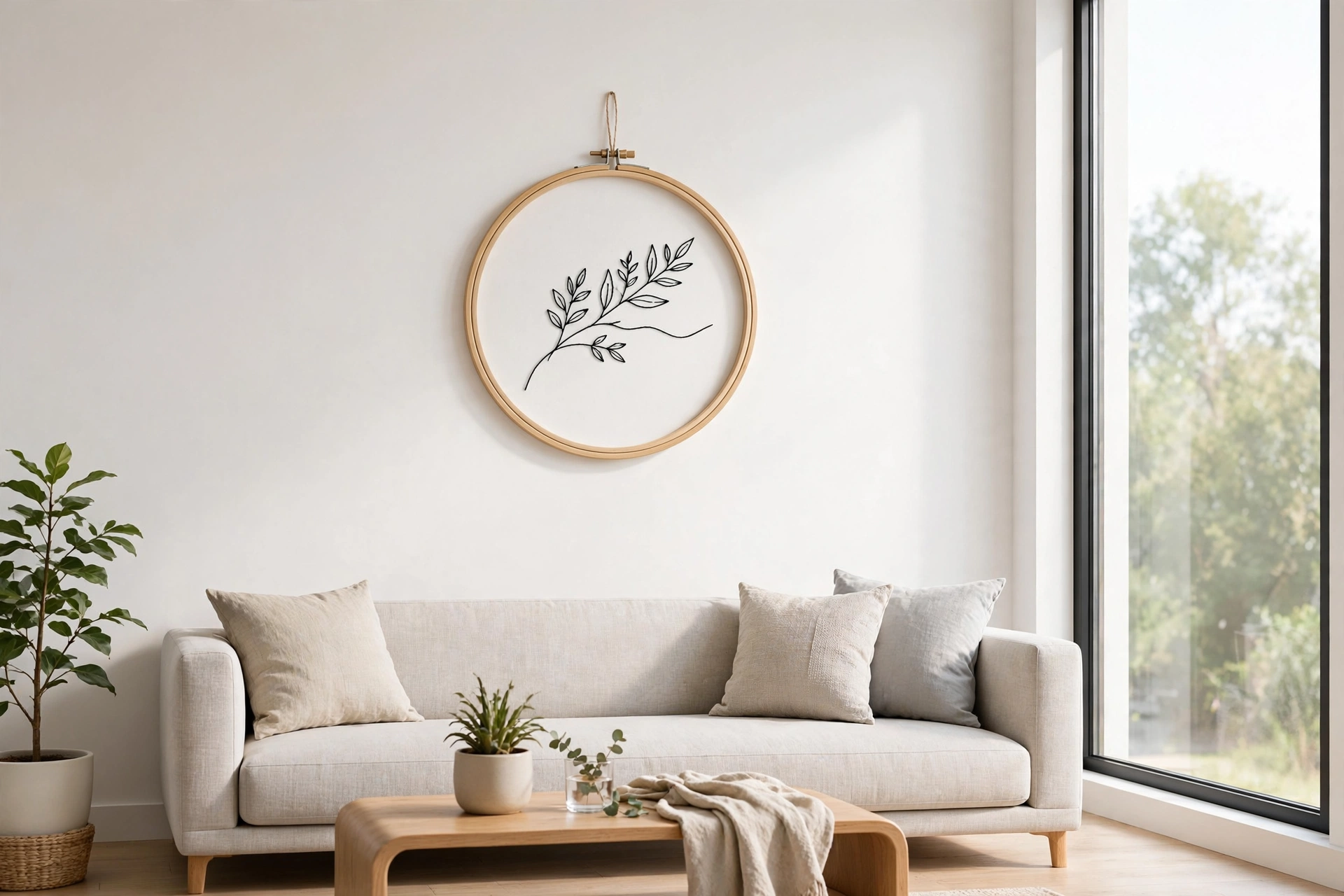
Minimalist embroidery ideas suit modern homes because they speak the same design language: clean lines, empty space, restraint. A single perfect stem in a white-walled room does what a full floral wreath cannot. It whispers. But minimalism is not just “less stitching.” It is a discipline with rules, and the rules are what separate the elegant from the unfinished-looking. This guide covers those rules, twelve projects that embody them, and the mistakes that make minimalism look like you gave up halfway.
The rules of minimalist embroidery
Minimalism fails when it is treated as the absence of effort. Real minimalism is effort concentrated into fewer decisions. These are the rules I follow.
Rule one: one idea per piece. A minimalist hoop contains exactly one visual idea: one stem, one face, one mountain, one word. The moment you add a second idea, it stops being minimal and starts being sparse. Before you stitch, name the idea in one sentence. “A single eucalyptus stem.” If you cannot name it in one sentence, it is two ideas.
Rule two: maximum two colors, usually one. Most minimalist embroidery uses a single floss color on a neutral ground. Black on white is the classic. Dark gray on cream is softer. If you use two colors, one should dominate and the other should be an accent, a single French knot in gold on an otherwise black design, for example. Three colors is not minimalism. It is just a small regular project.
Rule three: empty space is a design element. In minimalist work, the unstitched linen is doing as much work as the stitches. Plan it deliberately. A stem placed in the lower third of the hoop with empty space above it feels intentional. The same stem dead center feels like you did not know where to put it. The rule of thirds applies to embroidery exactly the way it applies to photography.
Rule four: every stitch must earn its place. In a full design, a slightly uneven stitch disappears into the whole. In minimalism, it is the whole. Slow down. Make each stitch deliberate. Use shorter stitches than you think you need, because short stitches look more controlled. And frog without mercy. If a line is not right, redo it. Minimalism demands perfectionism the way maximalism demands abundance.
Rule five: finish like a gallery piece. Minimalist work lives or dies on presentation. A raw hoop edge undermines the whole aesthetic. Wrap the hoop, paint it, or frame the piece behind glass. The finishing should be as considered as the stitching, because in a minimalist home, people will look closely.
Twelve minimalist embroidery ideas
1. The single botanical stem. One eucalyptus or olive stem in stem stitch, dark gray on white linen, placed in the lower third of a 5-inch hoop. This is the iconic minimalist piece, and it takes about ninety minutes. The stitch to master is stem stitch with absolutely even length. Practice on scrap until your stitches are metronomic, then commit.
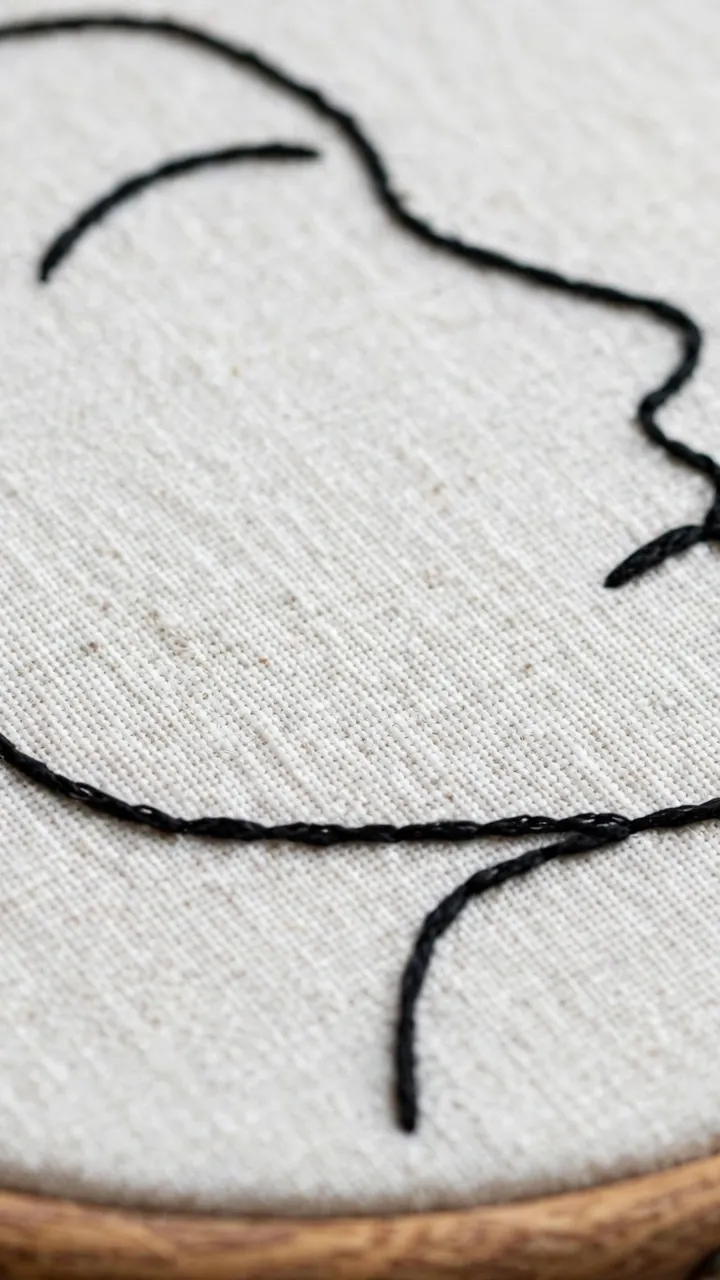
2. The continuous line face. A face profile drawn in one unbroken backstitch line, the way Picasso did it with a pen. Print a single-line face drawing, trace it, stitch over it without lifting the needle. Black floss on white. Two hours, and it looks like art gallery work. The trick is committing to the line. Hesitation shows.
3. The mountain horizon. Two or three overlapping mountain outlines in backstitch, gray on cream, with vast empty sky above. This is minimalism as landscape: the mountains anchor the bottom, the emptiness is the point. Add a single French knot sun if you must, but consider leaving it out. The empty sky is braver.
4. The single word. One word in stem stitch, lowercase, centered: “breathe,” “still,” “grow.” Two strands, generous letter spacing, nothing else. Words are the most personal minimalist pieces because the word you choose says everything. Pick the word carefully. You will look at it every day.
5. The geometric trio. Three small hoops, each with one geometric shape: a circle, a triangle, a line. Same floss, same fabric, same hoop size. Hung together, they are a study in form. Separately, they are almost nothing. That is the point. Minimalism is often about the relationship between pieces, not the pieces themselves.
6. The negative space leaf. Instead of stitching a leaf, stitch everything around it: a dense field of seed stitch in gray, with a leaf-shaped area left unstitched. The leaf appears as empty linen surrounded by texture. This is advanced minimalism, the kind that makes other stitchers stop and stare, because it inverts the usual logic of what gets stitched.
7. The thread sketch. A quick loose sketch of anything, a cup, a chair, a hand, stitched in running stitch as if you were doodling with thread. Do not refine it. The sketch quality is the aesthetic. This is the most forgiving minimalist project because imperfection is built into the concept.
8. The single French knot constellation. A scattering of French knots in dark floss on white linen, arranged as a real constellation. No connecting lines, just the stars. Minimal to the point of abstraction, and beautiful precisely because of it. Label the constellation on the back if you want, or leave it a mystery.
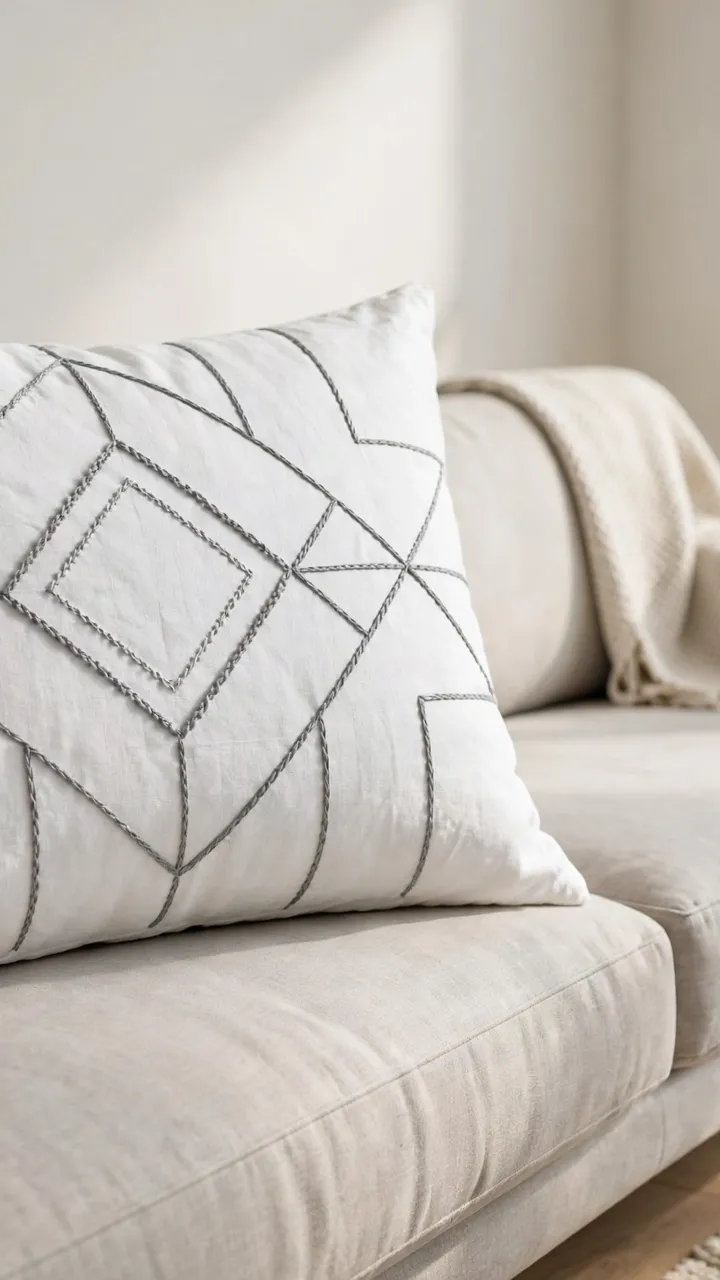
9. The hemline. A single row of running stitch in a contrasting color along the hem of a white curtain panel or duvet cover. Not a hoop, not a picture, just a line that says someone cared about this detail. This is minimalism as lifestyle: the stitching is barely visible, but the room feels different.
10. The shadow stem. Stitch a stem in stem stitch, then stitch its “shadow” offset by a quarter inch in a lighter gray. Two stems, one idea, subtle depth. This is the minimalist project that rewards close looking, which is exactly what minimalist decor is for.
11. The unraveled edge. A piece where the design intentionally fades: dense stitching at one edge dissolving into single scattered stitches and then nothing. A flower that becomes a stem that becomes a line that becomes empty linen. This is minimalism as narrative, and it is stunning on a long horizontal frame.
12. The white-on-white. White floss on white linen, a simple motif in satin stitch or backstitch. Visible only in raking light, invisible head-on. This is the most extreme minimalist project, essentially a secret. Guests will not notice it. You will know it is there. Sometimes that is enough.
Minimalist mistakes that look like giving up
Too small in too big a hoop. A tiny motif floating in a huge hoop does not look minimalist, it looks lost. Match the design scale to the hoop. A 3-inch design belongs in a 4-inch hoop, not a 7-inch one. The empty space should feel deliberate, not accidental, and proportion is how you signal the difference.
Wobbly lines. In a full design, a wobbly stem is character. In minimalism, it is the only thing to look at, so it reads as a mistake. Use shorter stitches, stitch slower, and frog anything that is not clean. Minimalism is not the style for “good enough.”
Defaulting to black. Black on white is the entry point, but it is not the only option. Dark olive on cream, charcoal on pale gray, deep navy on white, these are all minimalist and all more interesting than default black. Choose the neutral deliberately instead of reaching for the black skein out of habit.
Forgetting texture. Minimalist does not have to mean flat. A single satin-stitched leaf has a sheen that backstitch does not. A French knot casts a tiny shadow. Varying the stitch within a minimal design adds richness without adding visual noise. One idea, but rendered with full craft.
Where minimalist pieces live
Placement is everything. A minimalist hoop needs white space around it the way the design needs white space within it. Hang single pieces with at least twice the hoop’s diameter of empty wall on each side. Group pieces with generous gaps, not clustered tight. And put them where the light is good, because minimalist stitching rewards close looking and close looking needs light.
The rooms that suit minimalism best are the ones that are already calm: bedrooms, reading corners, hallways, bathrooms. A single stem in a white bathroom is perfection. The same stem in a cluttered playroom disappears. Match the piece to the room’s energy.
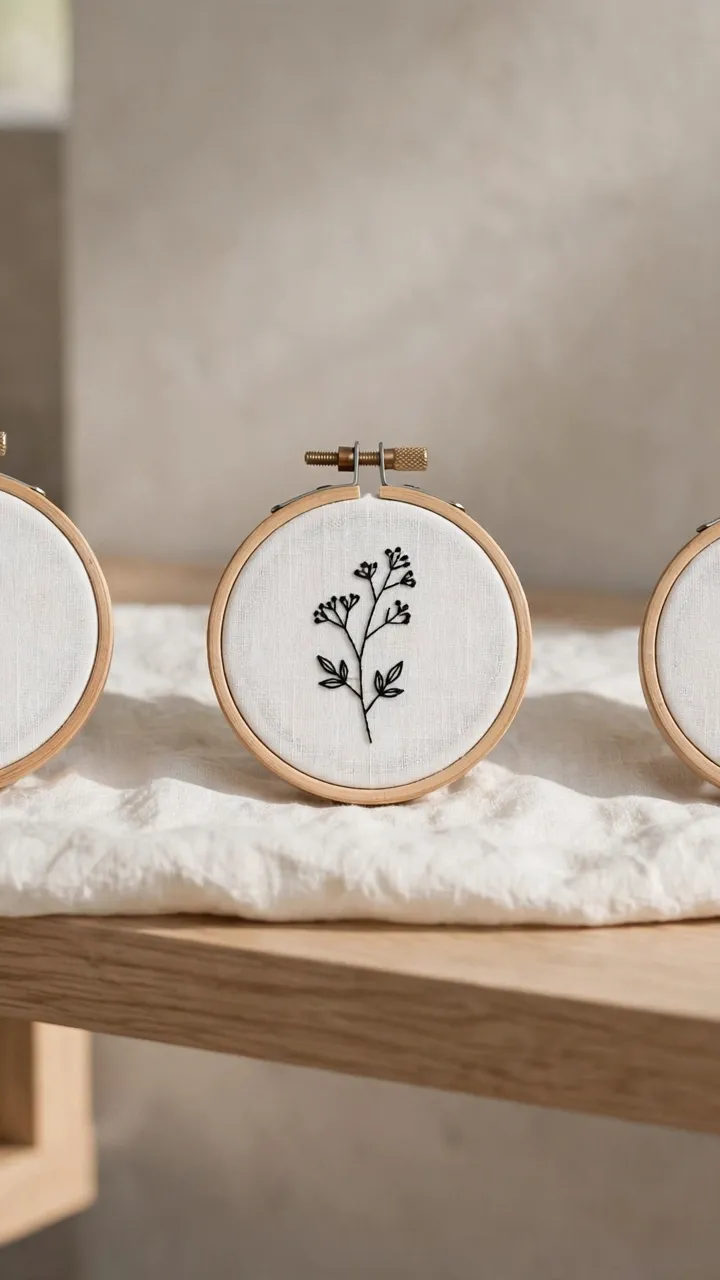
Start with the single botanical stem. It teaches the even stem stitch that underpins half the projects on this list, it finishes in an evening, and it will tell you honestly whether minimalism suits your stitching temperament. Some stitchers try it and immediately want to add more flowers. That is useful information. Minimalism is not for everyone, but for those it suits, one perfect line is worth a thousand stitches.