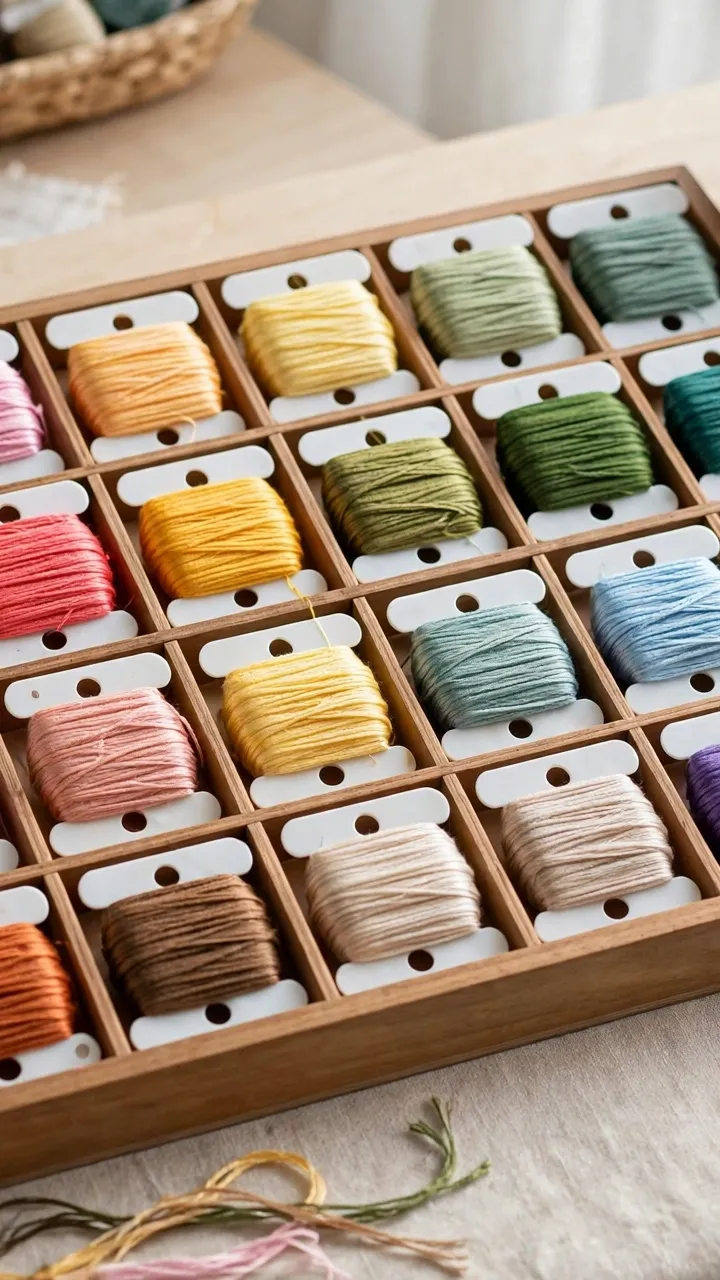
Thread tangling in embroidery is the craft equivalent of headphone cords in a pocket: you set the thread down straight, you pick it up as a sailor’s knot. I have spent cumulative days of my life untangling floss, and I say that as someone who tracks her stitching hours. The good news is that tangling is not random. It has causes, the causes have fixes, and the fixes are mostly habits that take seconds. Here is the full diagnosis.
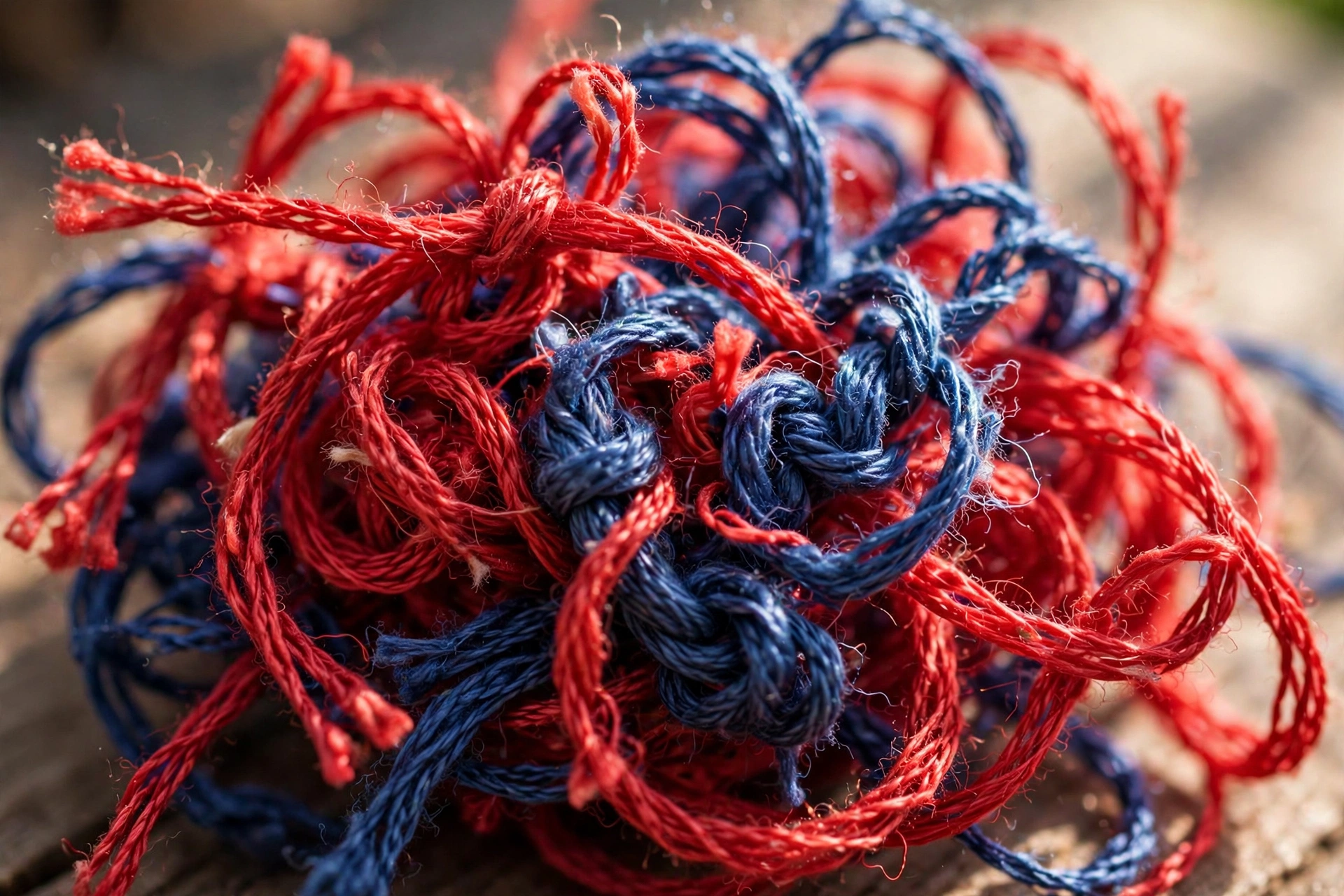
Why your thread tangles: the physics in 30 seconds
Embroidery floss comes off the skein with twist memory. It wants to curl, and every stitch you make adds a little more twist as the needle rotates through the fabric. Twist accumulates. Accumulated twist becomes loops. Loops become knots. This is why a fresh thread behaves beautifully for the first ten minutes and then turns feral: you are winding it up like a rubber band with every stitch, and eventually it unwinds itself into a tangle.
Four things accelerate the process. Threads longer than your forearm, which give the twist more room to express itself. Spinning the needle between your fingers as you stitch, which adds twist directly. Pulling the full length of thread through the fabric on every stitch, which works the twist along the whole strand. And thread that started tangled, because separated-and-recombined strands that were not smoothed will tangle faster than a clean pull from the skein.
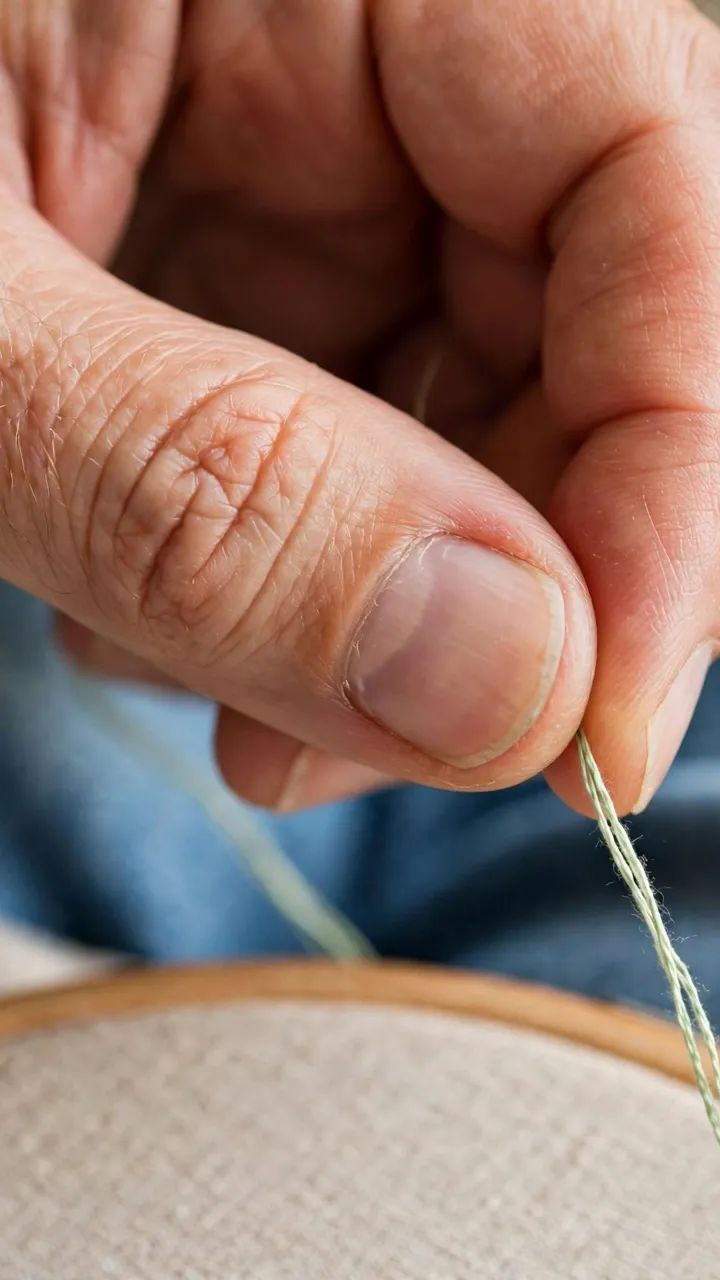
The fixes, ranked by how well they work
1. The 18-inch rule. Never stitch with a thread longer than 18 inches, measured from fingertip to elbow roughly. Shorter thread twists less, tangles less, and frays less, because it makes fewer trips through the fabric. Yes, you rethread more often. Rethreading takes fifteen seconds. Untangling takes five minutes. The math is not close. This single habit eliminates about 70 percent of my tangles.
2. The dangle. When you feel the thread starting to twist, and you will feel it, the thread gets springy and starts looping, stop stitching and let the needle dangle freely from the thread. Gravity and the needle’s weight spin the twist out in about five seconds. Hold the fabric still, let the needle hang, watch it rotate. It looks silly. It works instantly. I dangle every ten minutes or so as preventive maintenance, the way you would stretch during a long drive.
3. Separate, then smooth. When you pull strands from the skein, separate each strand individually, then lay them back together and run them between your thumb and forefinger to smooth them. Strands pulled as a clump keep their skein twist and tangle as a unit. Individually separated strands lie parallel and behave. This takes twenty seconds and prevents a whole class of tangles that people blame on the thread brand. It was never the brand.
4. Thread conditioner. A pass through beeswax or a commercial conditioner like Thread Heaven coats the fibers, reduces friction, and tames the twist. It also slightly stiffens the thread, which some stitchers dislike for soft shading work. I condition thread for long outlines and borders, where tangling is most disruptive, and skip it for blended shading, where I want the fibers soft and grabby. One four-dollar block of beeswax lasts years.
5. Stroke the thread as you pull. Each time you draw the thread through, run it between your thumb and forefinger with light pressure. This lays the fibers straight, works out micro-twists before they accumulate, and gives you a tactile early warning when the thread starts getting springy. It becomes automatic within a week, like checking your mirrors while driving.
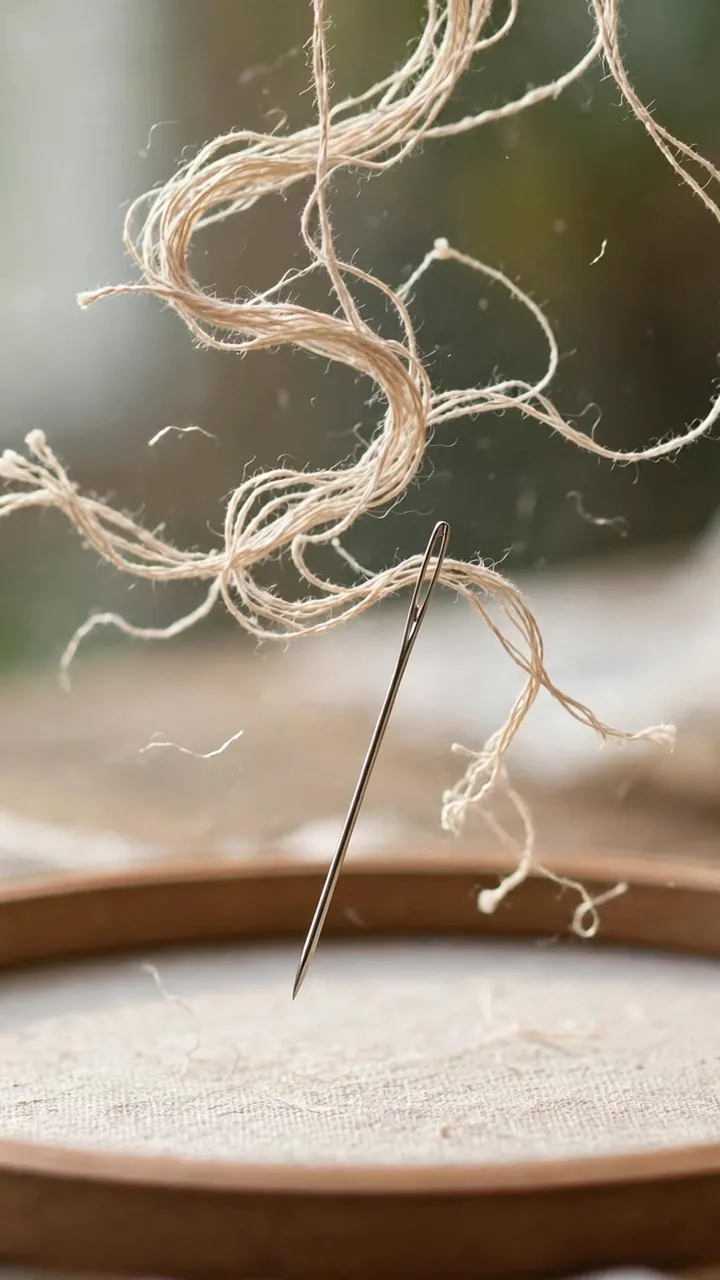
The habits that prevent tangles
Beyond the fixes, a few habits keep the whole session smoother. Park your needle in the edge of the fabric or a needle minder when you pause, instead of letting the thread puddle on the work. A puddled thread twists against itself. Keep your working thread to the same side of the fabric, and try not to flip the hoop around mid-row, which winds the working thread around everything. When you start a new thread, pull it through the skein loop slowly rather than yanking, because a yanked pull starts the thread’s life twisted.
Also, and this took me years to accept: some threads tangle more. Cheap no-name floss has inconsistent twist and tangles faster than DMC, which is one of the quiet reasons stitchers stay loyal to DMC at ninety cents a skein. Metallics are the worst offenders of all, and they deserve their own post, their own tools, and possibly their own therapist.
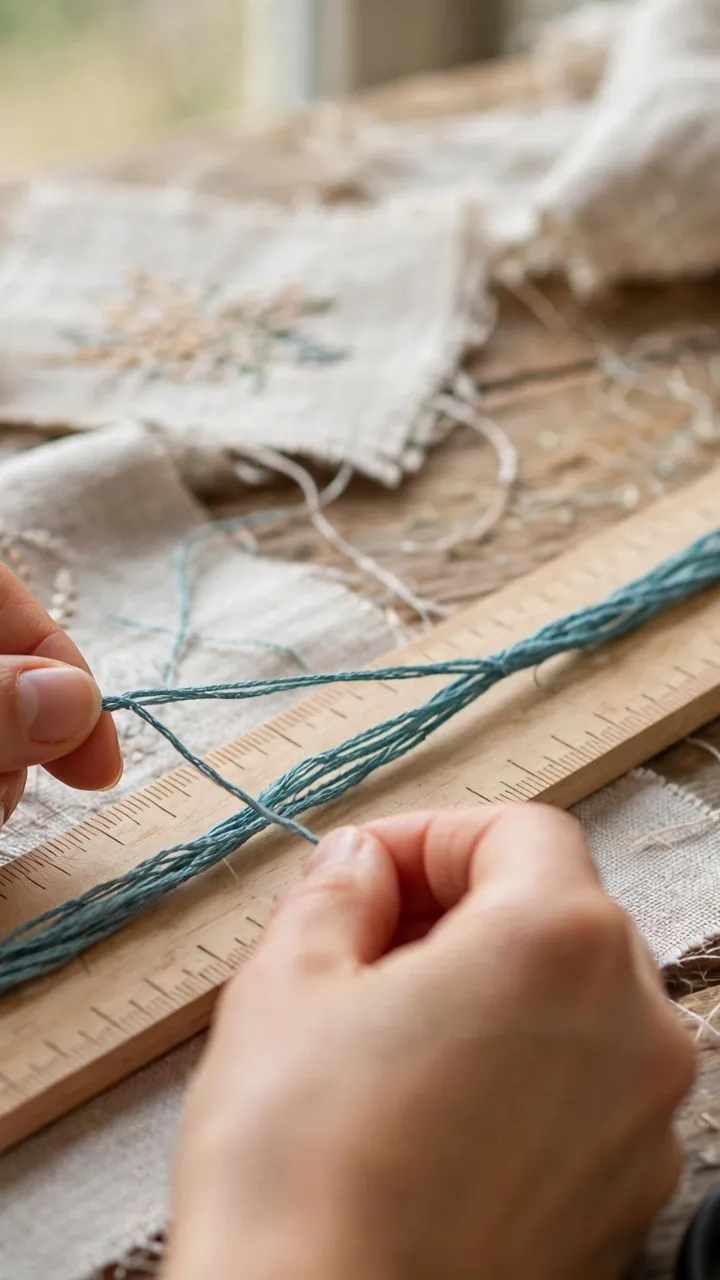
When the tangle wins
Sometimes, despite everything, you get a knot. Here is my rule, developed over many stubborn evenings: if I cannot undo it in sixty seconds, I cut it. Snip the thread as close to the tangle as possible, secure the working end, and rethread. Thirty seconds of pride versus ten minutes of picking at a knot with a needle tip while your project sits there judging you. The cut-and-restart is not giving up. It is triage.
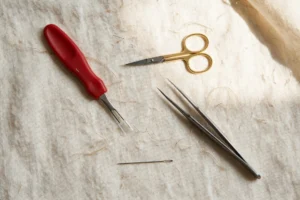
For the sixty-second attempt, the method is: stop pulling, which only tightens knots. Lay the tangle flat, find the loosest loop, and work it open with the tip of your needle, not your fingernails. Patience and the needle tip undo most tangles. Teeth, I have learned, do not help and are bad for the thread.
Tangling is the most democratic embroidery problem. It happens to beginners and to the woman at the retreat with forty years of stitching, and the fixes are the same for both of us: short thread, frequent dangles, separated strands, a little wax when needed. If you are just starting out, the basic stitches guide covers threading and strand prep in more detail. And the next time your thread turns feral mid-row, dangle the needle, count to five, and carry on. The tangle is not a verdict on your skill. It is just physics, and physics can be managed with the right habits. Keep a small pair of snips and a needle minder in your project bag, so the sixty-second rule is always within reach.