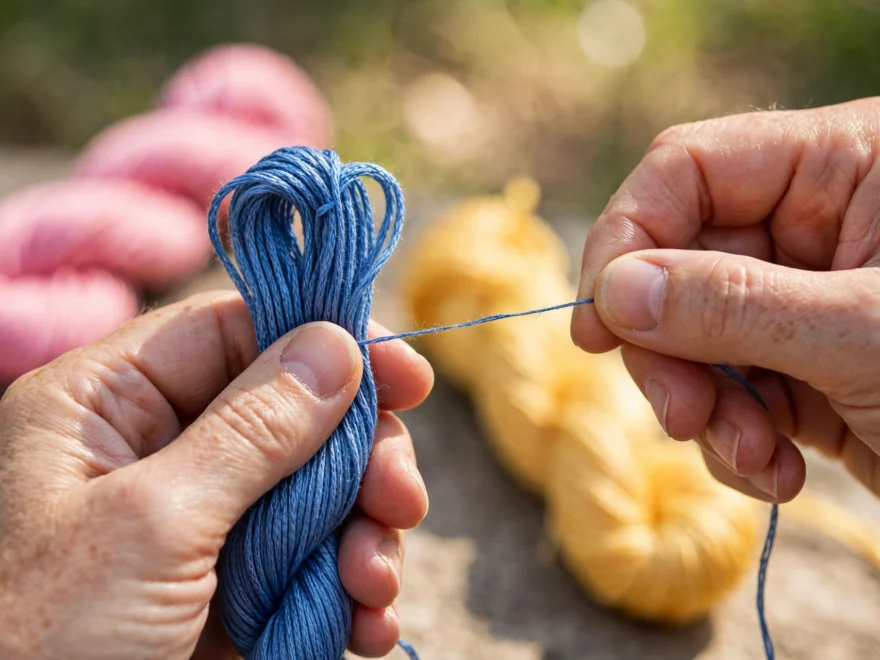
My embroidery floss vs thread education cost me a weekend and a floral border. I bought a cone of something labeled embroidery thread from the clearance bin of a craft shop that has since become a vape store. Two dollars, enormous cone, obvious bargain. I stitched a whole border with it. It came out thin, flat, and scratchy, like it had been sewn by a tired sewing machine. Real floss would have been soft and full. Nobody had told me that in embroidery, floss and thread are not interchangeable words.
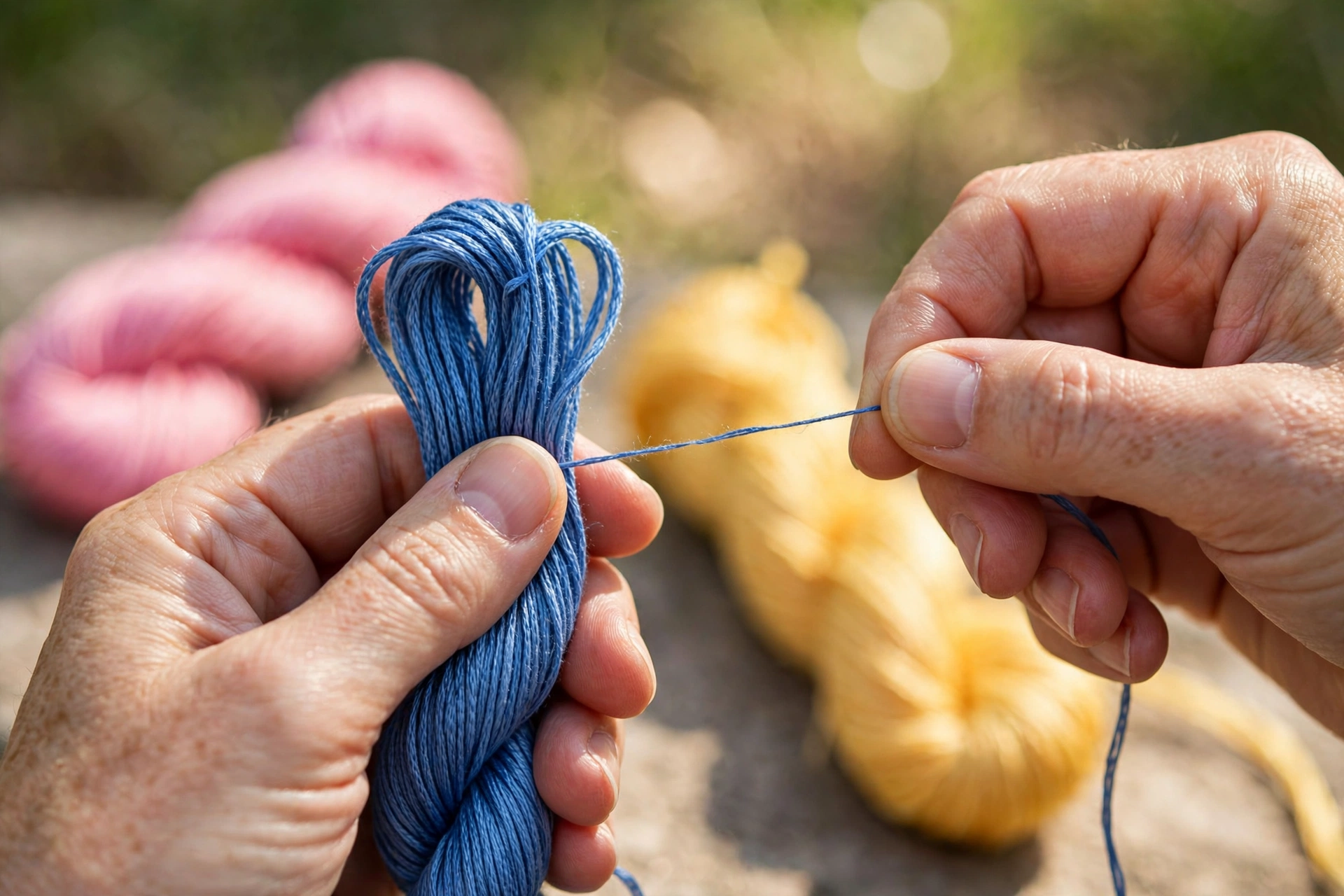
They get mixed up constantly, even by shops. Here is the whole mess untangled: what floss actually is, the three things people mean by embroidery thread, and the five mistakes that quietly wreck beginners’ stitching.
Floss Is Not a Fancy Word for Thread
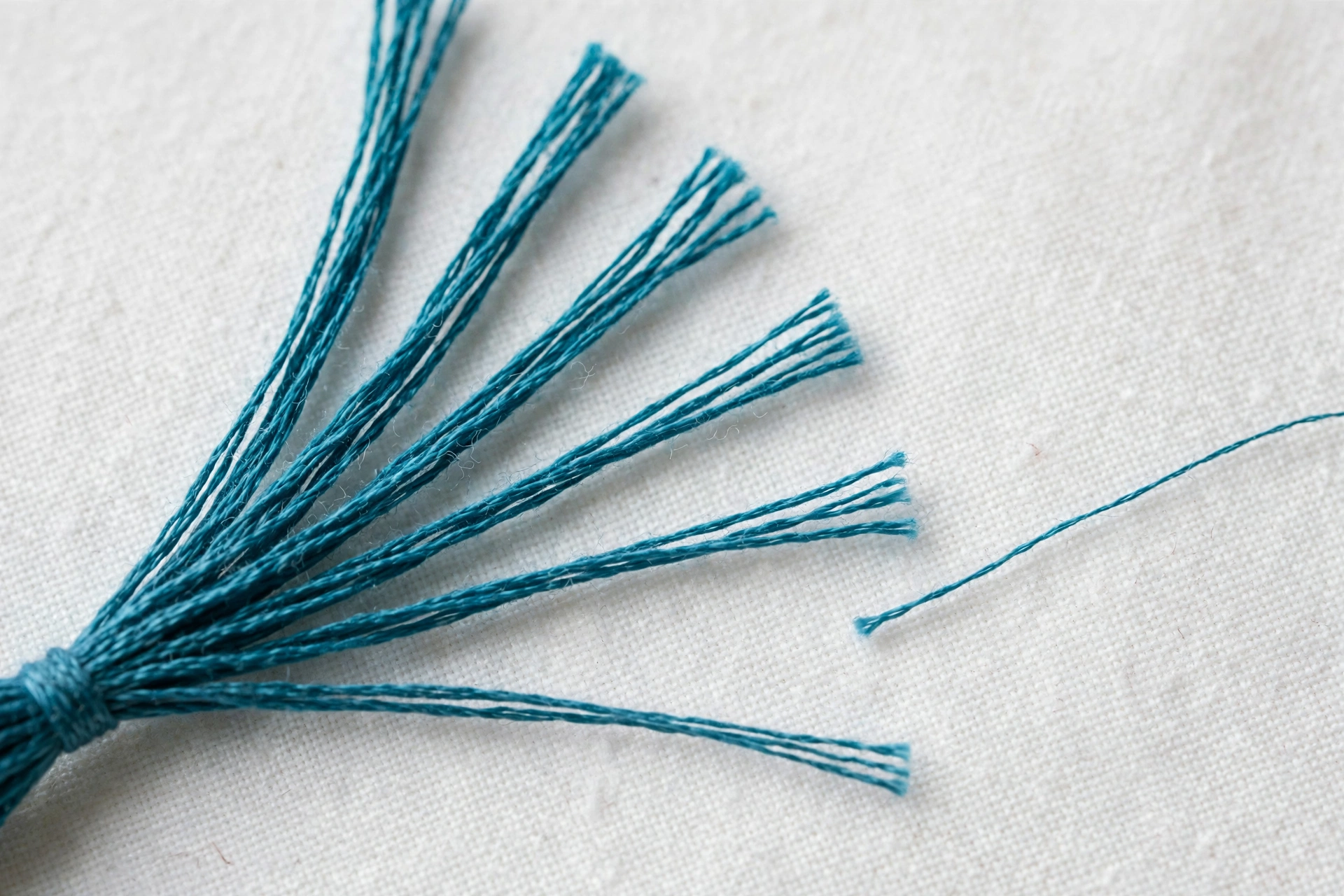
Stranded cotton floss is six loose strands twisted into one skein, about 8.7 yards of it, and you pull the strands apart to control how thick your stitches look. That separability is the entire magic trick. One strand for fine lettering, two or three for everyday stitching, and you dial the texture up and down at will.
DMC makes more than 500 colors, each with a number, so you can rebuy DMC 321 in ten years and get the same red. The finish is soft and matte. It catches light gently, which is why embroidered pieces look rich instead of shiny. If you want to browse the full numbered range, DMC’s site lists every shade.
The Three Things “Embroidery Thread” Actually Means
This phrase gets used for three different materials, and only two of them belong in hand embroidery.
One: perle cotton. A twisted, non-divisible thread with a slight pearl sheen, sold in balls. Lovely stuff. French knots stitched in perle cotton pop off the fabric in a way floss never will. But you use it as-is, never separated, and you pick a weight and live with it.
Two: crewel wool. A fine wool yarn for crewel work on linen twill. Different animal entirely, wonderful texture, irrelevant unless that is the technique you are learning.
Three, and this is the trap: ordinary sewing thread. Some shops label it embroidery thread because it runs through a sewing machine’s embroidery function. It is thin, strong, slightly wiry, and built to disappear into seams. As decoration sitting on top of fabric, it looks exactly as sad as it sounds. This was my two-dollar cone.
Embroidery Floss vs Thread: Five Ways Beginners Wreck Perfectly Good Floss
- Stitching with all six strands. The number one beginner error, and I see it constantly. Six strands look lumpy, snag on everything, and make French knots the size of peas. Most designs want two or three strands. Fine details want one. Which, by the way, is also why matching your needle eye to your strand count matters.
- Cutting strands without separating them. Pull one strand at a time from the cut length, then recombine however many you need. Strands yanked off as a group stay kinked and twist while you stitch, and you will fight them the whole way.
- Cutting the working thread too long. Anything over about 18 inches tangles, frays from repeated passes through the fabric, and wears thin before you finish the length. Short lengths feel annoying at first. They save you constantly.
- Letting the thread twist as you stitch. If your floss starts corkscrewing, drop the needle and let it hang. Watch it untwist itself. It takes ten seconds and feels like a magic trick every time. Stitching through the twist makes knots collapse and satin stitch look ropey. Some stitchers run the strand between damp fingers to smooth it, which works, though you will feel ridiculous doing it.
- Buying bargain floss with no colorfastness. Cheap unbranded skeins bleed in the wash and fade in sunlight. If a deal looks too good, wash a test strand in warm water first. If the water changes color, the floss is a liar. Walk away.
The Strand Rules I Actually Stitch By
Tape these inside your project bag:
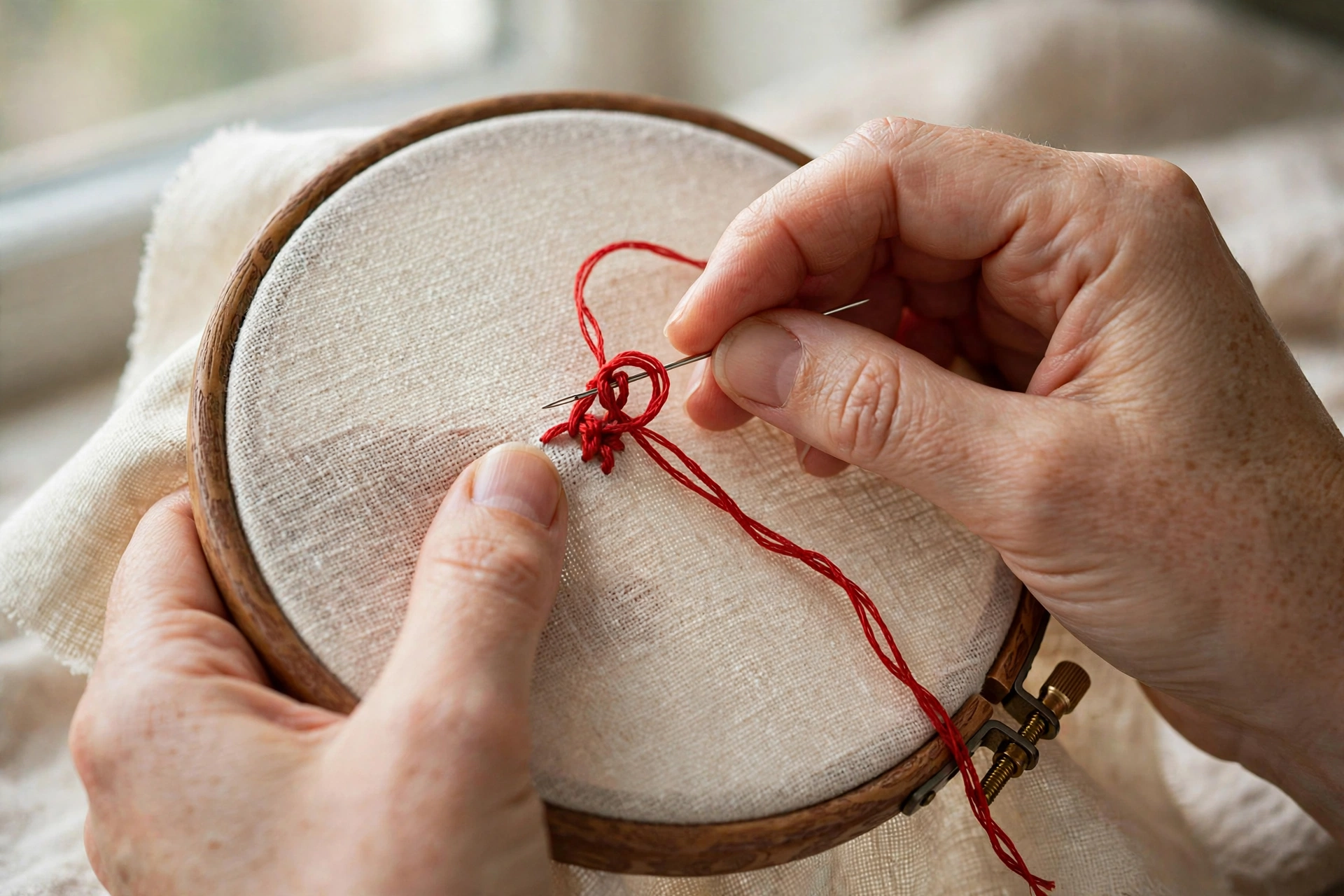
- Two strands is the default. Change my mind.
- One strand for lettering, faces, and anything you want to look delicate.
- Three for bold fill. Never six. Six is a cry for help.
- Test every dark red in warm water before it touches your fabric. Reds bleed first and apologize never.
Once you start thinking in strands instead of threads, floss becomes the most forgiving material in your kit. Cheap, hundreds of exact colors, total texture control. Just make sure what is in your hand is actually floss. And buy one extra skein of every main color at the start. Dye lots shift slightly between batches, and a mid-project rebuy can leave a visible line across your border. Ask me how I know.
When you are ready to pick actual colors, learn to read a floss color card like the numbers matter, because they do. And once you own the right floss, keep it somewhere you can actually find it.
3 comments