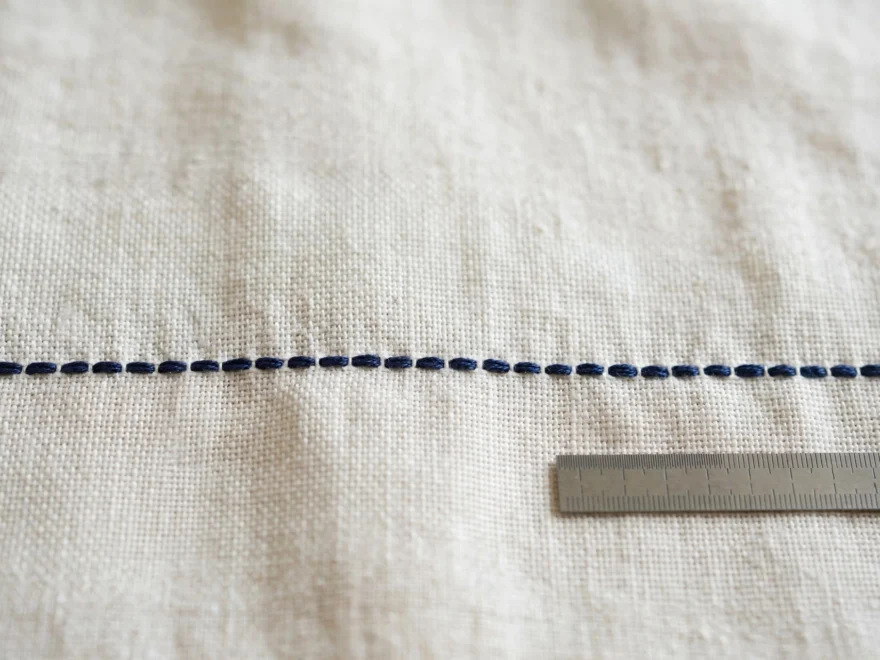
My early samplers looked like seismograph readings. Stitches marched across the fabric in every size except the same size, and I assumed I just lacked the gene for neatness. Then Dot, who runs the Tuesday stitch group at the library and has been embroidering since Eisenhower was president, looked at my work and said, “Honey, your tension is having mood swings.” She was right. Uneven stitches are almost never a talent problem. They are a tension problem, a spacing problem, or a rhythm problem, and all three are fixable with boring, unglamorous practice. Here is how to make even embroidery stitches the default instead of the accident.
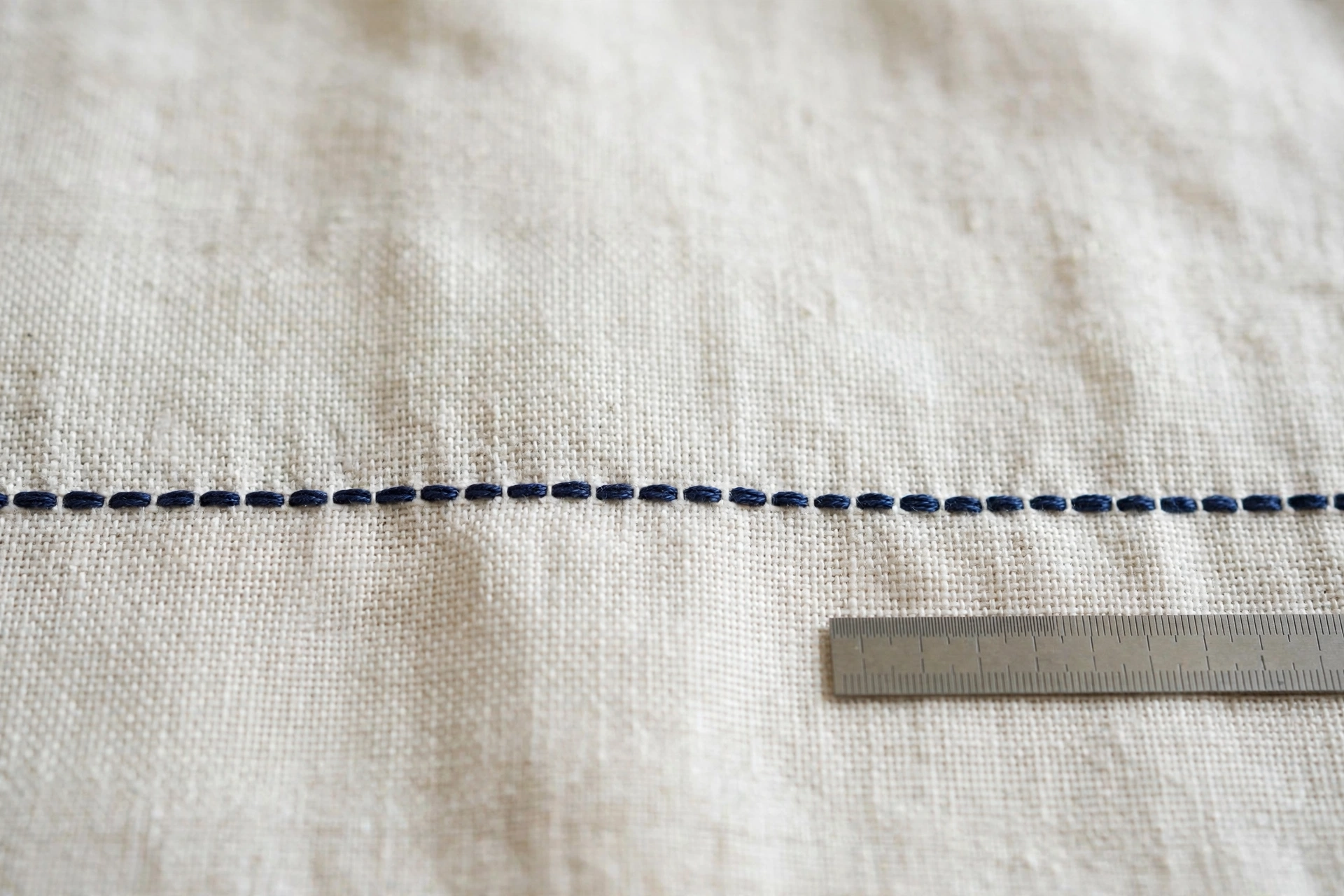
Tension is the culprit 90 percent of the time
Every stitch is a small negotiation between your pulling hand and the fabric. Pull too hard and the stitch sinks, puckers the fabric, and looks smaller than its neighbors. Pull too softly and it loops, snags, and looks bigger. Even stitches come from pulling with the same force every time, which sounds impossible until you realize it is just muscle memory, the same kind that lets you sign your name identically every time.
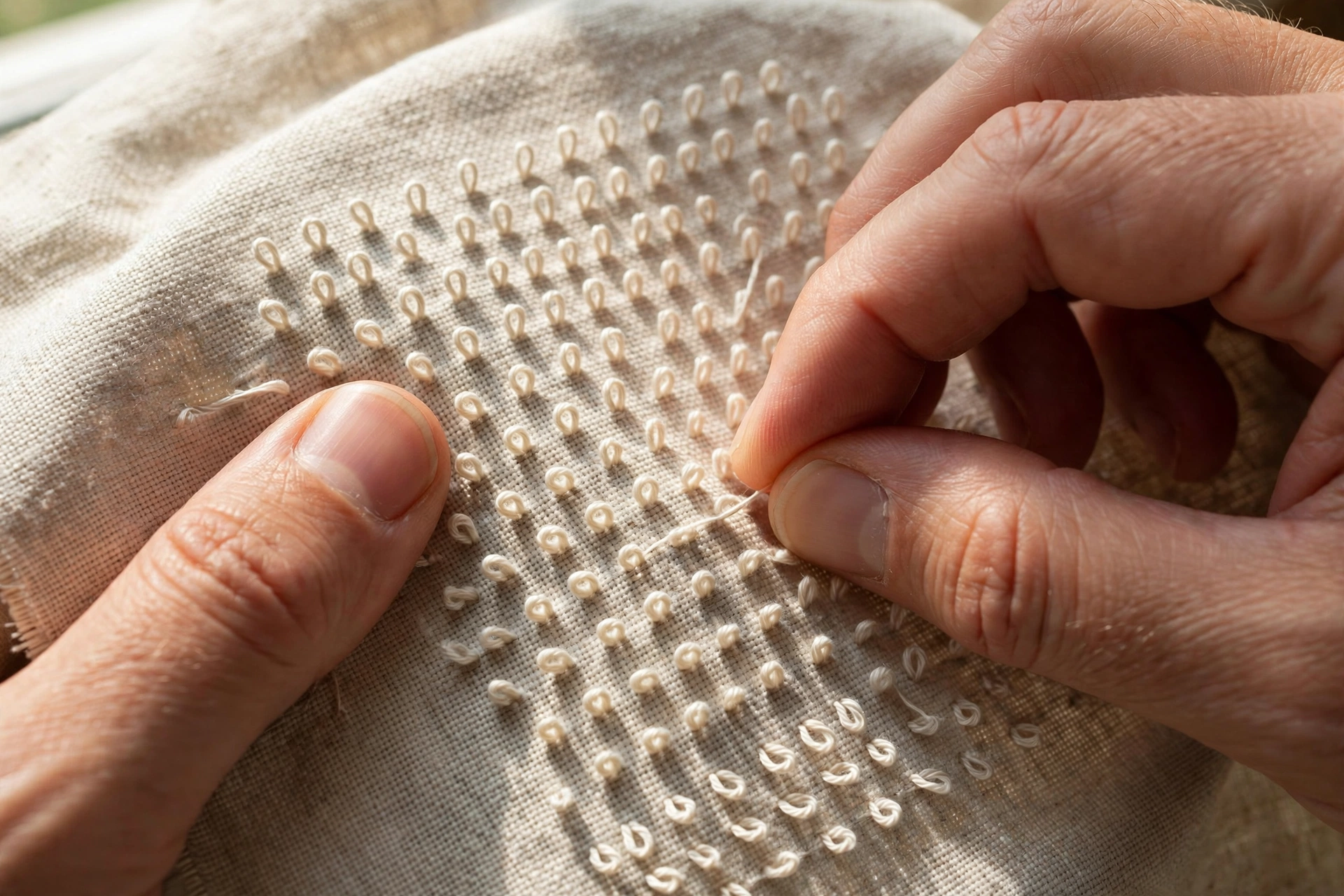
The target feeling: the thread should lie flat and smooth on the fabric, with no daylight under it and no dimple around it. When you get one stitch exactly right, stop and look at it. Memorize how the pull felt in your fingers. That feeling is the whole skill. DMC’s stitch guides describe it as “firm but not tight,” which is accurate and completely unhelpful until your hands learn it, which takes about two weeks of conscious practice.
Same length, every time
The second half of evenness is spacing, and spacing is just measurement. For running stitch, backstitch, and stem stitch, mark your stitch lengths before you start. A water-soluble pen and a ruler, dots every quarter inch, takes two minutes and removes all guesswork. I marked every line for my first year. Nobody will know, and the back of your work will look like it was done by someone with their life together.
For stitches where marking is impractical, count instead. Count threads of the fabric: four threads per stitch, every stitch, on evenweave linen. On plain quilting cotton, use the width of your needle as a gauge. The method does not matter. The consistency does. And when you are choosing between backstitch and stem stitch for a line, know that backstitch is more forgiving of spacing wobbles, because its segmented nature hides small inconsistencies that stem stitch’s continuous twist would reveal.
The rhythm trick
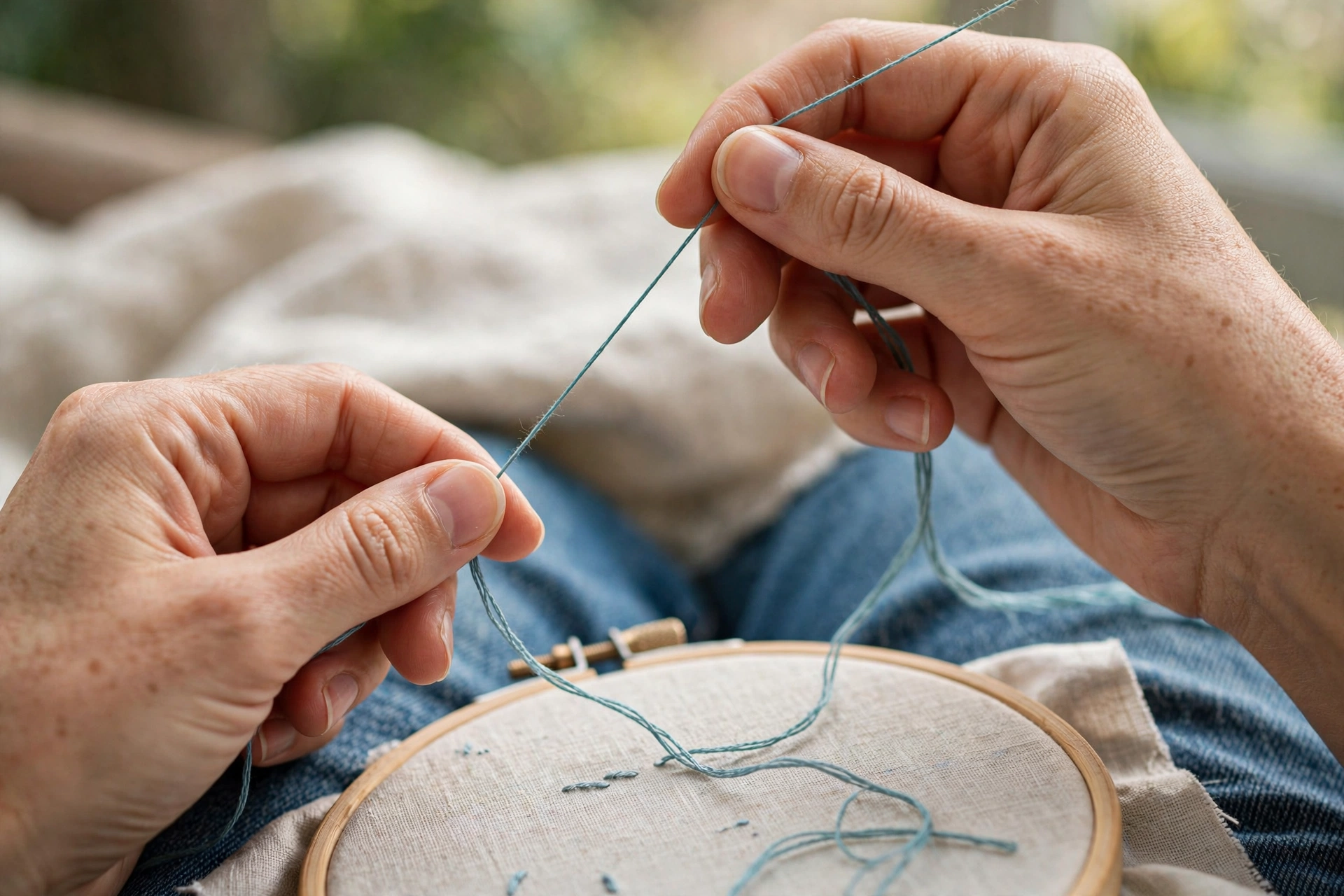
Here is the thing Dot actually taught me, and it sounded like mysticism until it worked. Stitch to a rhythm. Down, up, pull, breathe. Down, up, pull, breathe. Same tempo, same motions, no rushing the easy stretches and no tensing up on the tricky bits. Your hands are remarkably good at repeating a motion identically when you give them a steady beat, and remarkably bad at it when you stitch in fits and starts while watching television.
This is also why your stitches get uneven when you are tired. Fatigue breaks rhythm first, long before you notice. My evening stitching is visibly worse than my morning stitching, and I have the samplers to prove it. Important rows get stitched before dinner. Borders and filling can have the tired hands.
Fabric tension matters as much as thread tension
You can have perfect pulling rhythm and still get uneven stitches if the fabric itself is moving. A hoop that loosens mid-session lets the fabric shift under each stitch, and shifting fabric eats consistency alive. This is the unglamorous infrastructure of even stitching: seat the fabric properly, check it hourly, re-tighten when it sags. The full method is in my guide to keeping fabric tight, and it does more for stitch evenness than any amount of careful pulling.
Also mind how you hold the hoop. A death grip flexes the rings and works the fabric loose, which changes the tension under your needle from one minute to the next. Hold it lightly, or rest it on a table or pillow. If your hand aches after stitching, you are gripping too hard, and your stitches are paying for it.
Check the back: it tells the truth
The front of your work is where hope lives. The back is where truth lives. Flip your hoop over every so often and look: even stitches make neat, uniform loops and travels on the back. Uneven tension shows up back there first, as puckering, loose loops, or thread that dives too deep. I check the back every time I rethread my needle, which turns quality control into rhythm instead of interruption.
If the back looks like a bird’s nest, do not despair and do not keep going. Stop, look at what changed, and fix it now. Usually it is one of three things: the hoop loosened, your strand count drifted (did you accidentally pick up three strands instead of two after rethreading?), or your rhythm broke. All three are five-minute fixes. Stitching another hour on top of the problem is not.
The ten-minute drill that fixed mine
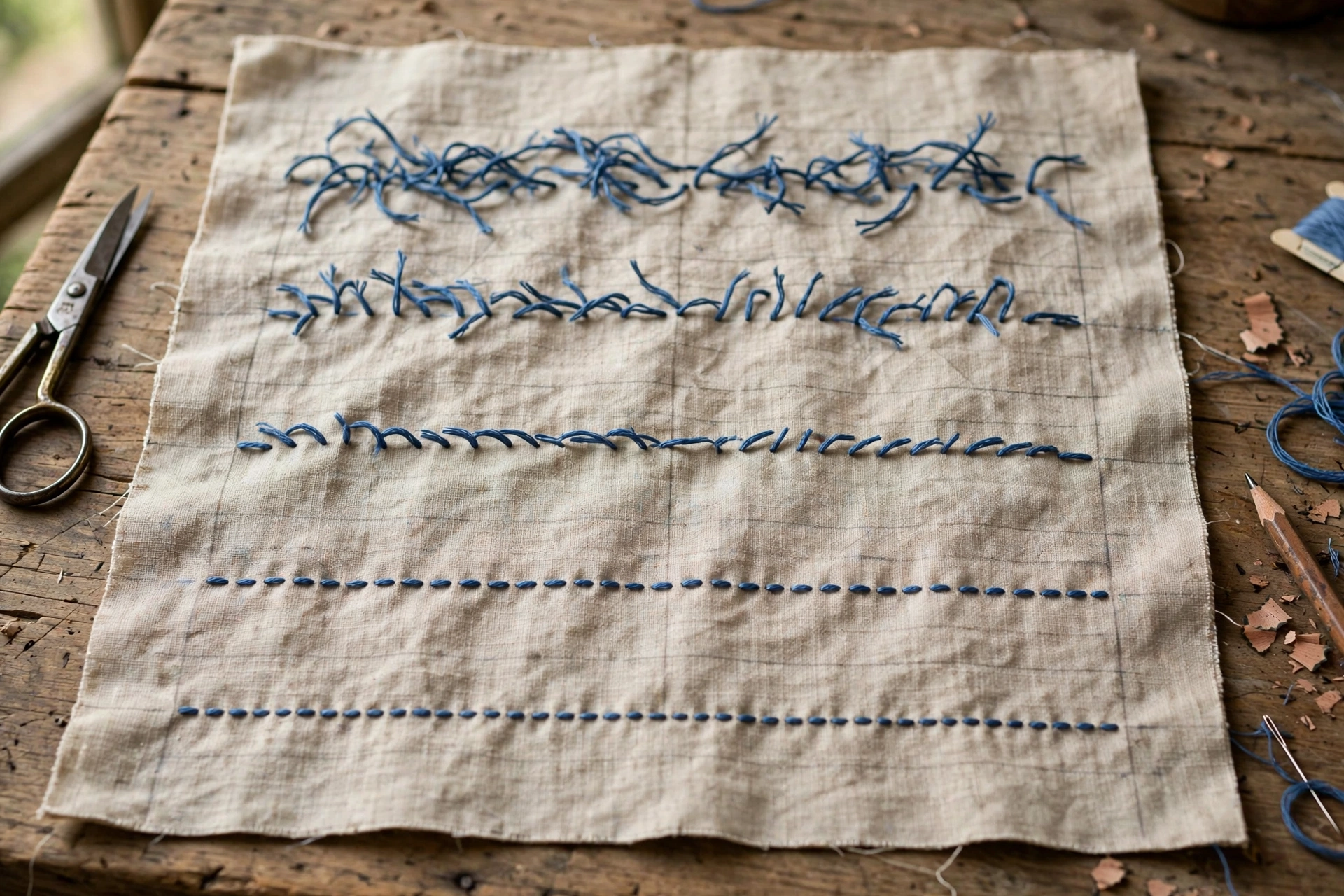
Here is the actual practice routine, and I am not going to pretend it is exciting. Take a scrap of linen, draw five straight lines with a ruler, and stitch them: one in running stitch, one in backstitch, one in stem stitch, one in chain stitch, one in whatever you are currently learning. Mark the stitch lengths first. Stitch slowly, to a rhythm, checking the back after each line. Ten minutes a day for two weeks.
It is boring. It works. My lines went from seismograph to ruler-straight, and the improvement transferred to every project immediately, because evenness is not stitch-specific, it is hand-specific. Once your hands know the feeling, they apply it everywhere, including small details where it matters most. Keep the drill samplers. Looking back at week one versus week four is deeply satisfying.
If one particular stitch resists evening out, isolate it. Stitch a full line of just that stitch, slowly, watching each one land. Nine times out of ten the problem is a tiny inconsistency in one part of the motion, like pulling slightly sideways on every third stitch, that you only notice when the stitch is alone under inspection. Fix the motion, then put the stitch back into the rotation.
What evenness is not
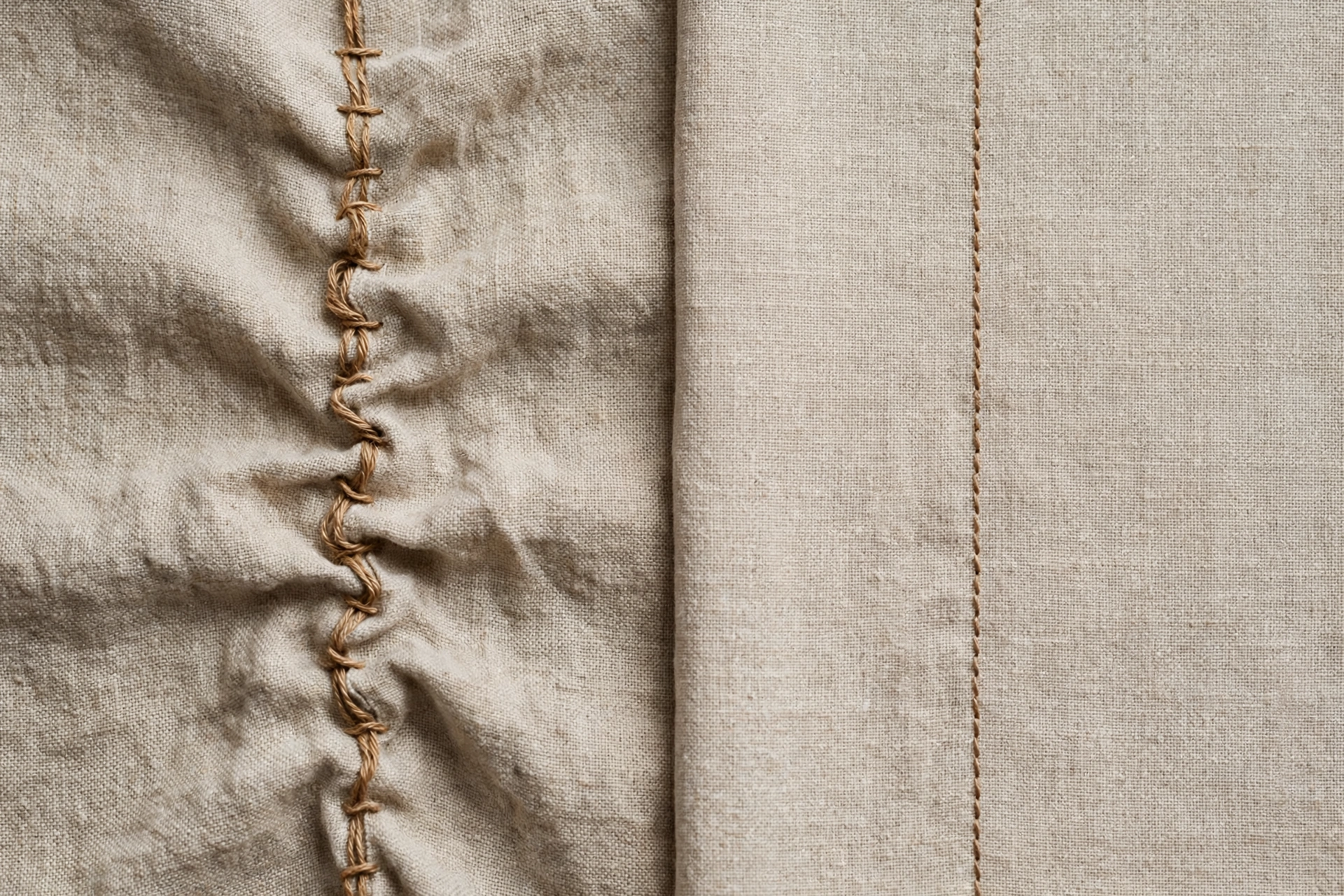
A quick correction before I go, because this gets misunderstood. Even stitches do not mean robotic stitches. Hand embroidery is allowed, encouraged, to show the hand. The goal is not machine uniformity. The goal is intention: every stitch the size you meant it to be, no surprises, no accidents. A little organic wobble in a stem stitch vine is charm. Random stitch sizes in a geometric border is a mistake. You get to decide which is which, and that decision is what makes it craft instead of manufacturing.
So: same pull, same length, steady rhythm, tight fabric, honest back-checks. Five habits, none of them exciting, all of them transformative. And when your stitches land evenly every time, flowers like the lazy daisy go from charming to genuinely professional, because the petals finally match each other.