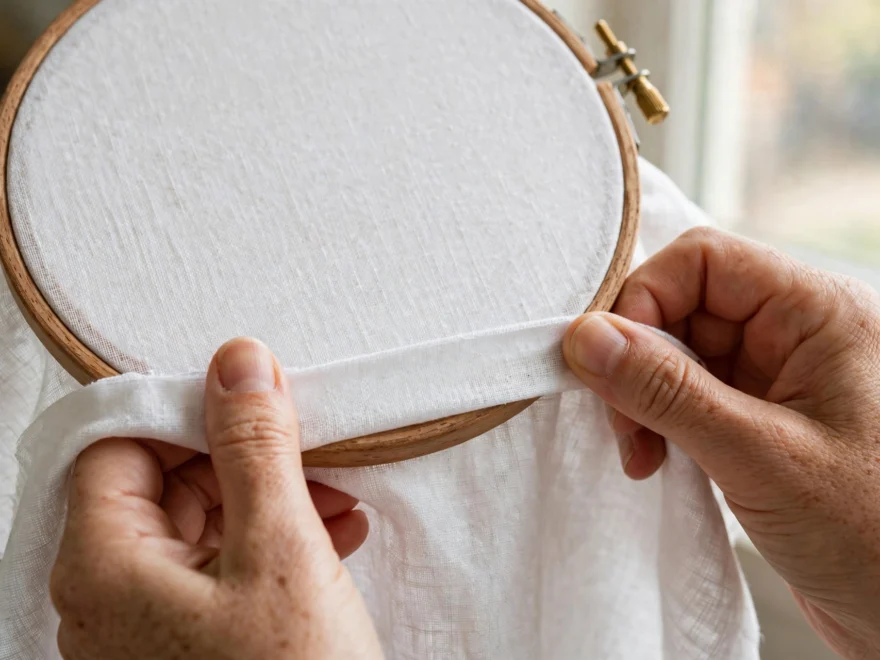
I fought loosening fabric for my entire first year. Every twenty minutes the linen went saggy, my stitches went uneven, and I assumed my hoop was garbage. Then a woman at the library stitch group watched me wrestle with it for ten minutes, reached into her tote without a word, and handed me a screwdriver. Ninety seconds later my fabric was drum-tight, and it stayed that way for the whole evening. I have never hooped fabric without a screwdriver since.
Learning to keep fabric tight in hoop setups is almost entirely technique, not gear. It comes down to how the fabric is seated, how the screw is tightened, and how your stitching pulls things off-center. Get those three right and the problem mostly disappears.
How to keep fabric tight in hoop: the 90-second method
Do it in this order and it works on any hoop, wood or plastic, cheap or good.
Loosen the screw until the outer ring slides easily over the inner ring with fabric between them. Forcing it stretches the weave unevenly, and you will pay for that later. Lay the inner ring on a flat table, center your fabric over it with even margins all around, design side up, and press the outer ring down. Do not pull anything tight yet.
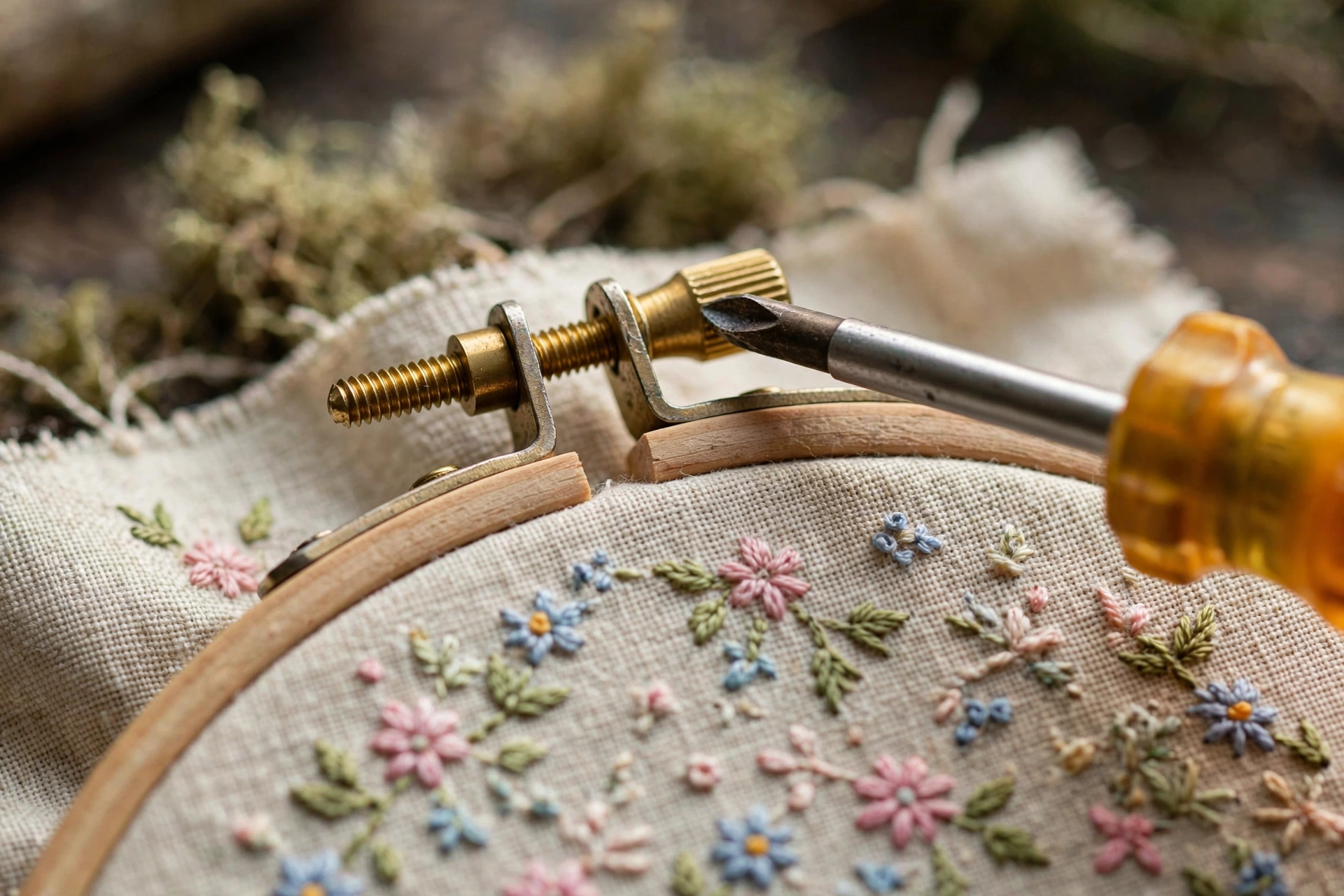
Now the part that matters: pull the fabric taut in four directions, top, bottom, left, right, in that order, a little at a time, twice around. You want even, not extreme. Over-pulling distorts the weave and your motif along with it. Tighten the screw firmly by hand, then give it one more quarter turn with the screwdriver. That quarter turn is the whole trick. Hand-tight loosens as you stitch. The screwdriver turn does not.
Tap the center with your fingertip. It should sound faintly drum-like and bounce back instantly. If it thuds or dents, redo the four-direction pull. Then check the grain: the weave lines should run straight, not wavy. Wavy grain means you pulled unevenly. This thirty-second check prevents hours of distorted stitching, and hardly anyone does it.
When it still goes slack, check these five things
Your fabric margin is too small
Fabric with less than an inch of margin past the rings cannot grip properly, full stop. Cut at least 2 inches larger than the hoop on every side. This single fix solves more loosening complaints than any other.
You are death-gripping the hoop
Squeezing hard while you stitch flexes the rings and works the fabric loose, especially with wooden hoops. Hold it lightly, or rest it on a table or a pillow. If your hand aches after stitching, you are gripping too hard, and your tension is paying for it.
You stitch from the edges inward
Starting at the edges pushes slack toward the middle, where it has nowhere to go. Start at the center of the design and work outward, and the slack gets pushed toward the rings, which absorb it. Counted-work stitchers have done this forever for exactly this reason.
The screw is stripped
A bent or stripped screw cannot hold tension no matter what you do, and cheap hoops develop them fast. If the screwdriver turn does nothing, retire the hoop. No trick compensates for broken hardware, and a five-dollar replacement beats an hour of fighting.
Your stitches are too tight, not your hoop too loose
This one masquerades as a hooping problem constantly. Tight fabric plus tight stitches equals puckering. If the fabric feels drum-tight but the surface still puckers, relax your pulling hand. The thread should lie on the fabric, not dig into it.
The twill tape trick for stubborn fabrics
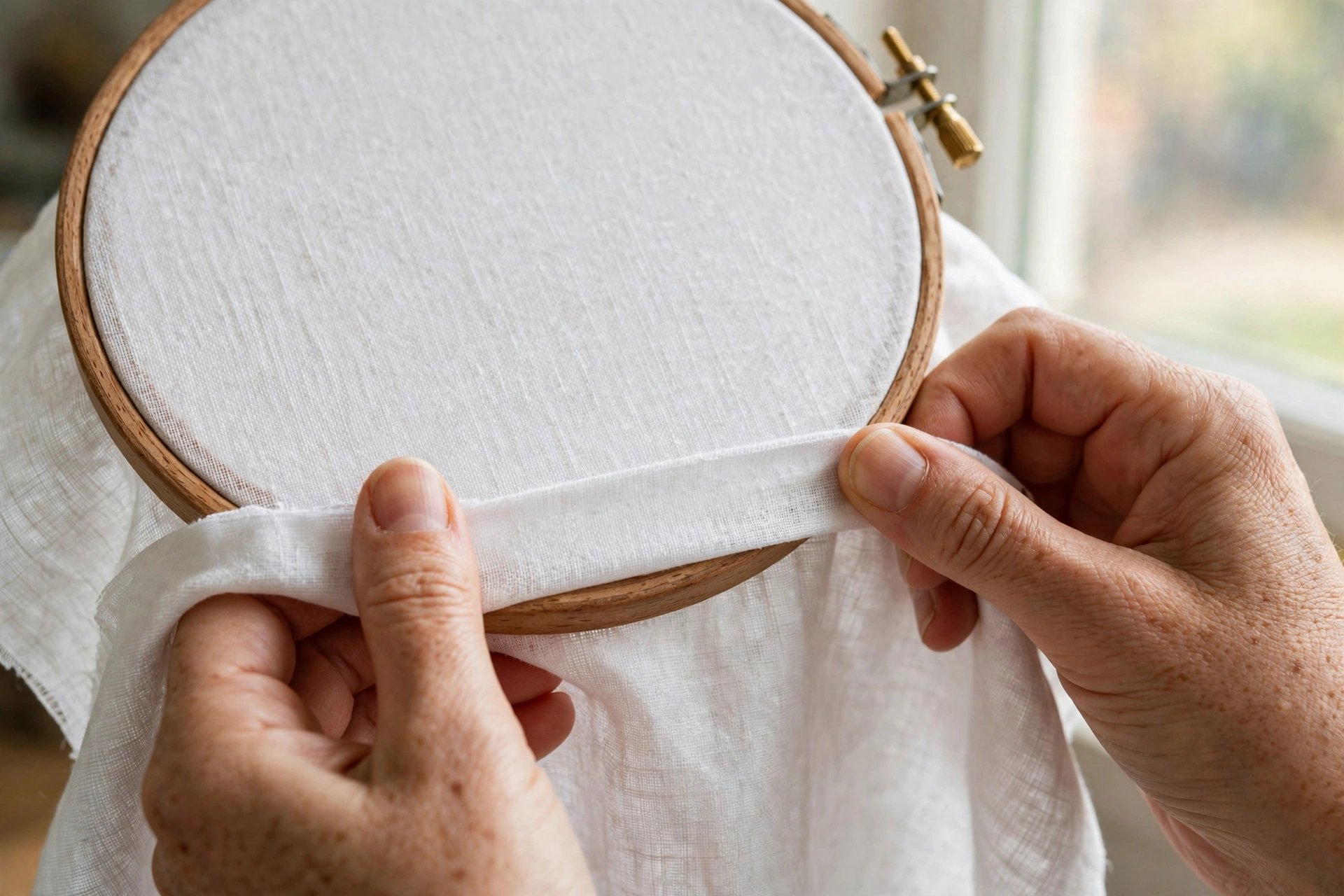
Some fabrics just will not stay put: sateen, anything slippery, anything loosely woven. For those, wrap the inner ring with cotton twill tape or bias binding, overlapping slightly, and secure the end with a tiny stitch. The wrap gives the outer ring something to grip, and the fabric stops creeping. This fixed my loosening problem on sateen completely. Rewrap once a year or when the tape looks compressed.
On long sessions, accept one maintenance stop per hour. Loosen the screw slightly, pull the four directions snug, retighten with the screwdriver. Ninety seconds. I do it whenever I rethread my needle, so it becomes rhythm instead of interruption.
How tight is too tight
There is such a thing as overdoing it. If the weave looks stretched into little diamonds around the rings, or the fabric makes a high ping instead of a low drum sound, back off a quarter turn. Over-tensioned fabric springs back when you release it and takes your stitches with it, leaving everything slightly puckered. You want a trampoline, not a snare drum.
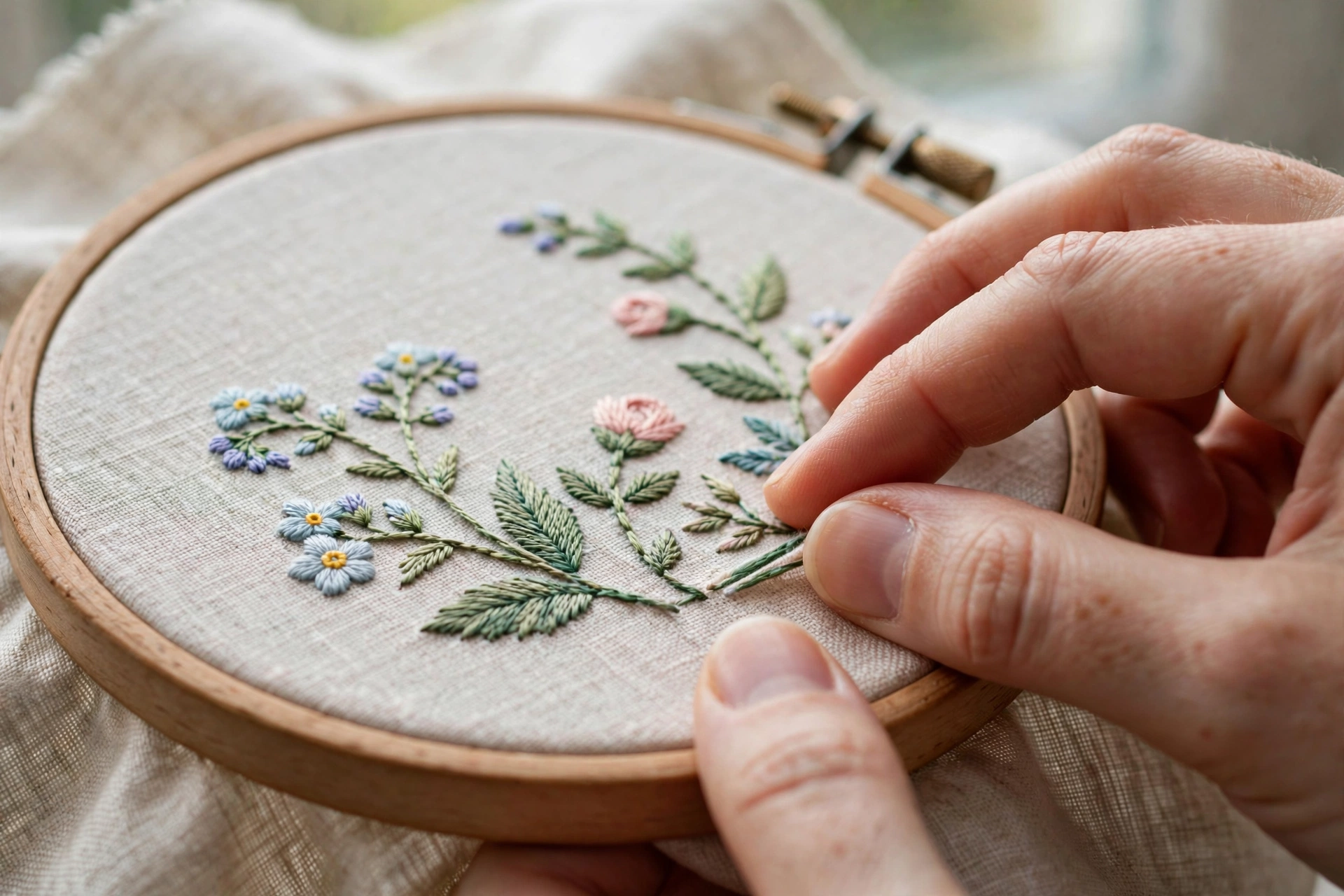
That is the whole system: seat it evenly, finish with a screwdriver, re-seat hourly, wrap the ring for slippery cloth. Once these become automatic you will stop thinking about tension entirely, which is exactly when stitching gets fun. If you are still choosing gear, read which hoop size to buy first, because an oversized hoop on a small scrap of fabric will never hold, no matter how good your technique is.
2 comments