The first personalized gift I ever stitched was a disaster I still think about. It was a tote bag for my best friend’s birthday, and I decided to embroider her full name across the front in elaborate script. I had been stitching for three months. The letters came out wobbly, the spacing drifted, and “MELISSA” looked like it was sliding off the bag. She loved it anyway, because she is a good friend, but I learned the lesson that shapes this entire guide: personalized embroidery gifts work when the personalization is simple and the execution is clean. One perfect initial beats five shaky letters every time.
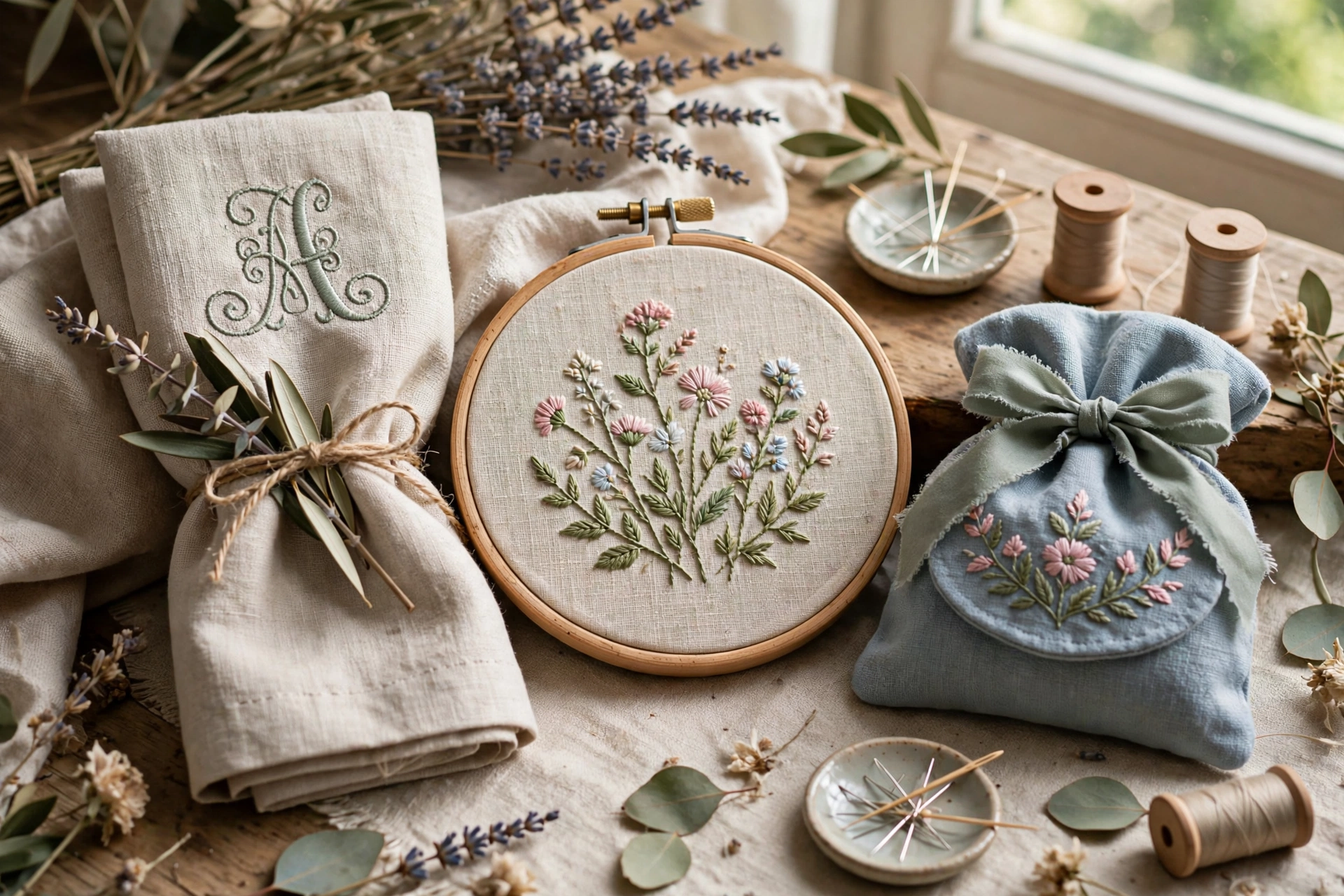
Personalized gifts hit different from store-bought ones because they prove you spent the one currency that matters: time. Nobody doubts that you care when you hand them something with their name stitched into it. But personalization also raises the stakes, because a mistake in someone’s name is not charming, it is just wrong. This guide covers the personalization techniques that work for beginners, twelve gift projects organized by recipient, and the mistakes that turn a thoughtful gift into an awkward one. Embroidered greeting cards are one of my favorite small personalized gifts to make, and I wrote a full DIY guide for them.
The three personalization techniques beginners should learn
You do not need fancy lettering skills. Ninety percent of personalized embroidery uses one of these three methods, and all three are beginner-friendly if you follow the rules.
Method 1: Backstitch monograms. A single initial, or two to three initials, worked in backstitch with 2 strands of floss. Trace the letter from a printed font using a water-soluble pen, then stitch over the lines. Backstitch is the right choice because each stitch is independent, so a slightly wobbly stitch does not drag the whole letter off course. Keep letters 1.5 to 2 inches tall. Smaller than that and the curves get fiddly; larger than that and any wobble is visible from across the room. This method handles about eighty percent of all personalization, and it is the one I recommend you master first. I wrote a full guide on this here: Minimalist Embroidery Ideas for Modern Homes.
Method 2: Names in stem stitch. For full names or words, stem stitch gives a smooth, flowing line that reads beautifully. The catch is that stem stitch magnifies inconsistency, so only use it for names once your stitch length is even. Practice the name on scrap fabric first, always. I practice every name twice before it goes on the gift, because the second attempt is always cleaner and the gift deserves the second attempt.
Method 3: Dates and numbers in backstitch. Wedding dates, birth years, anniversaries. Numbers are actually easier than letters because they are mostly straight lines and simple curves. A wedding date in small backstitch under a floral motif is one of the most requested personalized designs I know, and it takes about thirty minutes once you have the numbers traced.
The golden rule for all three: trace first, stitch second, and never freehand a name directly onto the gift. The five minutes spent tracing with a water-soluble pen saves the five hours you would spend frogging a crooked “H”.
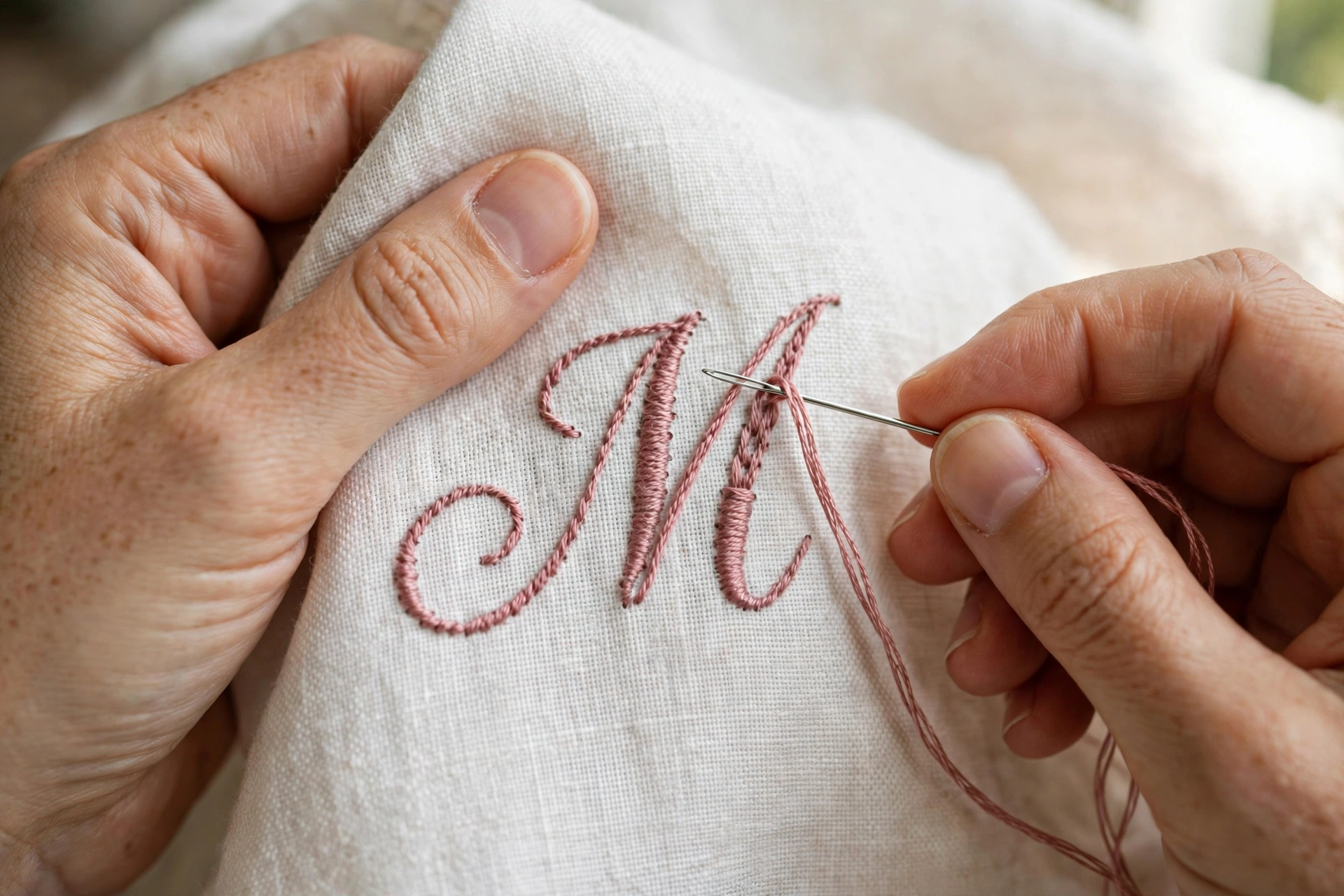
Personalized embroidery gifts by recipient
Different people want different things. A gift that delights your sister might confuse your coworker. Here is what works for whom, with honest time estimates.
For new parents: the name onesie or bib. A baby’s name in stem stitch on a plain white onesie or bib, with a tiny motif above it: a star, a moon, an elephant. Use 2 strands, keep it small, and stitch through a water-soluble stabilizer so the knit does not stretch. Time: two hours. New parents receive approximately four hundred identical stuffed animals; a personalized bib stands out. Avoid stitching on the back where the baby lies, because knots against newborn skin are cruel.
For your partner: the anniversary hoop. Your wedding date in backstitch, a small floral sprig, both of your initials. A 5-inch hoop, cream linen, dusty rose and sage. This is the gift that lives on the bedroom wall for decades. Time: five to six hours. Start two weeks before the anniversary, not two days. Ask me how I know.
For your best friend: the inside-joke tote. A tote bag with a reference only the two of you understand: a word, a tiny drawing, a date. My best friend got a tote with a stitched avocado and the words “emergency guac” because of a road trip incident we do not discuss. Time: three hours. The personalization here is the joke itself, which means the stitching can be simple. The thought does the heavy lifting.
For your mom: the monogrammed napkin set. Four linen napkins, her initial on each, in a color she loves. Moms use napkins, moms appreciate linen, and moms definitely notice hand stitching. Time: eight hours for the set, two per napkin. This is a weekend project if you start Saturday morning and do not get distracted.
For a new homeowner: the address hoop. Their new street name or house number in stem stitch, with a small house or key motif. Moving is stressful and a personalized piece for the new place says “I am happy for you” better than a candle ever could. Time: three to four hours. Get the address exactly right. Triple-check the spelling against their moving announcement, not your memory.
For a teacher: the apple pouch. A small drawstring pouch with an apple motif and “Thank you” or their name. Teachers receive a lot of mugs. A stitched pouch is different, useful, and clearly took effort. Time: three hours including the pouch construction, or one hour if you buy a pre-made pouch and just stitch the front.
For a coworker: the desk hoop. Keep it neutral and small: a 4-inch hoop with a simple botanical sprig and maybe their initial. Nothing too personal, nothing that assumes a close relationship. A desk is a semi-public space, so the gift should be something they would be comfortable displaying at work. Time: three hours. This is the safe, professional personalized gift.
For grandparents: the family name sign. The family surname in stem stitch on a linen panel, with the year established underneath: “The Hendersons, est. 1987.” Mount it on a dowel or frame it. Grandparents display this prominently, I guarantee it. Time: four to five hours. This is the gift that gets photographed and sent to the family group chat.
For a pet lover: the pet portrait patch. A simplified stitched portrait of their pet on felt: the basic shape, the distinctive markings, the name underneath. You do not need to be a portrait artist. A brown oval with floppy ears and the name “Biscuit” is instantly recognizable to Biscuit’s owner. Time: four hours. Pet people cry at these. In a good way.
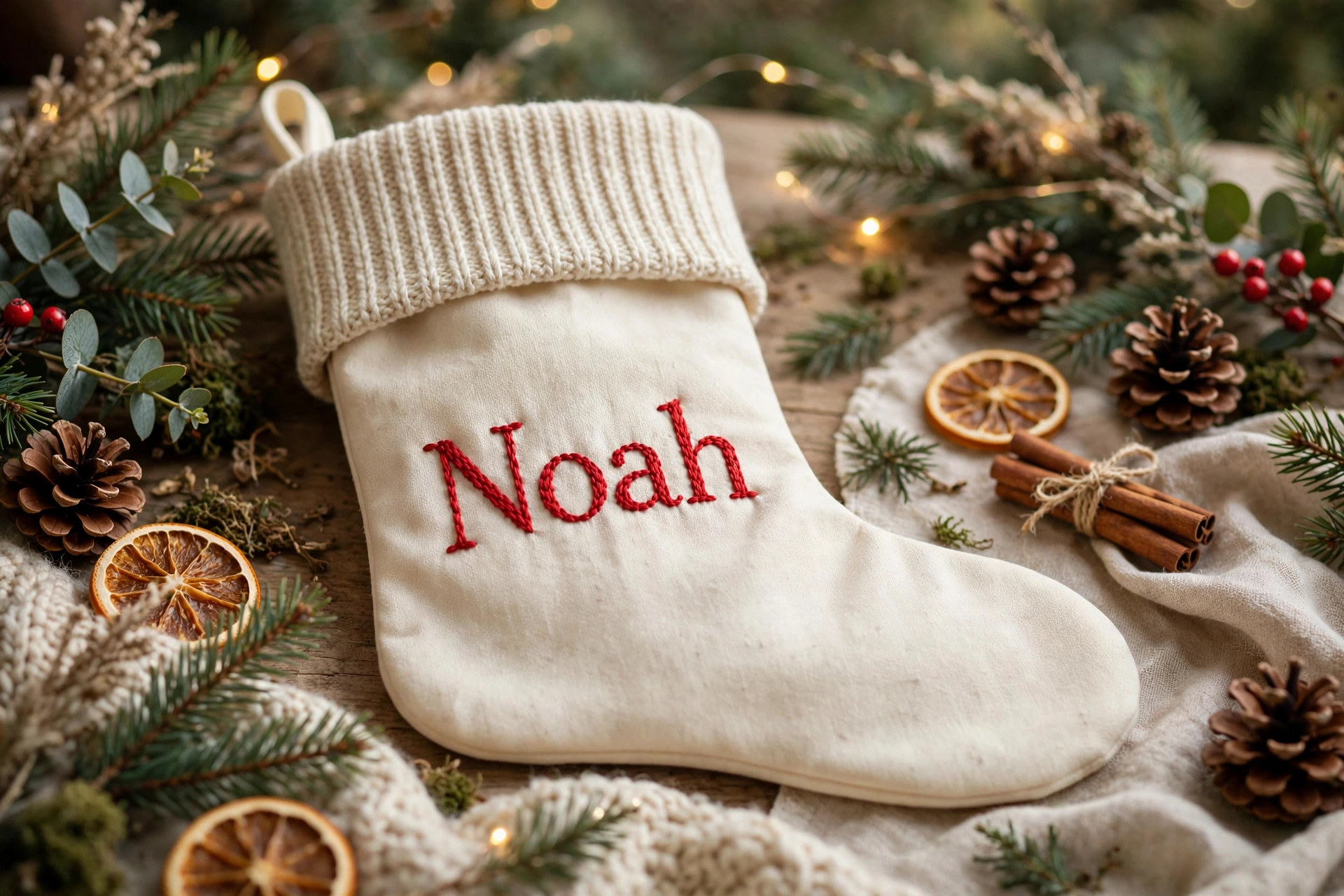
For the holidays: the named stocking. A Christmas stocking with the recipient’s name in bold backstitch across the cuff. Stockings are the ultimate personalized holiday gift because they get used every year for decades. Time: three hours per stocking. Start in October. Every year I tell myself this, and every year I am stitching stockings on December 23rd.
For a graduate: the year hoop. Their graduation year in large backstitch numbers, with a small cap or star motif. Simple, celebratory, and specific to the achievement. Time: two hours. Graduates are drowning in generic congratulations; a stitched year is specific and permanent.
For yourself: the practice piece you keep. Stitch your own initial on something you will use daily: a needle book, a project bag, a hoop for your wall. Personalized gifts for yourself are not selfish, they are how you practice personalization techniques before they go on someone else’s gift. Every gift stitcher should make themselves one piece first.
Personalization mistakes that ruin gifts
I have made all of these. Learn from my pain.
Spelling errors. The unforgivable one. Check the spelling against a written source, not your memory. I once stitched “Kathryn” for a “Katherine” and did not notice until the gift was wrapped. The re-stitching took longer than the original because I was also managing shame.
Wrong date formats. If you are stitching a wedding date, confirm whether they write day-month or month-day. An American couple and a European couple read 05/06/2020 very differently. When in doubt, spell out the month: “June 5, 2020” has no ambiguity.
Over-personalization. A tote with someone’s full name, birth date, and star sign is not thoughtful, it is a security risk. Keep personalization to what they would comfortably display in public. Initials and first names are safe. Full names plus dates belong on private items like the inside of a hoop, not the front of a tote.
Guessing at relationships. Do not stitch “Mr. and Mrs.” for a couple that has not told you their plans. Do not stitch a baby’s name before the baby is born and named. Do not assume a nickname is the name they want on a gift. When the personalization involves someone else’s life choices, confirm first.
Illegible fancy lettering. That gorgeous script font looks beautiful on screen and like spaghetti in thread. For names, clarity beats style every time. A clean backstitch name that anyone can read is better than a fancy script name that requires squinting. Save the fancy lettering for decorative words, not for someone’s identity.
The finishing touches that make it a gift
The stitching is half the gift. The other half is presentation, and it takes twenty minutes.
Back every hoop with felt. Press the finished piece under a cloth. Wrap it in tissue, not plastic, because plastic makes stitching sweat. Include a small card that says what it is and how to care for it: “Hand wash cold, dry flat.” Recipients who have never owned hand-stitched anything will throw it in the washing machine without this card, and you will find out at the next family gathering.
And sign the back. Your initials and the year, in tiny backstitch on the felt backing. Fifty years from now, someone will turn that hoop over and know exactly who made it and when. That is the real personalization, the one that outlasts all of us.
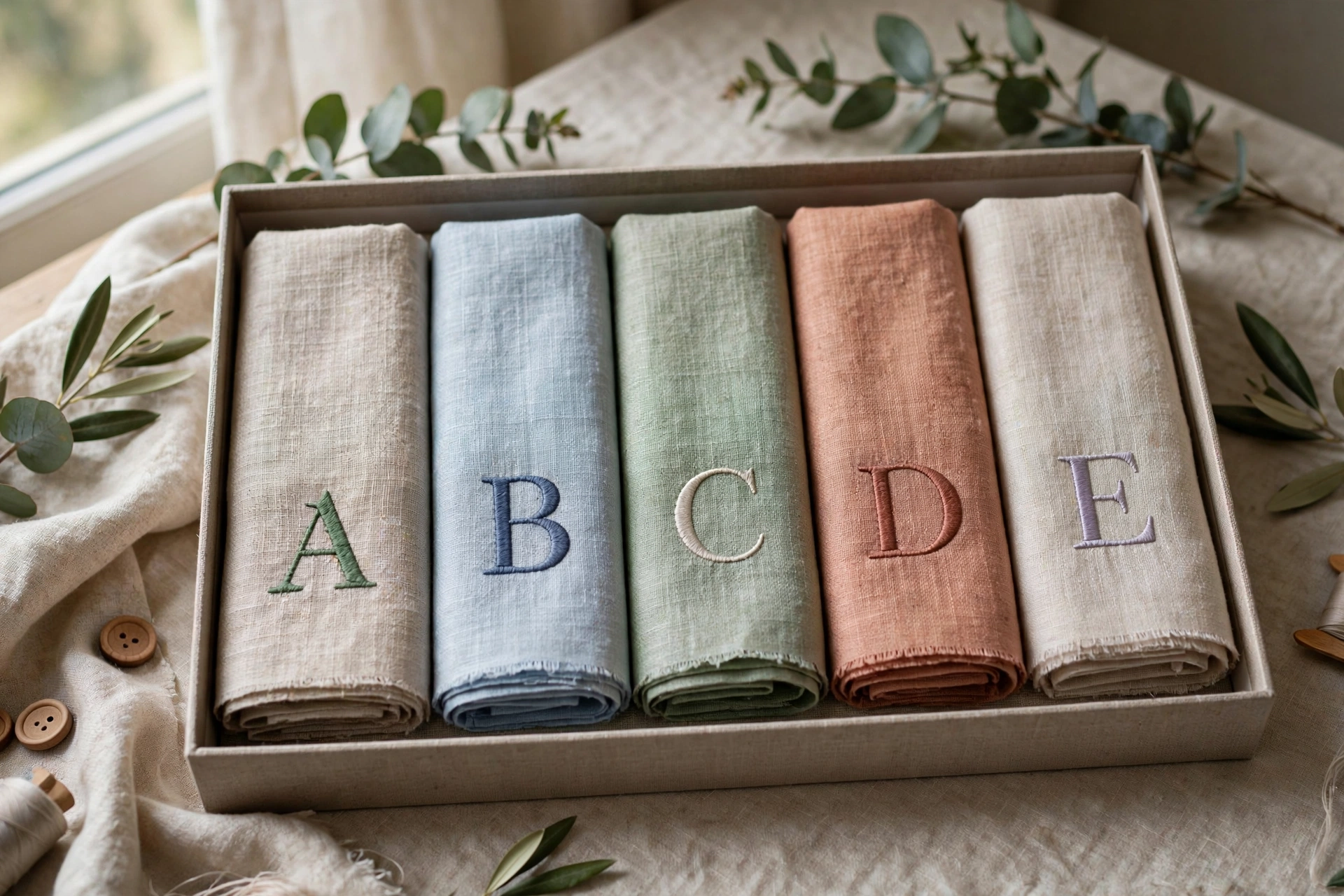
Start with the monogrammed napkin or the desk hoop. Both teach the backstitch lettering that unlocks every other project on this list, both finish in an afternoon, and both are gifts people actually keep. Personalized stitching is the highest form of the craft, not because it is the hardest, but because it says, in thread, that this person matters enough to stitch their name. That never goes out of style.