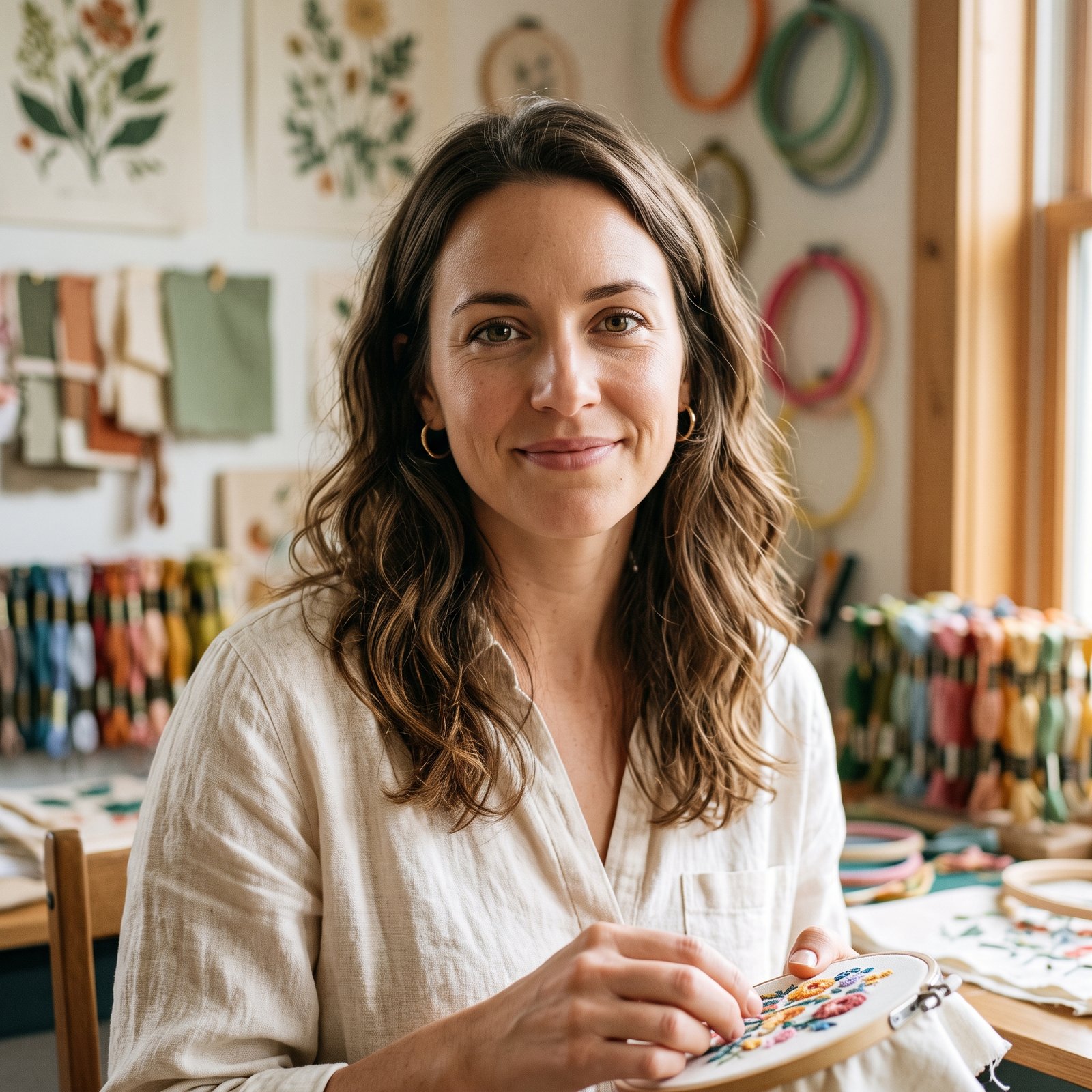
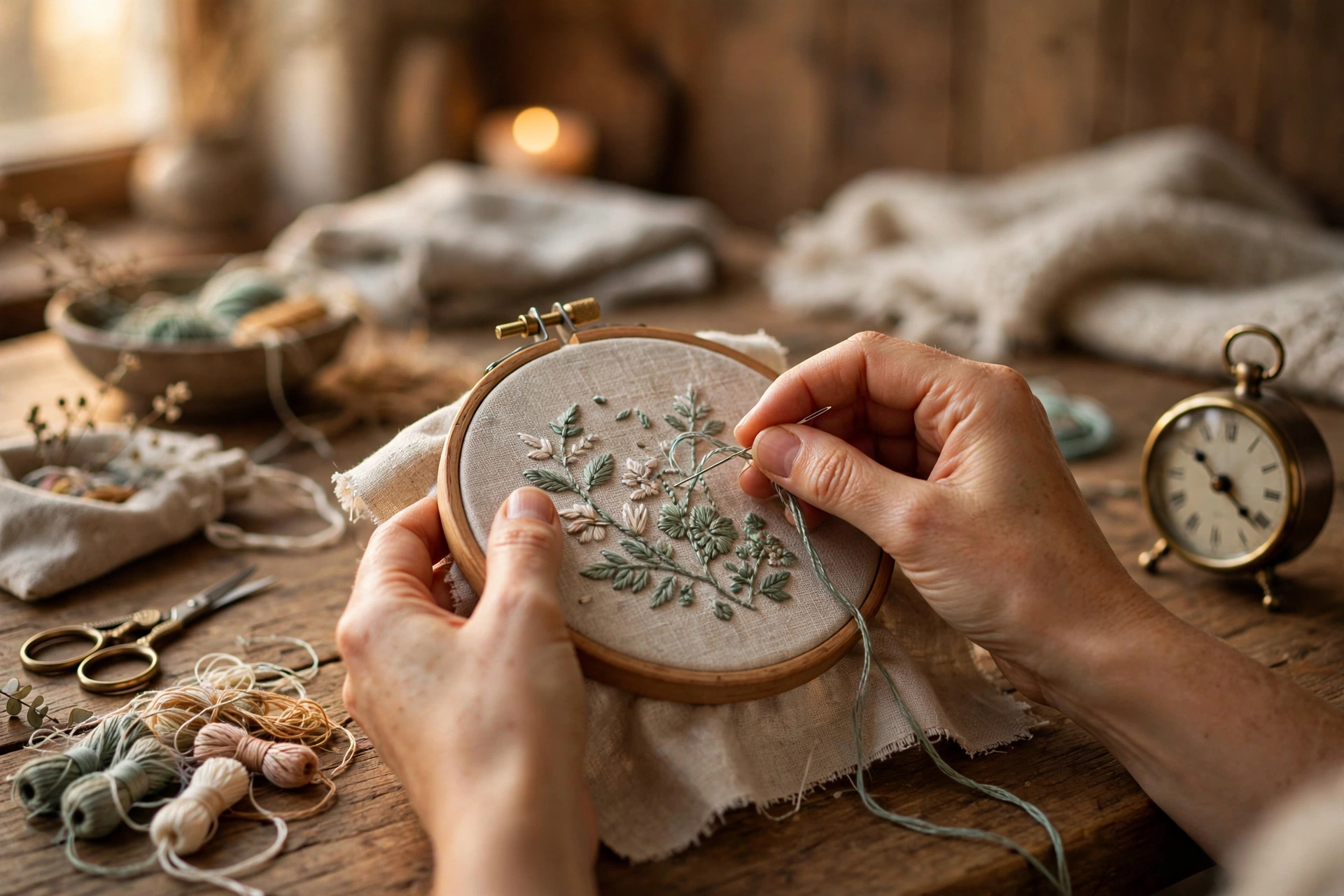
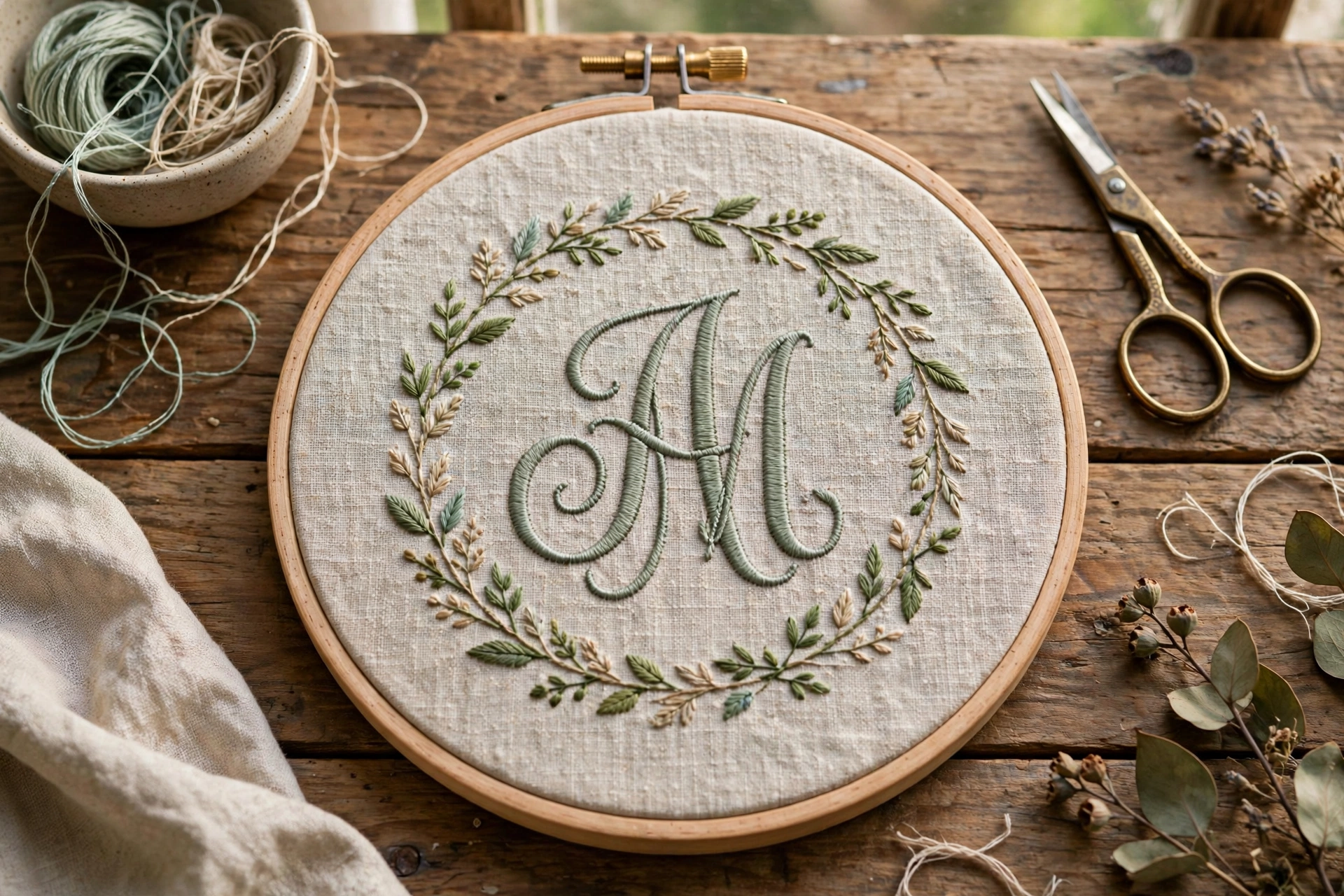
In the first November of my stitching life, I decided to embroider my sister-in-law’s initials on a four-inch hoop as a Christmas gift. Two letters. Backstitch. DMC 310, black, on natural linen. The simplest design a person can make. I started on November 2nd at 8 pm, half-watching a cooking show, fully confident I’d be done by the weekend. I finished at 11:40 pm on December 21st, three days before I had to wrap it. Total stitching time, by my extremely embarrassed count: about six and a half hours, spread across seven weeks of evenings. So how long does hand embroidery take? Longer than you think, shorter than you fear, and wildly dependent on about six variables. Here’s the realistic version, with my own logged hours and the math I wish someone had shown me at the start.
How long does hand embroidery take? The honest short answer
A small simple motif, like a monogram or a single flower: three to six hours. A typical five or six-inch hoop art piece with a few elements: ten to twenty hours. A big statement piece, like a jacket back or a heavily filled hoop: thirty to sixty hours, sometimes more. Those are steady-stitcher numbers. If you’re in your first month, multiply by one and a half to two, because everything is slower while your hands learn the movements. The good news: embroidery time is honest time. There are no drying stages, no kiln firings, no waiting on anything but yourself. It’s just you, a needle, and arithmetic. If you’re brand new and want the gentlest possible on-ramp, my beginner’s starting guide covers the first practice session that makes everything after it faster.
What actually changes the clock
Six things decide whether your project takes an evening or a season. First, stitch type. Backstitch is the speedster: once I’m warmed up I land a stitch every four to six seconds, roughly 600 to 800 stitches an hour. Stem stitch is close behind. Satin stitch is slower, maybe 200 to 300 stitches an hour, because each stitch gets placed, nudged, and judged. French knots are the divas: twenty to thirty seconds each when you’re new, ten to fifteen once they’re automatic. If you want a feel for the fastest stitch in the lineup, the backstitch guide is the one I’d start with. Second, coverage. Outlines are fast; fills are not. A filled shape takes five to ten times longer than its outline, because you’re laying hundreds of stitches where a dozen would do. Third, size. Time scales with area, and area scales with the square of the diameter, so a six-inch hoop holds more than twice the stitching area of a four-inch hoop. Fourth, fabric. Evenweave is fast and predictable. Linen with slubs makes you slow down and think about every needle placement. Dark fabric you can’t see your transfer marks on adds pure fumbling time. Fifth, thread changes. Every color change costs a minute or two: cut, thread, anchor, trim the tail. A design with forty color changes quietly loses over an hour to admin. Sixth, frogging. Beginners rip out fifteen to twenty-five percent of their stitches. I logged it once on a floral wreath: one hour in every five was un-stitching, not stitching.
Real project times from my stitching log
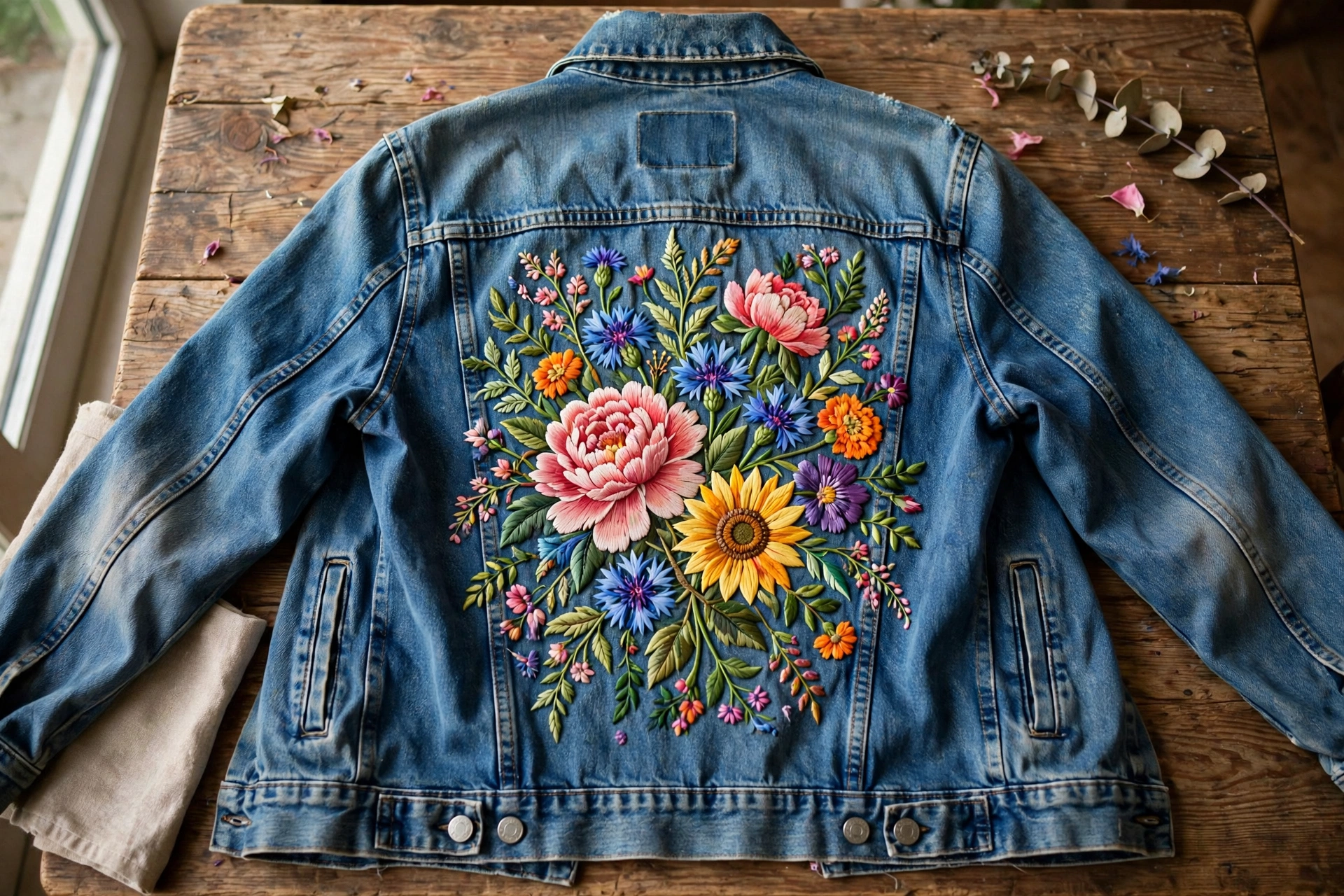
I started timing myself in my second year, partly from curiosity and partly so I’d stop lying to myself about Christmas deadlines. These are real numbers from my own hoop. A four-inch monogram hoop, two letters in backstitch, DMC 310 on linen: 6.5 hours over seven weeks of evenings. A five-inch single rose, satin stitch petals with a French knot center, about 400 stitches total: 9 hours, and the petals alone ate six of those. A six-inch hoop art piece, the word “home” in backstitch plus three small flowers: 14 hours across two weeks. A baby name banner, eight letters in stem stitch on linen: 11 hours, because lettering is slow. Every curve gets scrutinized and every wobble gets frogged. A tote bag with an eight-inch floral spray, mixed stitches, roughly 3,000 stitches: 22 hours over a month of evenings. And the famous denim jacket back panel: I abandoned it at 18 hours, about two-thirds done, and it lives in a drawer now as a monument to ambition. If you’re hunting for a first project in the sane range, the hoop art tutorial lands right in that sweet ten-to-fifteen-hour spot.
The per-stitch math nobody shows you
Here’s the estimation method that actually works: the fifteen-minute timed swatch. Pick the stitches your design uses, stitch a small test patch for exactly fifteen minutes, and count the stitches. Now you have your personal speed for that stitch mix. Example from my log: a five-inch floral hoop in mixed stitches. My swatch produced 96 stitches in fifteen minutes, which is 384 an hour. The design had roughly 12 square inches of actual stitching at about 96 stitches per square inch, so around 1,150 stitches total. That’s three hours of pure stitching. Add setup, thread changes, and a beginner’s frogging buffer, and I estimated five hours. Actual logged time: five and a half. The swatch method works because it measures your hands, not some idealized stitcher from a video. The formula: timed stitches per hour, times your estimated stitch count, plus twenty percent for frogging if you’re under a year in. Estimating stitch count gets easier with practice, but a decent shortcut is measuring your design’s stitch lines in inches and multiplying by stitches per inch: about eight per inch for backstitch at normal scale, twelve to fifteen per inch of width for satin fill. I wrote a full guide on this here: How to Start Hand Embroidery for Beginners (Step-by-Step Guide).
Why beginners are slower, and exactly when it clicks
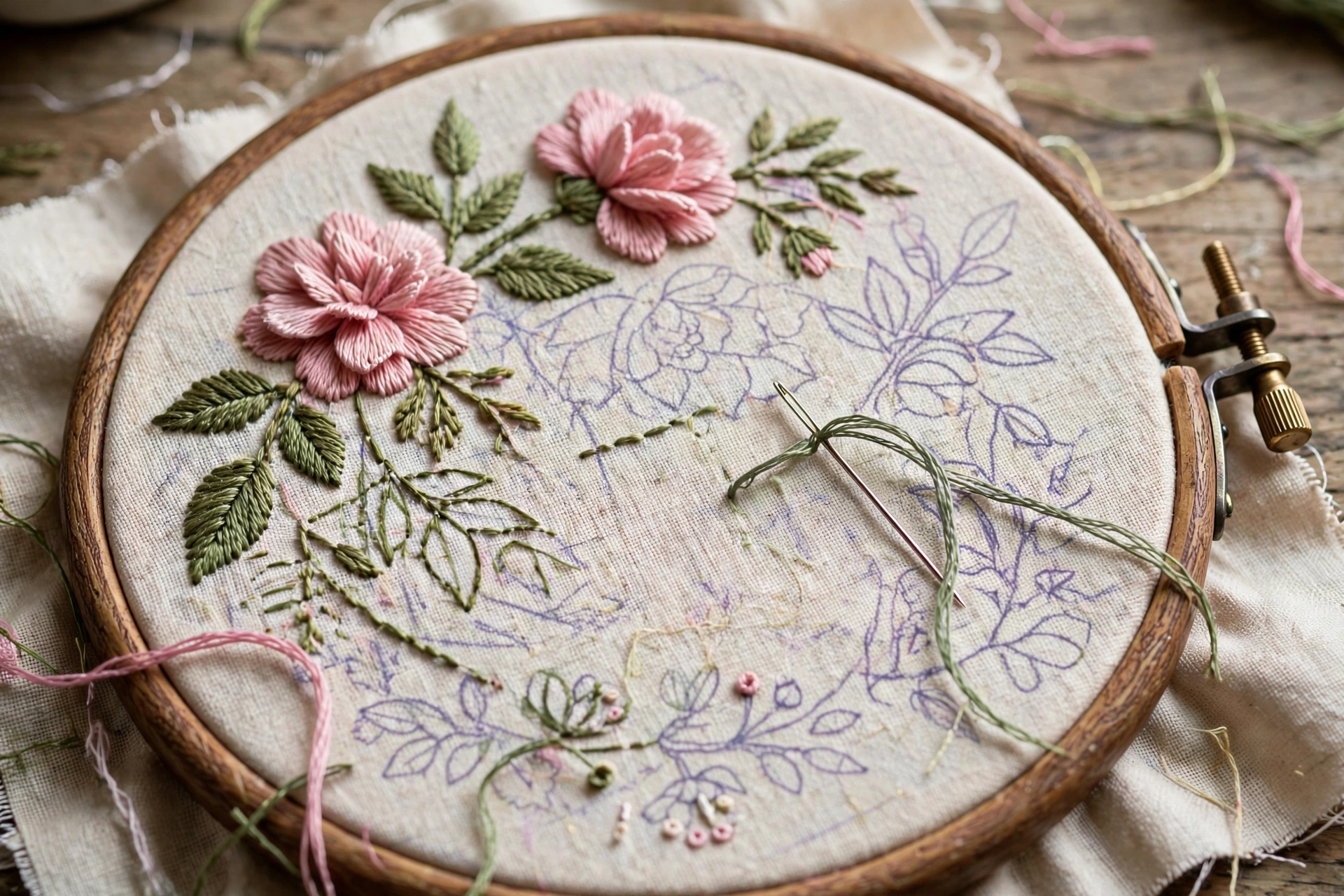
The first ten hours are the slowest of your stitching life. Threading the needle takes a full minute. You check your tension after every stitch. You read the design, then the fabric, then the design again. Somewhere around hours ten to twenty, rhythm shows up uninvited. Backstitch goes automatic. You stop holding your breath on French knots. My knots went from forty-five seconds each to about fifteen around hour eighteen, and I remember the evening it happened because I laughed out loud. The three biggest beginner time sinks are rethreading after tangles, frogging wobbly sections, and decision paralysis over color placement. All three shrink with practice, and none of them mean you’re bad at this. Nobody stays slow. Your hands learn the movements whether you want them to or not, the same way your fingers learned a phone keyboard.
What a real stitching week looks like
Hours on paper mean nothing until they meet your calendar, so here’s how my logged projects actually played out in real weeks. The 14-hour “home” hoop: I stitched about 45 minutes on weeknights while watching shows, five nights a week, so roughly 3.75 hours a week, finished in just under four weeks. The 22-hour tote bag: two longer Sunday sessions of two hours each plus three short weeknights, about 5.5 hours a week, done in exactly four weeks. The 9-hour rose: I did it in one obsessed week, two hours a night for four nights plus a Sunday afternoon, because small projects have momentum and I physically couldn’t put it down. Notice the pattern. Almost nothing gets finished in heroic single sittings. Embroidery happens in the cracks, one episode of television at a time. A realistic week for most people is two to four hours, which means a 15-hour project is a month of evenings and a 30-hour project is two months of them. Plan with that math, not the fantasy version where you stitch eight hours on a Saturday. Saturdays have laundry, and your back will file a complaint by hour three anyway. The other thing nobody mentions: stitching speed isn’t constant across a session. My first twenty minutes are slow while my hands warm up, the middle hour is my fastest, and the last half hour gets sloppy enough that I sometimes frog it the next day. Two focused hours beat four tired ones, every time.
How to estimate your own project without lying to yourself
Step one: measure the design area in square inches of actual stitching, not the hoop size. A six-inch hoop with a small motif in the middle is a small project wearing a big hoop. Step two: identify your stitch mix. Mostly outlines? Mostly fills? Mixed? Fills change everything. Step three: stitch a fifteen-minute timed swatch in those exact stitches and count. Step four: do the math, then multiply by 1.5. This is the rule, and it’s non-negotiable. Your first estimate is always optimistic because it doesn’t include thread changes, frogging, or the evening you just sit and stare at it deciding on the leaf color. Step five: put it on the calendar. Divide the hours by your realistic sessions per week. Three hours a week means a fifteen-hour project takes five weeks. Start Christmas gifts in October. I’m serious about this. If you need ideas sized for a sane first timeline, the easy project ideas list is sorted with beginners and their calendars in mind.
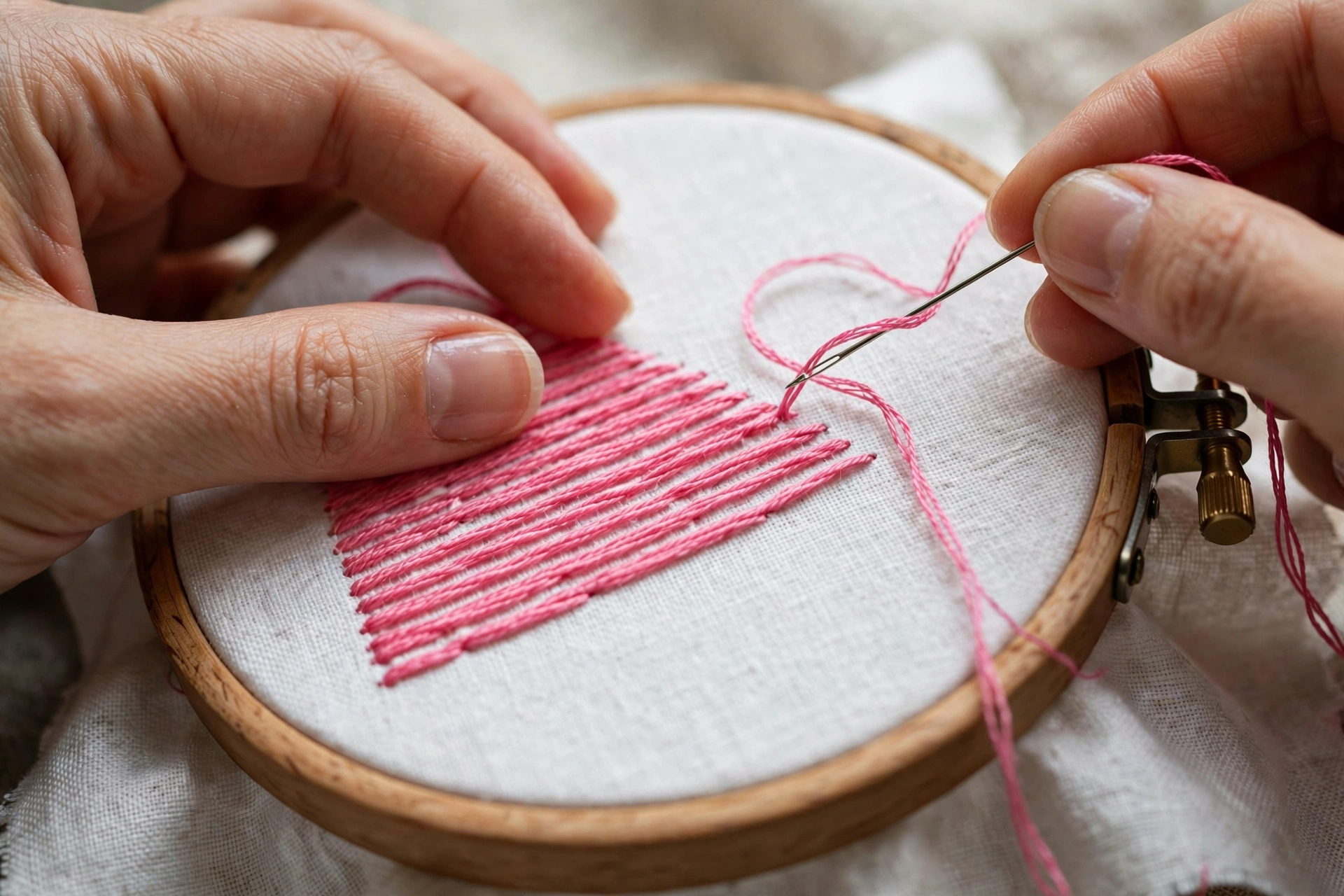
Hand embroidery is slow the way a walk is slow. That’s the point, and it’s also completely irrelevant to your gift deadline. Do the swatch, multiply by one and a half, and start earlier than feels necessary. Future you, the one wrapping presents on December 21st at 11:40 pm, says thanks.