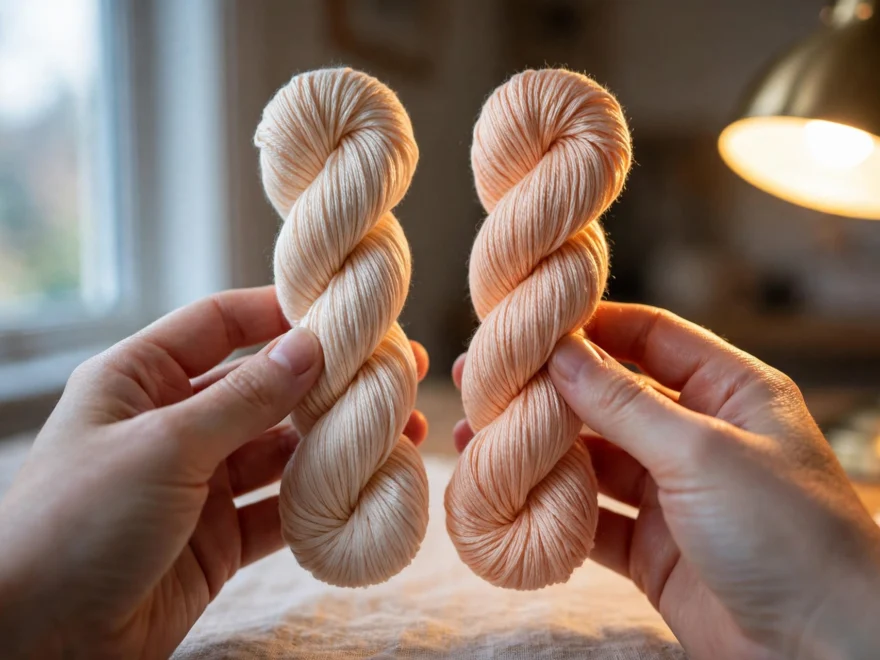
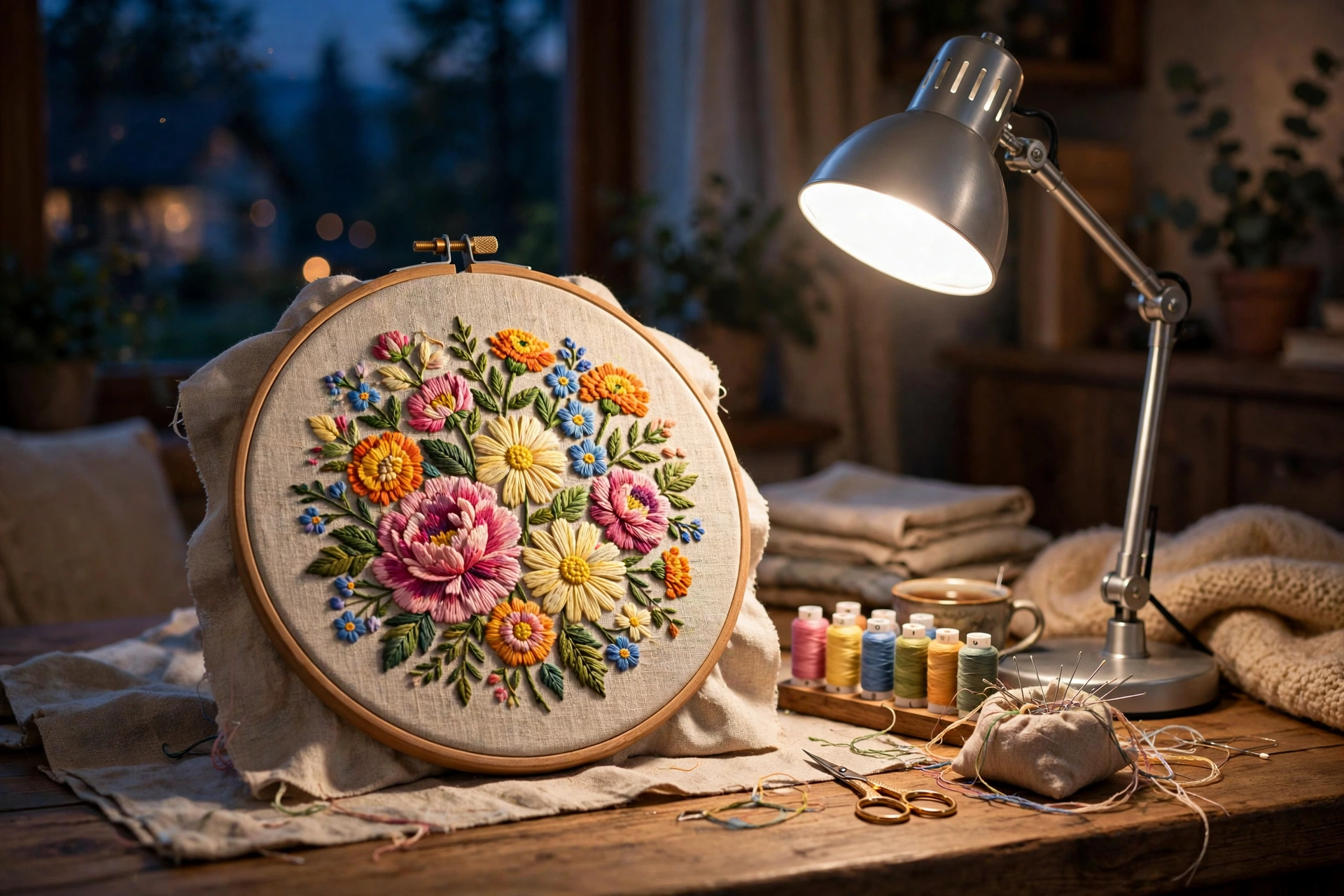
I stitched an entire floral border in what I believed was dusty rose. Under my living room lamp it was perfect, soft and pink and exactly right. Next morning I carried the hoop to the window and the dusty rose was plainly, unmistakably brown. That was my introduction to the daylight vs warm light problem, and it changed how I choose colors forever. Light does not just help you see your stitches. It decides what color you think you are using.
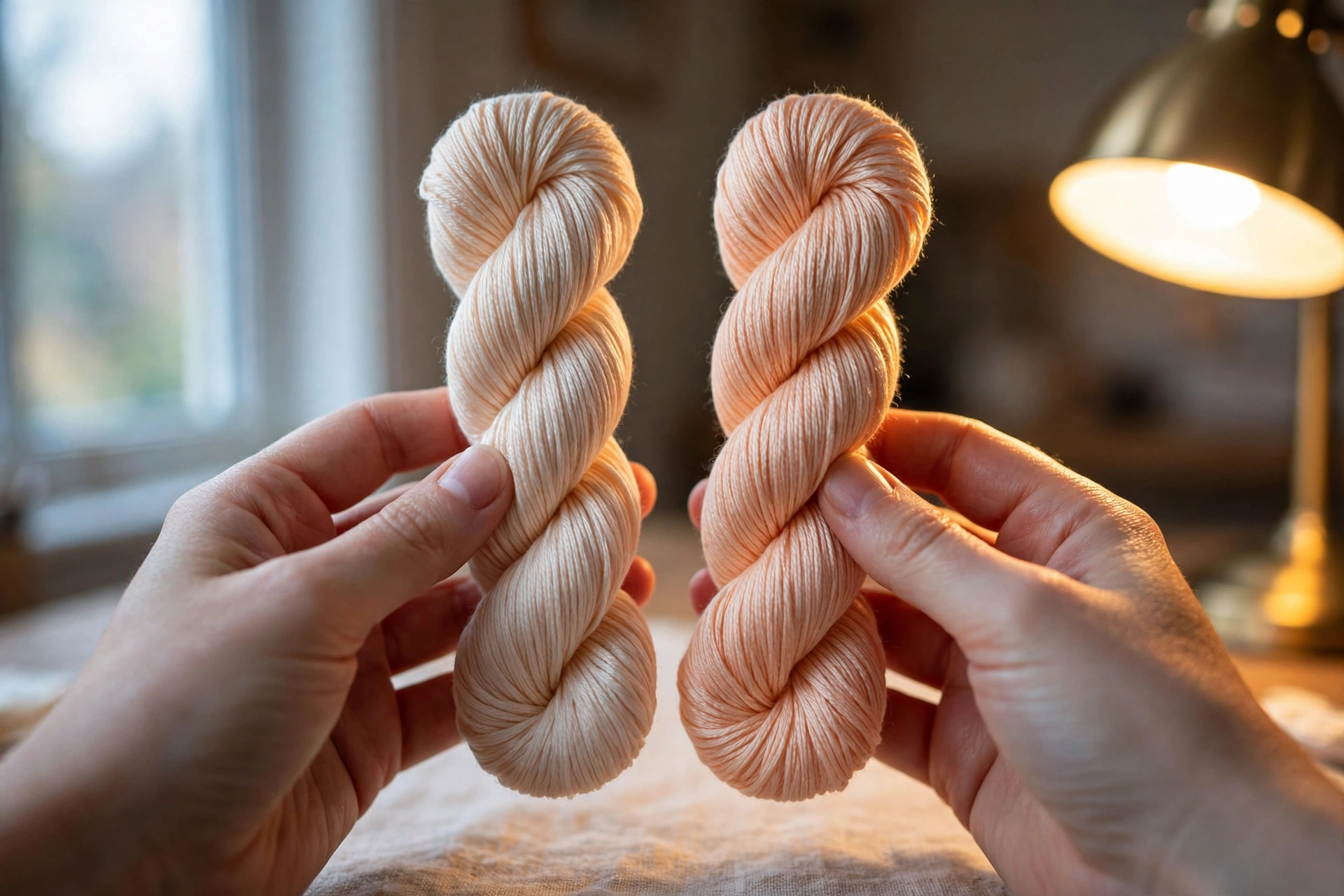
Here is the whole thing in plain terms: why light shifts thread color, which light tells the truth, and how to set up lighting you can trust, even if, like me, you do most of your stitching after dark.
Your Lamp Is Lying to You
Every bulb has a color temperature, measured in Kelvin. Around 2700K looks warm and yellow, like candlelight. Around 6500K looks cool and bluish-white, like an overcast noon sky. Your eyes adapt to the room automatically, so the red still looks red under warm light. It is just a yellower, duller red than the color card promised, and the shift is invisible while you work and shocking when you compare later.
Blues and purples suffer most. Navy reads as black. Violet slides toward brown. And subtle shade differences between similar colors, the whole reason you bought five pinks, disappear entirely. Warm light is cozy and it is what most of us own. It is fine for stitching. It is dangerous for choosing colors.
Daylight vs Warm Light: The Verdict
Daylight wins, and it is not close. It is the reference every thread manufacturer uses, so what you see matches the color card. It is also the easiest light on your eyes for long sessions. The catch: it moves. Morning light runs cool, late afternoon goes golden, and winter evenings remove it from the equation entirely.
So here is the rule I actually live by: decide colors in daylight, stitch under whatever you like. Ten minutes of honest light for the palette, then back to the cozy lamp for the three-hour session. You get the truth where it matters and the comfort where it counts.
The Colors That Lie Most
Not all shades shift equally, and knowing the worst offenders saves you from learning the dusty-rose lesson firsthand.
- Blues: navy reads as black under warm light, and medium blues dull down toward gray. If your night sky looks like a black hole, check it at noon before you rip anything out.
- Purples and violets: the biggest liars in the box. Violet slides toward brown, lavender turns gray. I no longer trust any purple chosen after sunset, as a rule.
- Reds and pinks: warm light flatters them, which is exactly the problem. Everything looks richer and warmer than it really is. Dusty rose becomes brown. Ask me how I know.
- Whites and creams: white looks cream, cream looks tan. If your snow scene is yellowing, it is the bulb, not the floss.
- Greens: sage and olive drift toward khaki. Bright greens survive better, but the subtle ones do not stand a chance.
The pattern is consistent: warm light steals the cool end of the spectrum and gilds the warm end. Once you have watched it happen on your own test card, you will never unsee it.
The Windowsill Test
Twenty minutes, and you will never trust a bulb blindly again:
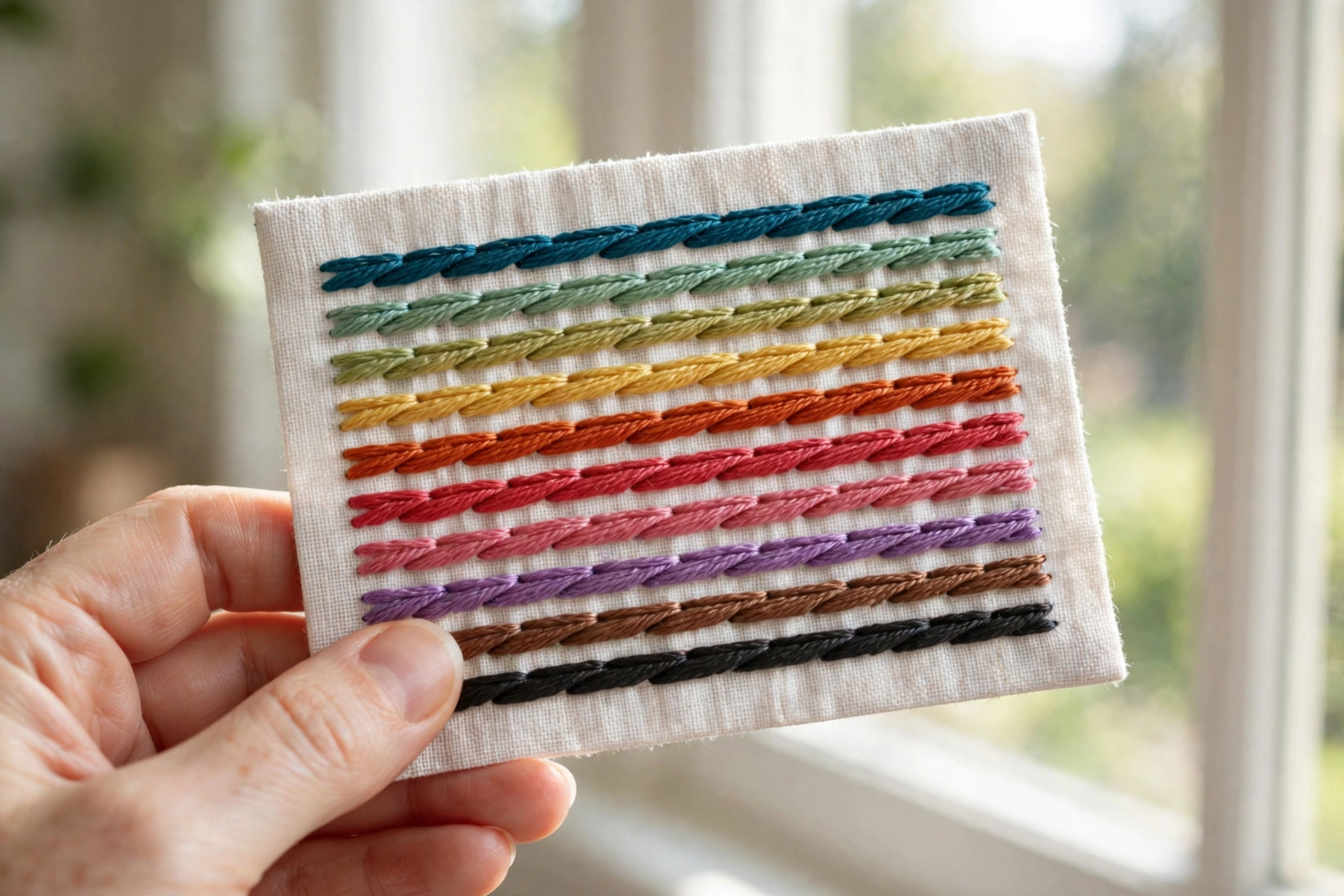
- Stitch a test card. One row of satin stitch in each of your five most-used colors on white fabric. Keep it forever. It becomes your reference for every lamp and every room you ever stitch in.
- View it in three lights. Morning window, evening lamp, overcast outdoors. Note which colors shift and by how much. Most stitchers are stunned by this step. I was, and I already knew the theory.
- Do the white paper test. Hold plain white paper under your lamp. If it looks cream instead of white, your bulb is too warm for color work. Swap it for a daylight LED in the 5000 to 6500K range. That Kelvin number on the box is doing more for your stitching than any gadget will.
What I Actually Stitch Under
Clamp lamp, zero footprint, 5000K LED bulb, 800 lumens, positioned over my left shoulder since I am right-handed. Total cost was under thirty dollars. For color decisions I carry the floss to the window at noon like a small ritual. If you buy one upgrade, make it a lamp with adjustable color temperature: daylight mode for choosing palettes, warm mode for relaxed evening stitching. Best of both, one purchase.
One more place this matters: your workspace lamp placement, which is the difference between even light and one side of the hoop living in shadow. And when you are choosing from the card itself, read it in daylight too. Cards lie under warm bulbs just like skeins do. Even pulling bobbins from your box deserves the window test before you commit to a shade.
The Takeaway
Ten minutes of honest light saves a border of brown roses. Dusty rose. Brown. Never again.
One comment