You spent hours stitching that beautiful design onto your favorite shirt or jacket. The last thing you want is for one careless laundry day to fade the colors, fray the threads, or pucker the fabric. The good news is that embroidered clothes are not fragile museum pieces. With a few simple habits, you can wash and wear them normally for years while keeping the embroidery looking fresh.
This guide covers everything: the golden rules that protect every embroidered garment, water temperature and detergent choices, when to hand wash versus machine wash, how to dry and iron safely, and how often you really need to wash. Treat this as your laundry reference for every embroidered piece you own or make.
The Golden Rules (Read These First)
If you remember nothing else, remember these five habits. They prevent the vast majority of laundry damage to embroidery:
- Always turn embroidered garments inside out before washing. This single habit protects the stitching from rubbing against other clothes, the machine drum, and zippers.
- Wash in cool water. Cool water is gentler on thread dyes and on the fabric, and it reduces shrinkage that can distort embroidery.
- Use a gentle cycle. Delicate or gentle settings mean less agitation, less friction, and less stress on your stitches.
- Skip harsh chemicals. No bleach, no harsh stain removers on or near the embroidery, and no fabric softener directly on stitched areas if you can avoid it.
- Never wring embroidered fabric. Twisting squeezes and distorts stitches. Press water out gently instead.
Water Temperature: Cool Is King
Cool or cold water, around 30 degrees Celsius or 85 degrees Fahrenheit and below, is the safest choice for embroidered clothes. Cool water keeps thread dyes locked in, minimizes fabric shrinkage, and is gentle on both cotton and synthetic threads. Warm water is acceptable for sturdy garments like denim jackets with colorfast thread, but hot water is asking for trouble: it accelerates dye bleeding, increases shrinkage, and can weaken some threads over time.
There is one exception worth knowing. If you used wash-away stabilizer or a water-soluble transfer pen and have not yet rinsed the garment, follow the product’s temperature directions for that first rinse, since some wash-away products need lukewarm water to dissolve fully. After that first rinse, cool water becomes the default.
Choosing the Right Detergent
Not all detergents treat embroidery equally. The best choice is a mild, color-safe liquid detergent without bleach, optical brighteners, or harsh enzymes. Detergents marketed as gentle, for delicates, or for colors are all good options. Liquid dissolves more completely than powder, which matters because undissolved powder granules can lodge in stitching and leave residue.
What to avoid: chlorine bleach, which weakens and discolors thread; oxygen bleach used carelessly on delicate embroidery (it is gentler than chlorine but can still fade some threads with repeated use); and harsh stain pretreatments applied directly onto stitched areas. If you need to treat a stain near embroidery, apply the treatment to the fabric around the stitches, work gently, and rinse promptly. For vintage or heirloom embroidery, consider a specialty textile wash designed for delicate fibers.
Use the right amount of detergent, not extra. More soap does not mean cleaner; it means more residue trapped in dense stitching, which can stiffen the embroidery and attract dirt faster. A normal measured dose is plenty.
Hand Washing vs Machine Washing
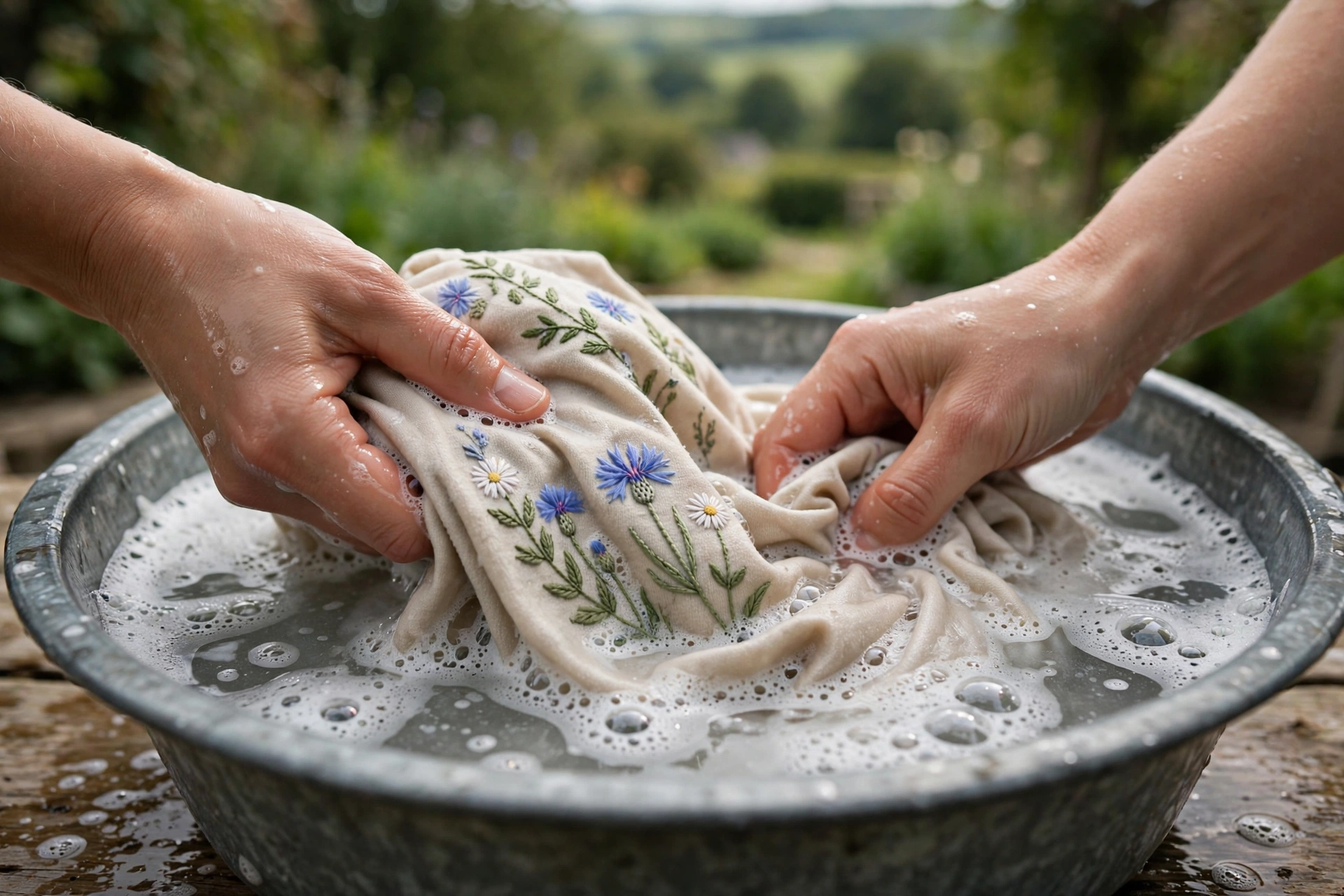
Hand washing is the gentlest option and the one I recommend for anything precious: heirloom pieces, very dense or delicate embroidery, beads or specialty threads, and garments you simply love too much to risk. Fill a clean basin with cool water and a small amount of mild detergent. Submerge the garment inside out, gently squeeze the soapy water through the fabric, and let it soak for 10 to 15 minutes. Rub stains lightly with your fingers, never scrub the embroidery itself. Rinse in clean cool water until no soap remains, then press the water out by rolling the garment in a clean towel. Never twist or wring.
Machine washing is perfectly fine for everyday embroidered clothes, like t-shirts, sweatshirts, and denim jackets, as long as you follow the rules: inside out, cool water, gentle or delicate cycle, mild detergent, and ideally a mesh laundry bag for extra protection. A mesh bag keeps the garment from tangling with other items and reduces friction on the embroidery. Wash embroidered items with similar colors and avoid washing them with heavy items like jeans with exposed zippers or anything with Velcro, which can snag threads.
A practical rule of thumb: if the embroidery is flat, sturdy, and made with standard cotton floss on a durable garment, the machine is fine. If the piece has raised or textured stitches, metallic thread, beads, or delicate fabric, hand wash it. When in doubt, hand wash. It takes ten minutes and buys complete peace of mind.
Drying: Where Most Damage Happens
Here is an uncomfortable truth: the dryer damages more embroidery than the washer does. High heat, tumbling, and friction are a brutal combination for thread. The safest drying method is to reshape the garment and lay it flat or hang it to air dry, away from direct sunlight, which fades thread colors over time.
For knit garments like embroidered t-shirts, laying flat is best because hanging a wet knit can stretch it out of shape, pulling at the embroidery. Smooth the embroidered area flat with your hands while damp so it dries in perfect shape. For denim jackets and other structured garments, hanging on a sturdy hanger is fine; just make sure the embroidered area lies smooth.
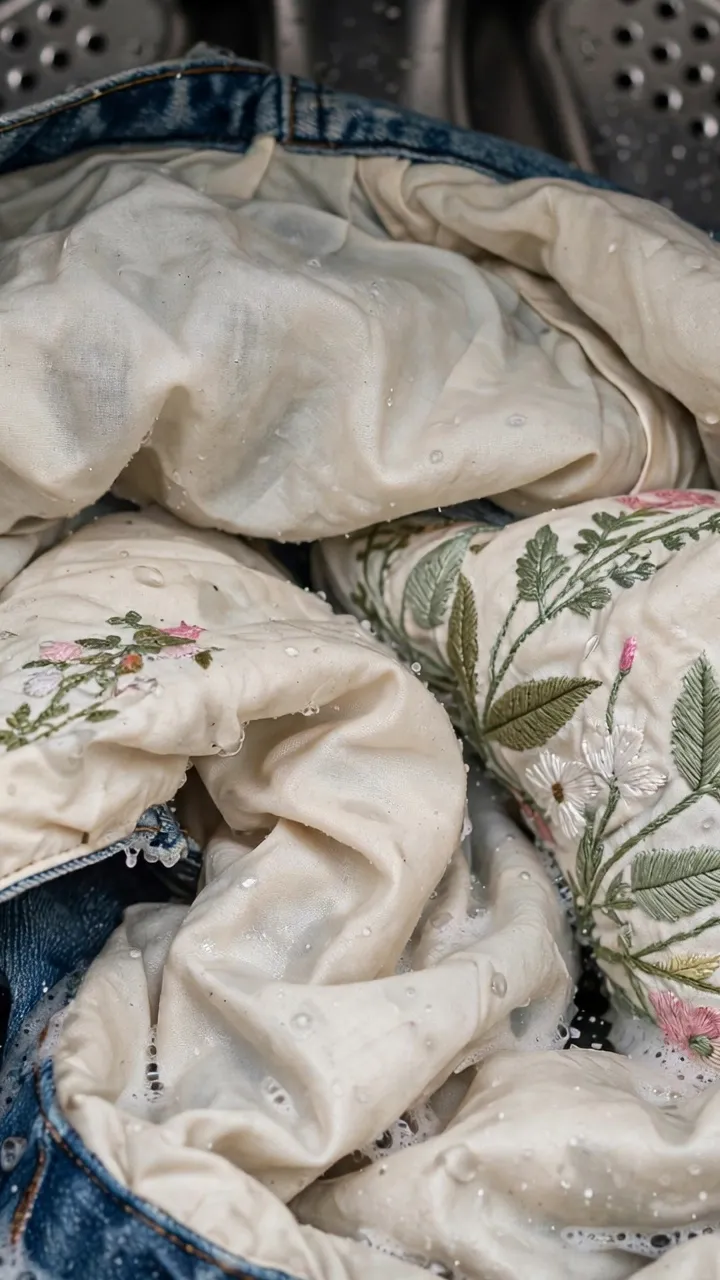
If you must use a dryer, choose low heat or air fluff, keep the garment inside out and in a mesh bag, and remove it while still slightly damp to finish air drying. Never use high heat on embroidered clothes. And never put a garment with wash-away stabilizer residue or transfer pen marks into a hot dryer before rinsing, because heat can set those marks permanently.
Ironing Around Embroidery
Ironing is safe as long as you protect the stitches. The rules are simple:
- Always iron from the wrong side when pressing over embroidered areas. The stitches stay protected underneath.
- Use a pressing cloth between the iron and the fabric for extra safety, especially on delicate threads.
- Use moderate heat appropriate for the fabric. High heat can scorch cotton thread and melt synthetic threads.
- Press, do not slide. Lift and press the iron rather than dragging it, which can distort stitches.
- Never iron directly on metallic thread, beads, or sequins. Iron around them from the wrong side only.
- For textured stitches like French knots, press from the wrong side with a thick towel underneath so the knots sink into the towel instead of being flattened.
A garment steamer is a wonderful alternative for embroidered clothes. Steam relaxes wrinkles without pressing anything flat, so your textured stitches keep their lovely dimension. Hold the steamer a few inches away and let the steam do the work.
How Often Should You Wash Embroidered Clothes?
Less often than you think. Every wash, no matter how gentle, causes a little wear. Embroidered garments that are not visibly dirty or smelly often just need airing out. Hang the garment in fresh air for a few hours and it will be fine to wear again. This is especially true for jackets, sweatshirts, and decorative pieces.
For t-shirts and tops worn against the skin, wash when needed for hygiene, but consider whether a full wash is required or whether spot cleaning will do. A small stain can often be dabbed out with cool water and a tiny bit of mild soap without washing the whole garment. The less full laundry exposure your embroidery gets, the longer it stays vibrant.
Dealing With Problems: Bleeding, Fading, and Snags
Color bleeding: if thread dye bleeds in the wash, act fast. Do not put the garment in the dryer, because heat sets the stain. Rewash immediately in cool water, which often lifts fresh dye transfer. To prevent bleeding in the first place, always test thread colorfastness on a scrap before stitching, wash in cool water, and wash new embroidered garments separately the first time.
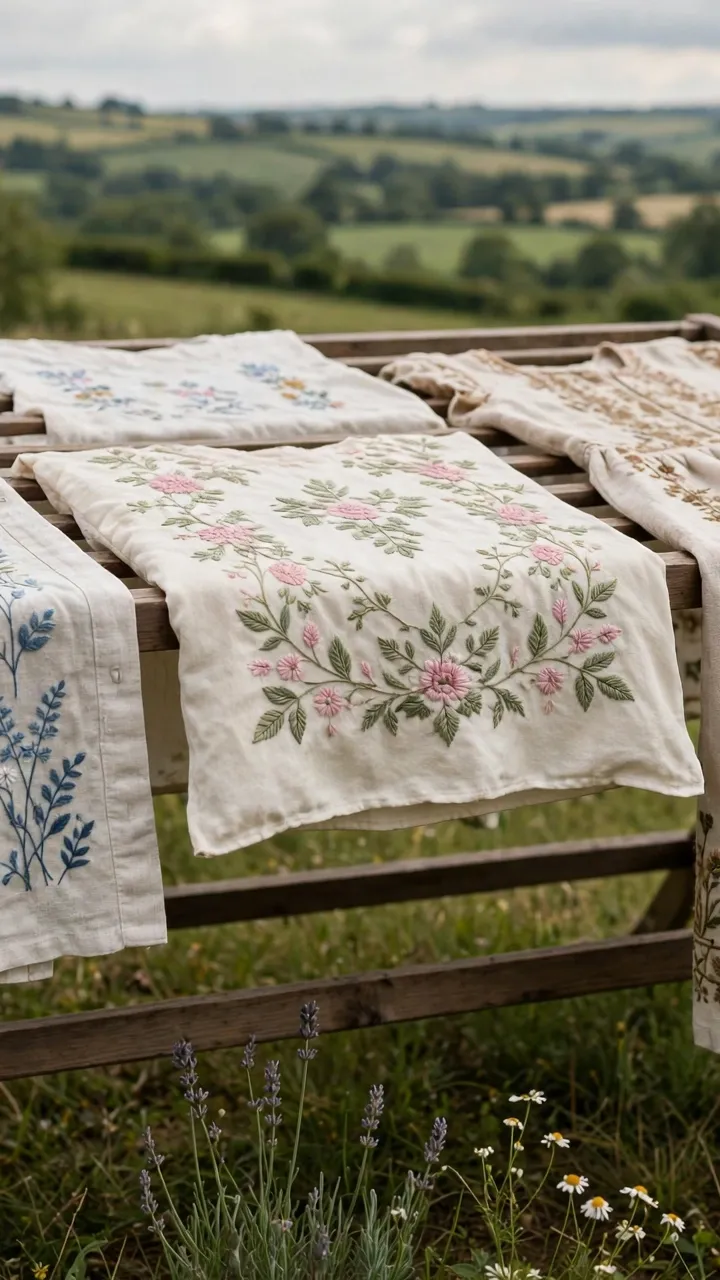
Fading: gradual fading comes from sunlight, hot water, and harsh detergents. Wash cool, dry away from direct sun, and use color-safe detergent. Some fading over years of wear is natural and part of a handmade garment’s charm.
Snagged threads: if a stitch snags, do not pull it. Use a needle to gently ease the snagged thread back into place from the wrong side, or carefully trim a loose end if it cannot be saved. For a popped stitch in an inconspicuous spot, a tiny duplicate stitch in matching thread makes an invisible repair.
Puckering after washing: mild puckering sometimes appears after the first wash as fabric and stabilizer settle. Often a careful press from the wrong side with a pressing cloth smooths it out. If puckering is severe, the cause is usually insufficient stabilization, which is a construction issue rather than a washing issue.
Storing Embroidered Clothes
Between wears, store embroidered garments clean, because body oils and invisible stains can set over time and attract pests. Fold knits rather than hanging them long-term, since hangers stretch knit shoulders and stress embroidery. For special pieces, fold with acid-free tissue paper between the folds to prevent creases across the stitching, and store in a breathable cotton bag rather than plastic, which traps moisture.
Common Mistakes to Avoid
- Washing right side out. The embroidery takes the full force of friction. Always turn inside out.
- Using hot water. It bleeds dyes and shrinks fabric. Cool water is the default.
- Using bleach or harsh stain removers on stitches. They weaken and discolor thread.
- High-heat tumble drying. The single most damaging laundry habit for embroidery.
- Wringing out water. Twisting distorts stitches permanently. Press water out in a towel instead.
- Ironing directly on the embroidery. Always press from the wrong side with a cloth.
- Drying in direct sunlight. UV fades thread colors surprisingly fast.
- Washing with zippers, Velcro, or hooks exposed. They snag threads. Fasten them or use a mesh bag.
- Overwashing. Air garments out and spot clean when you can; save full washes for when they are truly needed.
Your Stitching Deserves to Last
Hand embroidery is slow, personal work, and it deserves laundry habits that honor the effort. The routine is not complicated: inside out, cool water, gentle cycle or hand wash, mild detergent, air dry, press from the back. Five small habits, and your embroidered clothes will look beautiful through years of wear.
The next time you pull on that embroidered tee or jacket, you will know it is protected. And years from now, when the garment is soft and faded in that perfectly loved way, the embroidery will still be there, holding its color and shape, a quiet record of the hours you spent making something by hand. That is worth ten extra seconds at the laundry hamper.