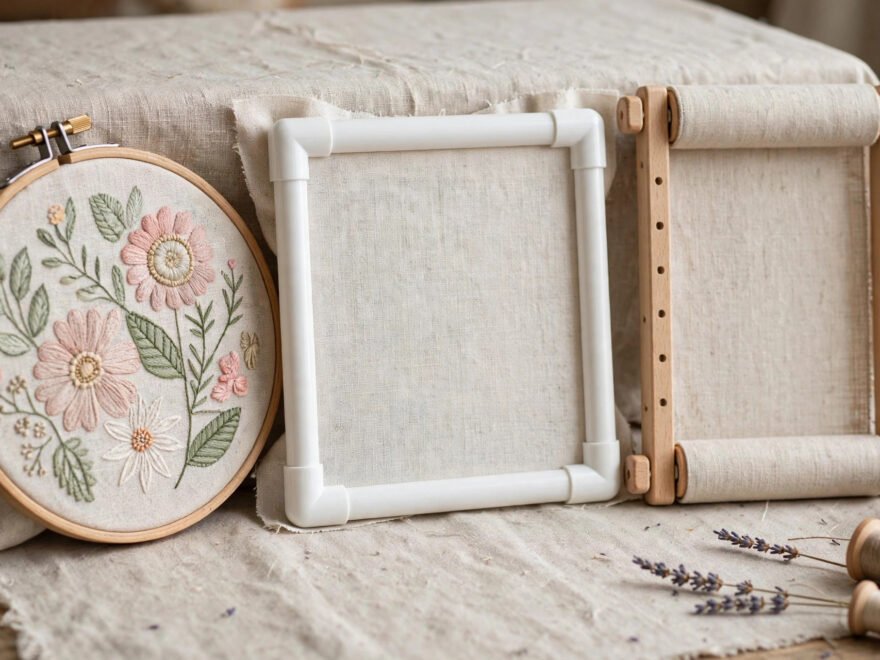
The verdict first, because life is short: buy a good 6-inch wooden hoop now, upgrade to an 8×8 Q-snap when the hobby sticks, and touch a scroll frame only when a project demands it. That is the whole embroidery frame comparison in one sentence. Everything below is the reasoning, the prices, and the mistakes I made so you do not have to.
All three do the same job, holding fabric taut. They just do it differently, and the differences show up in your shoulders, your wallet, and your finished piece.
The hoop: cheap, brilliant, slightly flawed
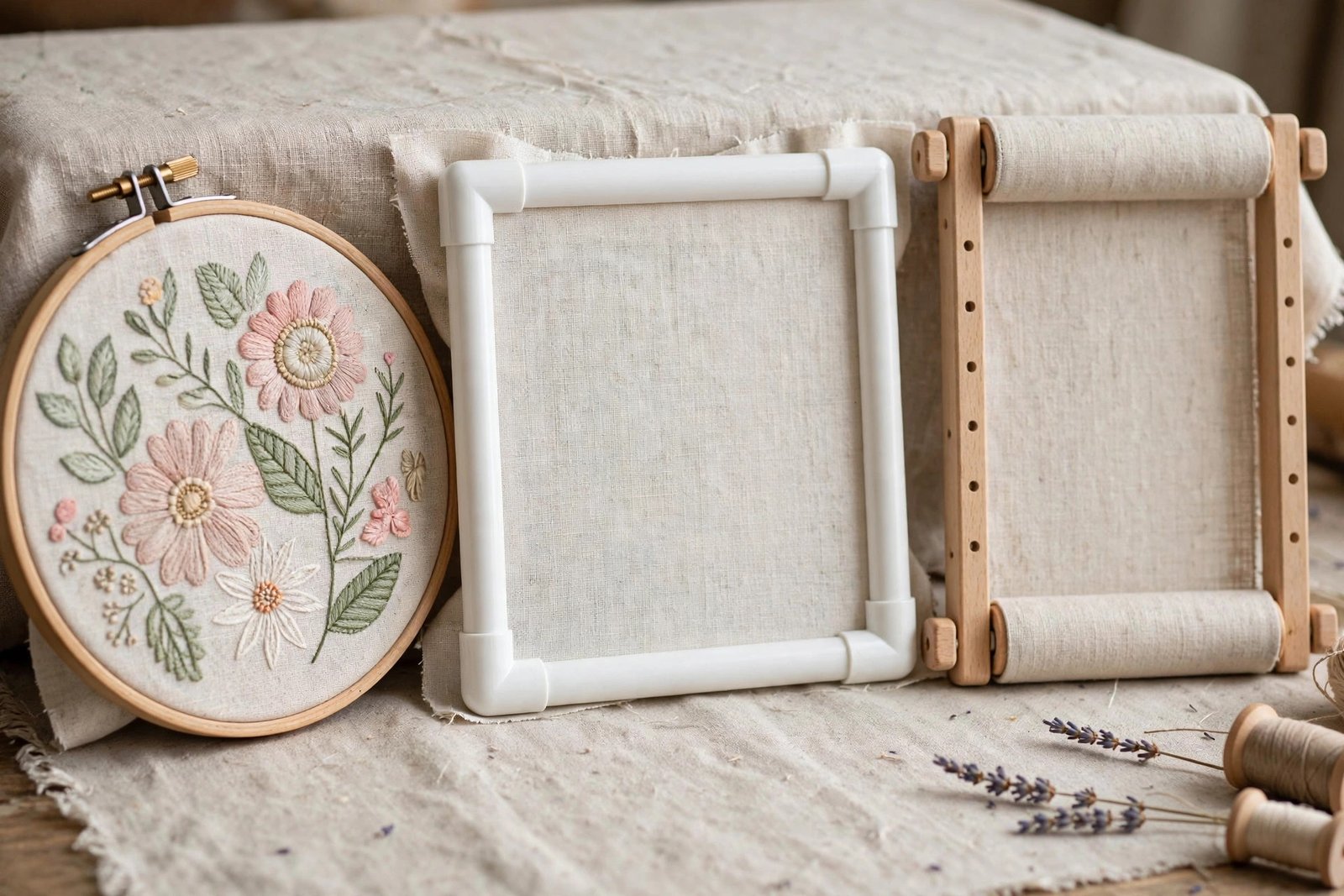
Two rings, one screw, a design older than any of us. A decent 6-inch beechwood hoop with a brass screw costs about five dollars and will outlive your interest in at least three other hobbies. It is light, it fits in a tote bag, and finished pieces can stay in it as wall art, which is why hoop art exists at all.
The flaws are real, though. The screw tightens unevenly by nature, snug near the screw, looser opposite it. Cheap hoops splinter, warp, and grow rust spots that migrate onto fabric. And hoop burn, that crushed pale ring, is a hoop-exclusive problem. I once left a piece hooped for three weeks while traveling, and the mark took two washings to release. Never again.
Still: every stitcher should own one good hoop. It is the right first purchase and the right travel companion forever.
The Q-snap: the upgrade that earns its price
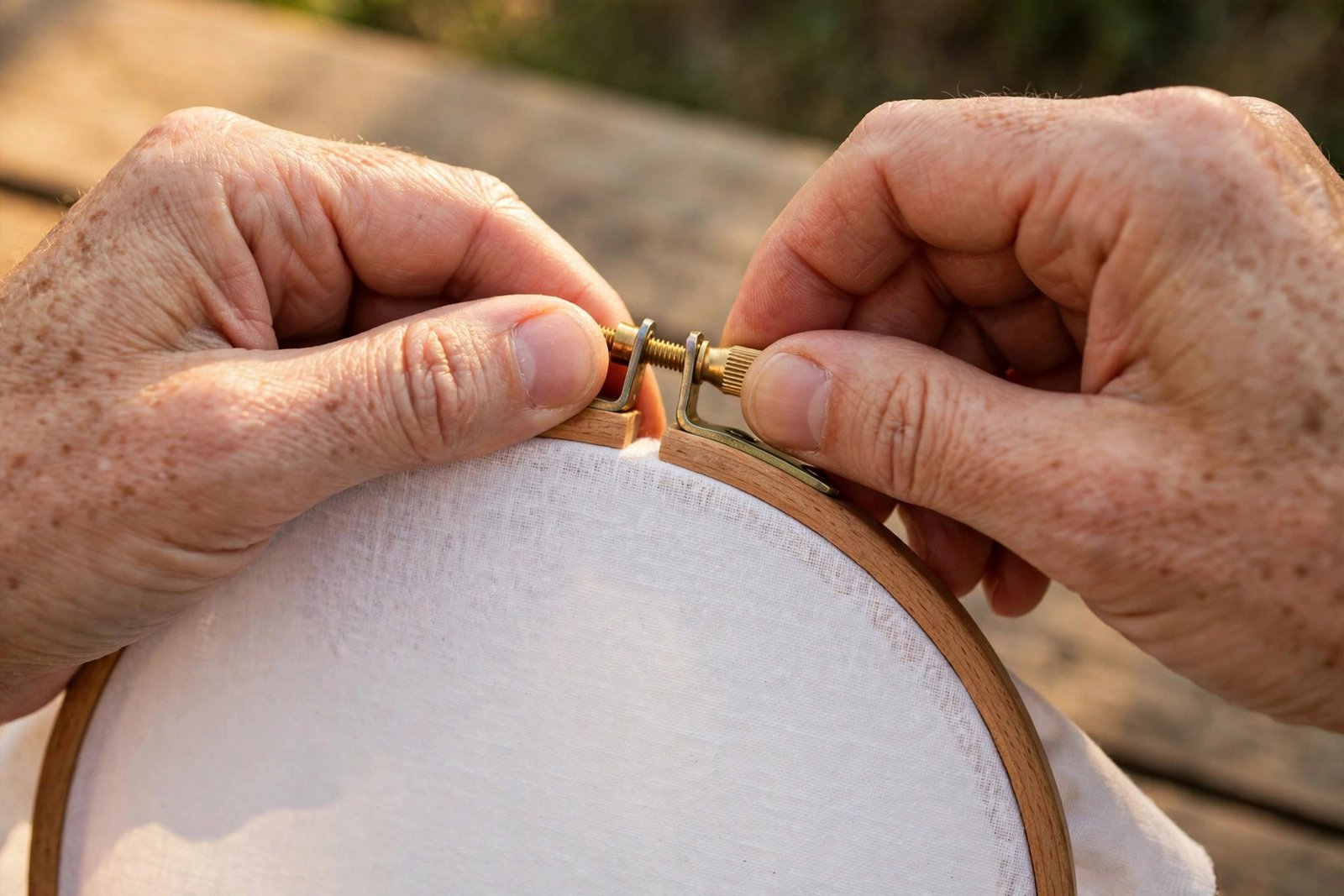
A square of PVC-style tubing with snap-on clamps gripping the fabric on four straight sides. An 8×8 inch Q-snap runs about eighteen to twenty-five dollars, roughly four times a hoop, and it is the best money I have spent on this hobby.
Tension is remarkably even because the fabric is held on four straight edges instead of pinched in a circle. No hoop burn, ever. Repositioning takes seconds: unsnap, shift, re-snap. The square shape gives you more usable area than a round hoop of similar size, and it is gentler on linen and hand-dyed fabric, which matters once you start buying the good stuff.
The honest downsides: it is bulkier than a hoop and will not slide into a jacket pocket. Brand-new clamps are stiff enough to annoy arthritic hands, though they loosen with use. And the clamps do eventually wear out and need replacing, a few dollars every couple of years.
Here is my strong take: if you stitch more than an hour at a time, the comfort difference between a hoop and a Q-snap is not subtle. Your non-dominant hand will notice within a week.
The scroll frame: wonderful, and almost certainly premature
Two rollers with fabric attached top and bottom, held apart by side bars. You roll between sections, so a huge piece stays mounted from first stitch to last with consistent tension. For a sampler you will work on for two months, nothing else compares.
Now the reality check. Mounting fabric evenly on the scrolls is a skill that takes a few tries to learn. The working window is narrow, which feels claustrophobic after the open space of a hoop. Cheap scroll frames wobble, and a wobbly frame is worse than no frame at all. And two hours into a scroll-frame session once, my right shoulder ached so badly I had to lie flat on the living room floor for twenty minutes. The frame was fine. My posture was the problem, and the frame did not forgive it.
A scroll frame is a specialist tool. Wonderful for big projects. Completely unnecessary for your first year. I will die on this hill.
Embroidery frame comparison: the differences that matter
Cost to start: hoop wins easily, about five dollars, against roughly twenty for a Q-snap and twenty-five and up for a scroll frame worth owning. Evenness of tension: Q-snap and scroll frame beat the hoop clearly. Portability: hoop by a mile, Q-snap is bag-okay, scroll frame stays home. Fabric wasted at the edges: the hoop eats about an inch all around, the scroll frame wastes the least. Learning curve: hoop is instant, Q-snap takes one session, scroll frame takes a few attempts before mounting feels natural.
The embroidery hoop has one more exclusive flaw worth naming: it is the only one of the three that can burn a ring into your fabric. If you stitch on dark or delicate cloth, that alone justifies the Q-snap upgrade.
Who should skip which
Skip the scroll frame unless you have a specific large project in mind. Skip the Q-snap if you only stitch fifteen minutes at a time on the bus; a hoop is lighter and you will not feel the comfort difference. Skip the fancy hardwood hoop sets until you know this hobby is yours. And whatever you buy, learn how to keep fabric tight first, because a badly seated Q-snap holds tension worse than a well-seated five-dollar hoop.
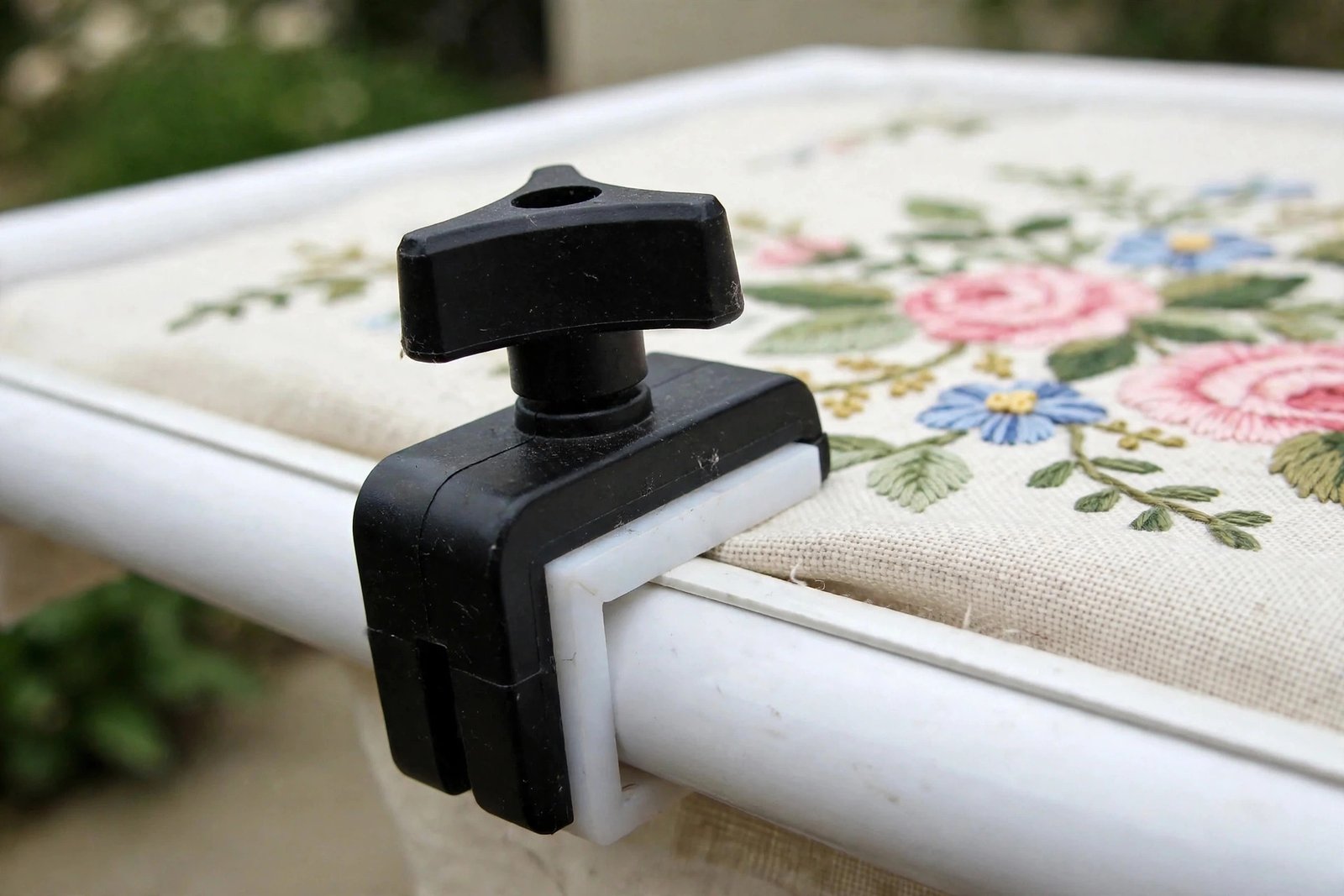
One last thing. I use all three regularly now: hoop for travel, Q-snap for daily stitching, scroll frame for the big pieces. Tools that get used are never wasted money. But buy them in that order, and only when the stitching in front of you asks for them. If you are still choosing your very first frame, start with the right hoop size and stop reading comparisons for a while.
One comment