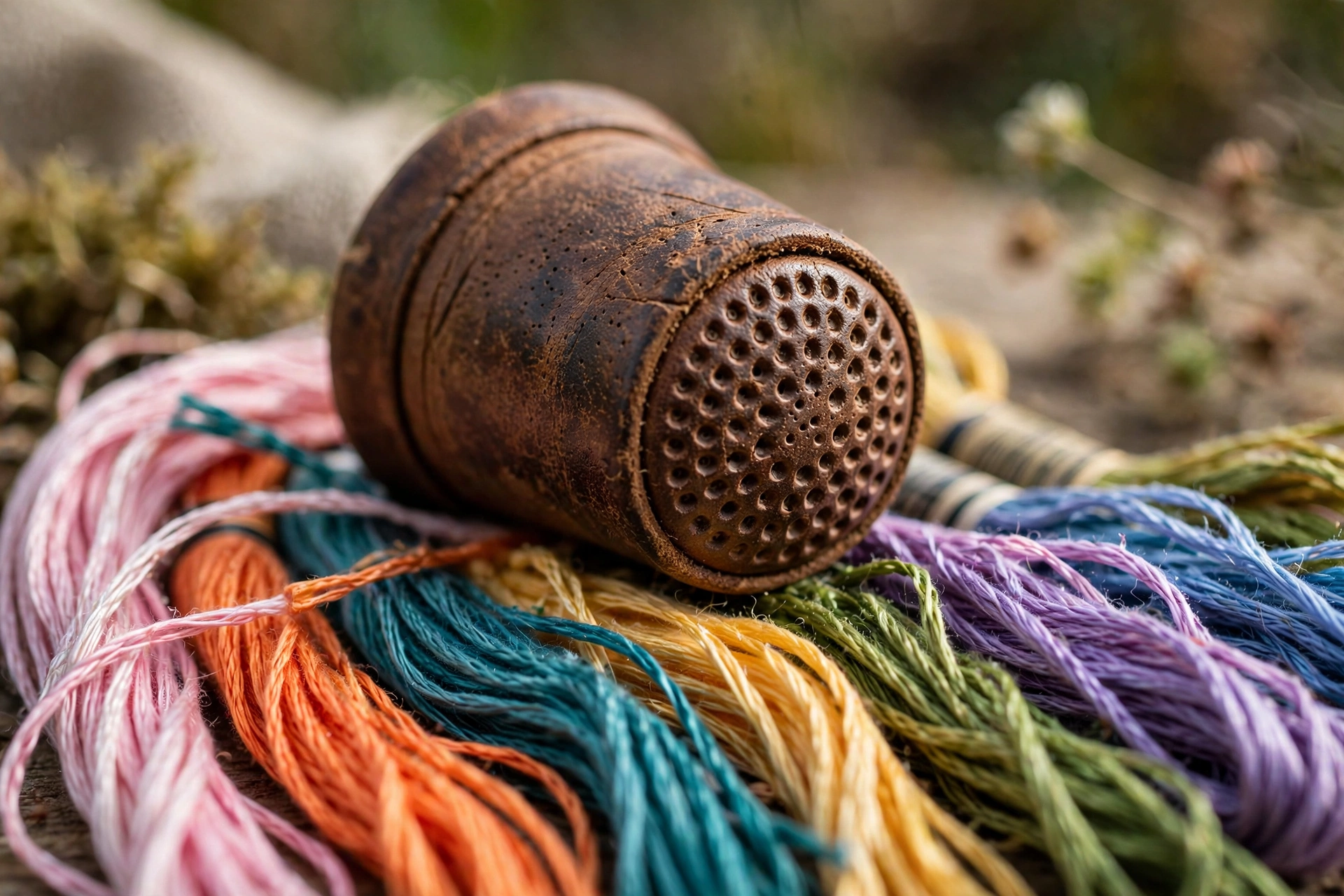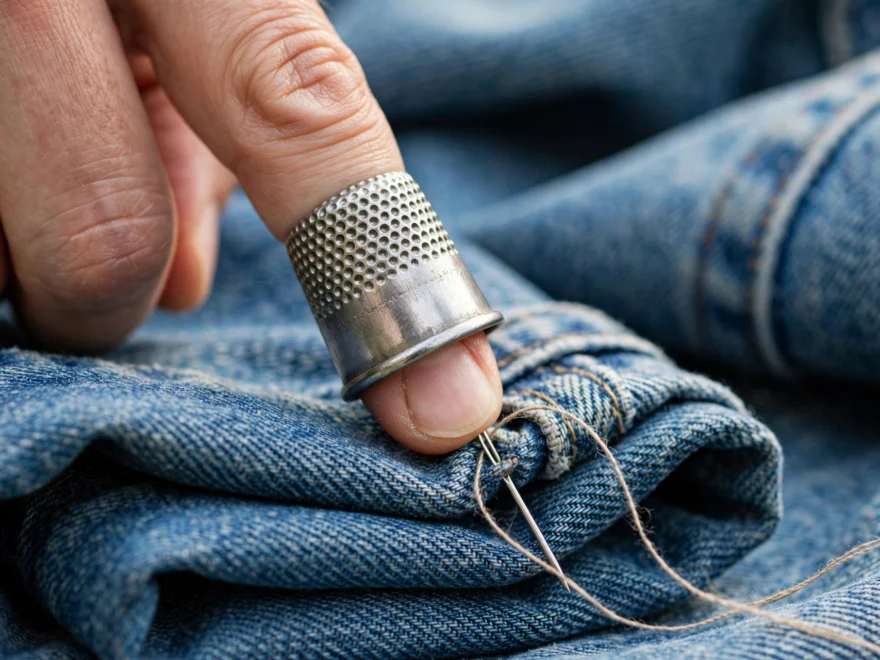
I refused to wear a thimble for two full years because every one I tried felt like a tiny torture device. Then I started the back panel of a denim jacket, 14 hours of stitching through two layers of 12-ounce denim, and by the second evening my middle finger had a dent that was still there the next morning. That dent converted me. A properly fitted thimble does not slow you down; it lets you push the needle with confidence instead of wincing at every hard stitch. Here is everything I wish someone had told me before the dent.
Why your fingertip is losing this fight
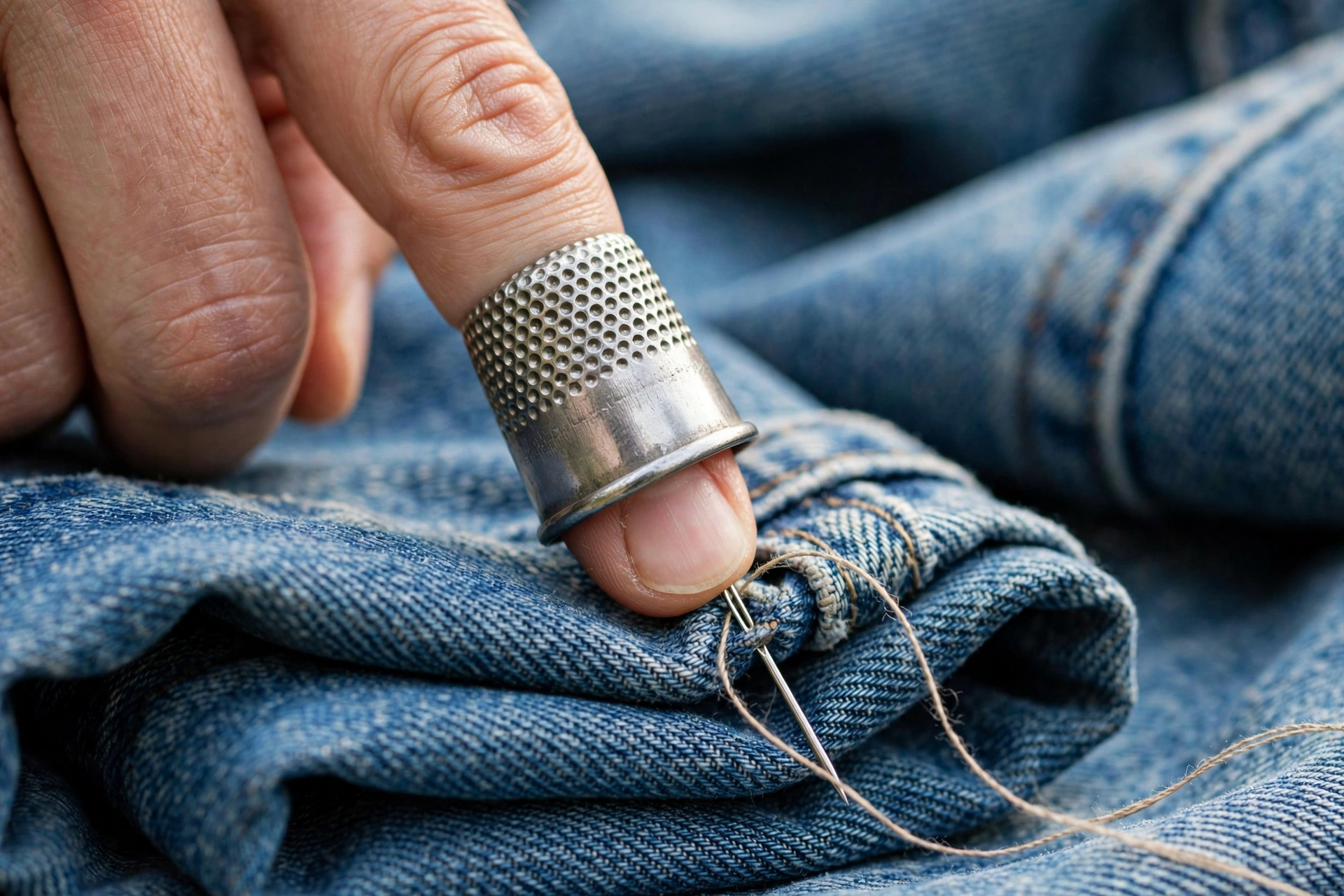
Every push of the needle drives force into one small patch of skin. On quilting cotton you barely notice. On denim, canvas, or the six-layer nightmare of a bag seam, you notice a lot. A thimble spreads that force across the whole finger and gives the needle a textured surface to bite into instead of skating off your skin. It also makes you faster, because you stop hesitating on the hard pushes. Hesitation is where crooked stitches are born.
The five kinds, ranked by how often I reach for them
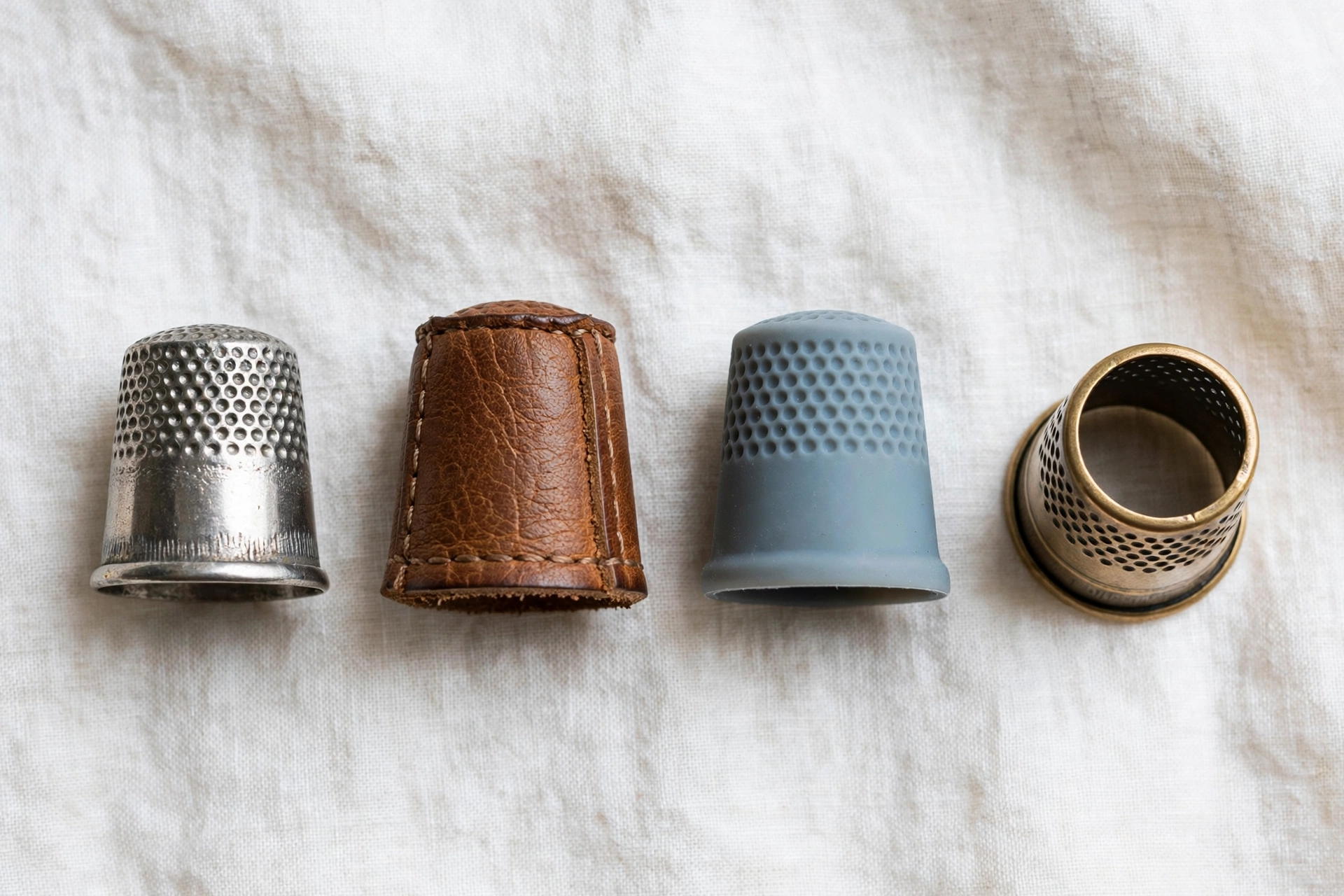
1. Leather stick-on. My daily driver. Soft leather with a reinforced pad, molds to your knuckle within three sessions, breathes, weighs nothing, and lives in every project pouch I own. About $8 for a pack of two. The pad eventually wears through on heavy denim, but at that price I just replace it.
2. Classic closed metal. The dimpled steel cap your grandmother wore. Maximum protection, lasts forever, and the dimples grip the needle end beautifully. Downsides: it can feel hot, and nickel-plated ones itch if you have any sensitivity. Get stainless steel. Mine is a $12 stainless cap that has survived five years.
3. Open-top tailor’s thimble. A metal band with no top, so your fingertip stays free to feel the needle. Less protection on the very tip, but wonderful breathability for long sessions on medium-weight fabric. My pick for summer stitching.
4. Silicone. Grippy, flexible, cheap, and they stay put, which makes them the friendliest first thimble for beginners. They just do not protect as well as metal on thick layers, and a determined needle will eventually poke through a thin spot. Fine for cotton, not for denim.
5. Ring and palm thimbles. Worn like a ring or strapped to the palm for sashiko-style pushing. A specialty tool. I have never gotten the hang of palm thimbles, so take this with salt, but sashiko stitchers I know will not work without one.
The shake test: finding your thimble fit
Most embroiderers wear the thimble on the middle finger of the dominant hand, because that is the finger doing the pushing. Measure around the finger at the middle knuckle with a soft tape or a strip of paper. That circumference is your size, with one giant catch: sizing is not standardized between brands. A medium from one maker can be a full size off from another, so always check the brand’s own chart and ignore the generic S/M/L on the package.
Then do the shake test. Push the thimble on fully, point your fingers at the floor, and shake your hand hard. A good fit stays put. If it slides or flies off, it is too big, and no amount of hoping will fix it. If you are between sizes, size down: slightly snug stays on, slightly loose becomes a projectile mid-stitch. I learned that during a stitching group when mine landed in someone’s tea.
Breaking it in without suffering
Metal needs no breaking in, just correct sizing. Leather is the one that asks for patience: it feels odd for the first five minutes of every new one, then molds to your knuckle and disappears. Give any new thimble a 15-minute test on scrap fabric before you judge it, never on your good project. Most stitchers stop noticing theirs within three sessions. If yours still feels like a torture device after a week, it is the wrong size or the wrong type, not a character flaw.
What I actually own, and what it cost
Three thimbles cover everything I have met in years of stitching. One stainless steel closed cap ($12) for denim and heavy layers. One leather stick-on ($4 each in a two-pack) for light fabrics and travel. One open-top tailor’s thimble ($9) for long summer sessions. Total: $25. If you buy exactly one thing from this post, make it the leather stick-on in your measured size. It is the cheapest way to find out whether you are a thimble person, and the dent in my finger says you probably are.