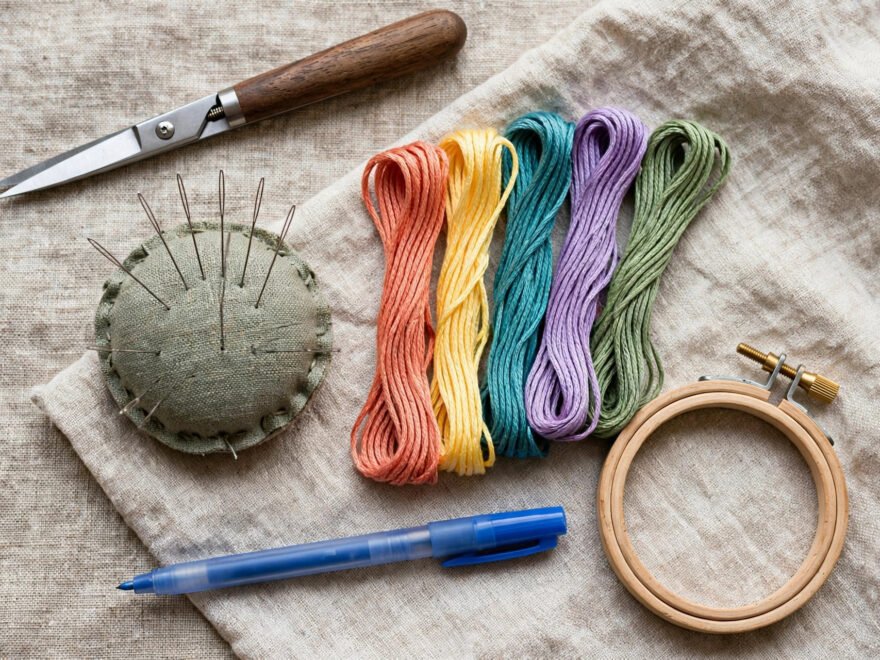
In 2019 I bought a 200-piece embroidery kit for $24.99 because it felt like a bargain. The scissors could not cut a single strand of DMC 310. The “embroidery needles” were dull sewing needles with eyes so small I needed tweezers and prayer. The hoop warped within a month. I still have untouched gadgets from that box, and it has been years.
This is the guide I wish had existed then: the only beginner embroidery tools worth buying, with real prices, and the popular items you can skip without missing a thing. The whole honest kit comes to about thirty-five dollars.
The beginner embroidery tools worth buying, item by item
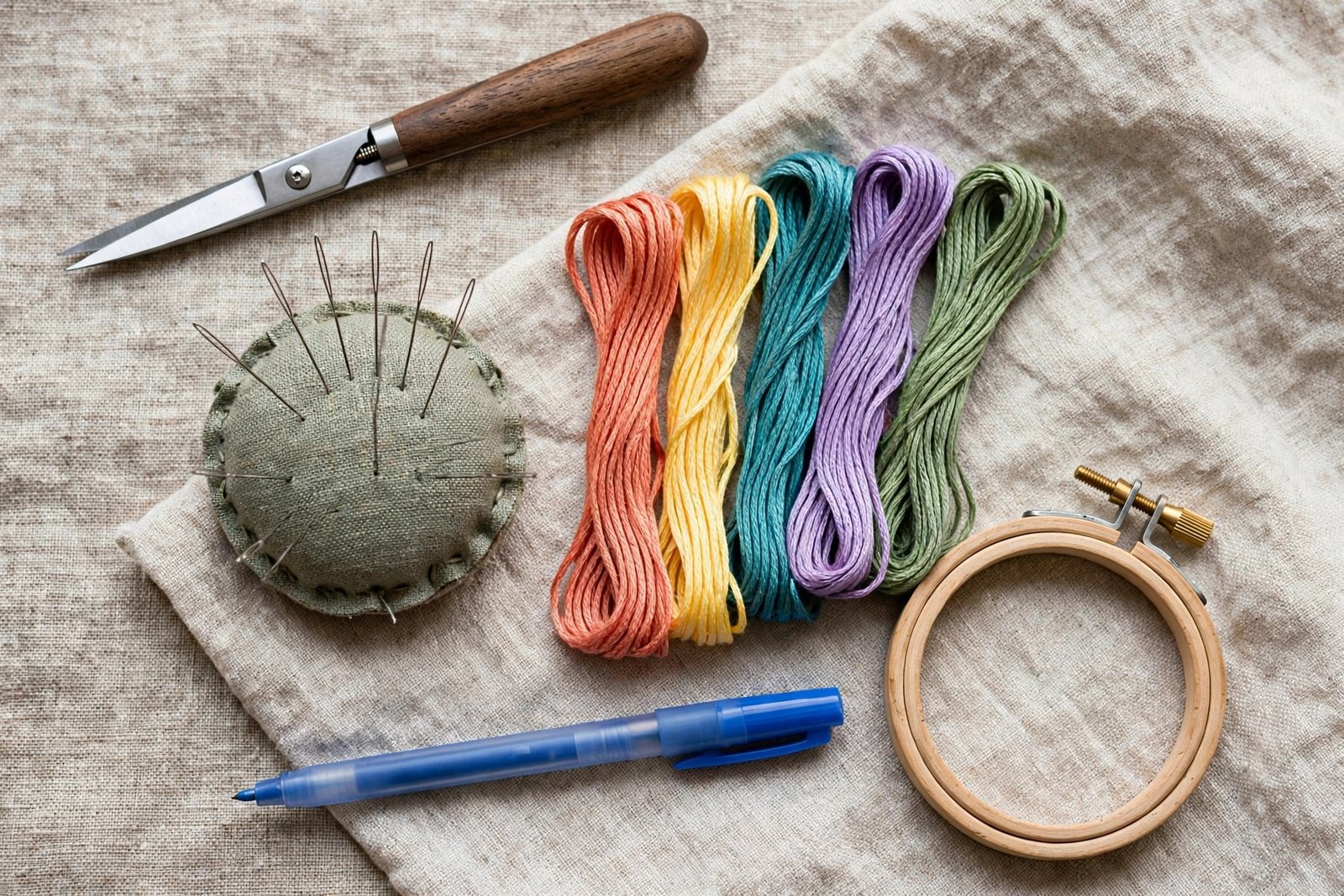
1. A good 6-inch wooden hoop with a brass screw, about $5
The single most impactful purchase. Steel screws rust and seize. Cheap wood splinters and warps. A solid beechwood hoop with a brass screw holds tension evenly for years and costs maybe two dollars more than the bad one. Run your finger around the inside of the rings before buying. Smooth means good. Rough means walk away.
2. John James crewel needles, sizes 3 to 9, about $4
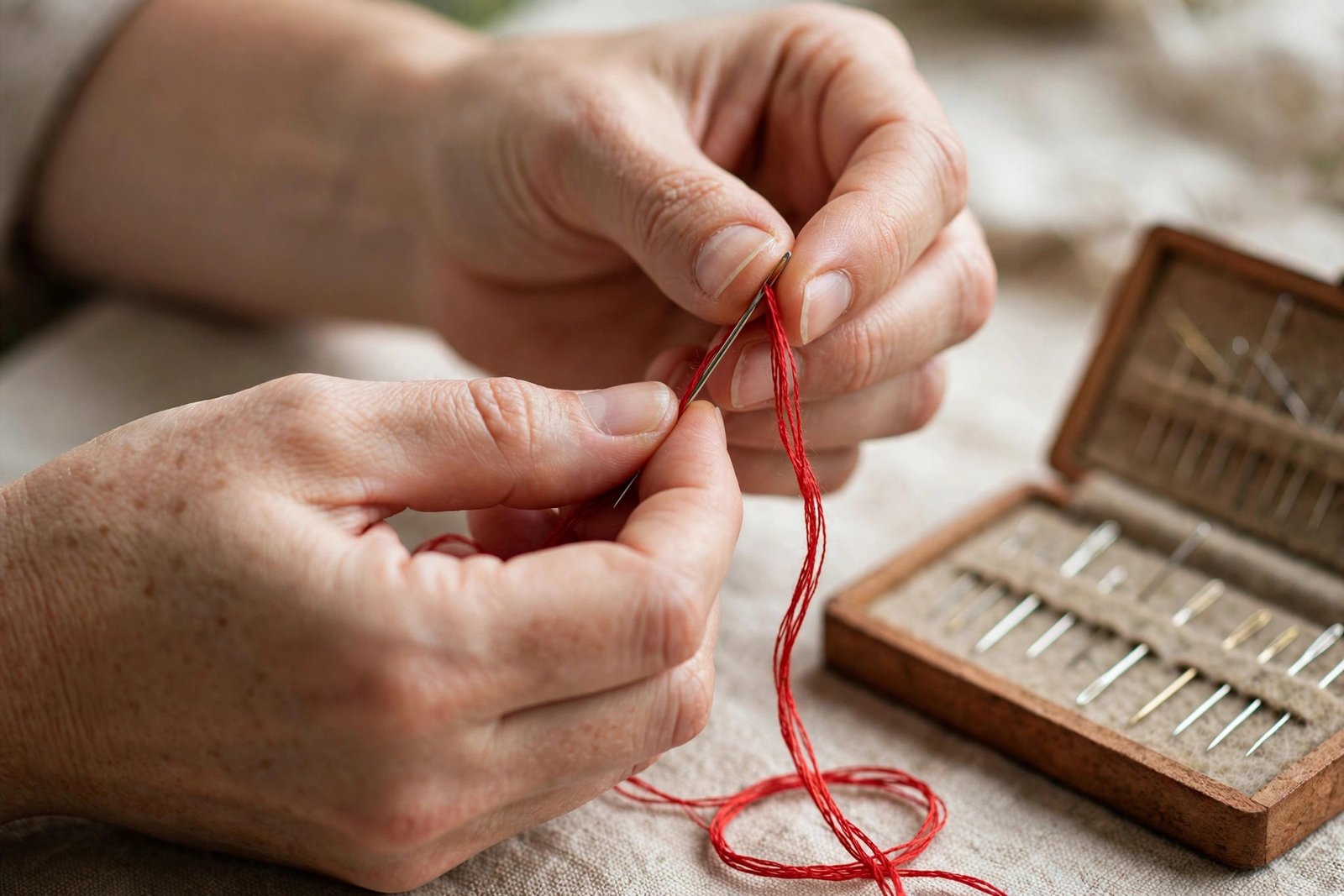
Throw away the needle that came in the kit. I mean it. Embroidery needles have a long eye that floss glides through; sewing needles have tiny round eyes that shred thread and patience in equal measure. A mixed pack of John James crewel needles in sizes 3 through 9 covers everything from fine detail to chunky wool, and it costs less than a coffee. Buy a needle organizer too, because loose needles migrate into couch cushions and never come back.
3. Small sharp embroidery scissors, about $8
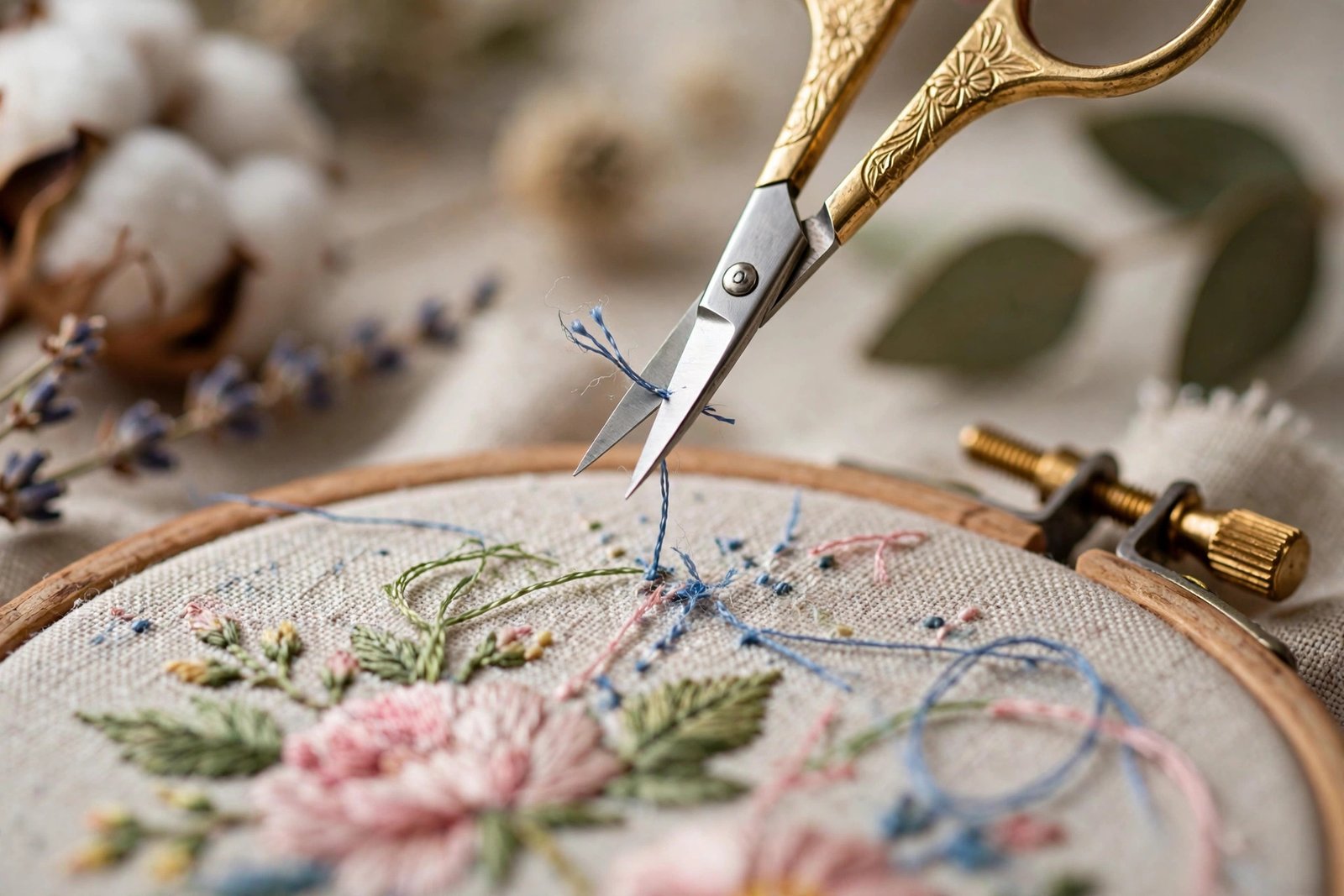
You need scissors that cut one strand of floss cleanly, right at the fabric, without chewing. The classic stork scissors are not just decorative: those fine pointed tips let you snip thread tails close without nicking a stitch. Any small sharp pair works. The key word is sharp. Dull scissors fray the thread end, and a frayed end will not go through any needle eye on earth.
4. Real DMC floss, 15 to 20 skeins, about $10
This is where beginners cheap out most, and it shows in the finished piece. DMC floss costs around sixty cents a skein, has even dye and predictable thickness, and the color numbers mean something: DMC 310 is black on every continent. Bargain floss bleeds, snaps mid-stitch, and varies between skeins of the “same” color. You do not need 200 colors. Fifteen to twenty basics, including 310, 321, 666, and Blanc, will carry you through your first dozen projects.
5. A water-soluble marking pen, about $3
Transferring the design is half the hobby, and a good water-soluble pen makes it painless. The marks vanish with a dab of water. Test any pen on a fabric scrap and wash it out before trusting it on a real project, because a few off-brand pens leave ghosts on certain fabrics. One pen lasts months.
6. Cheap wire needle threaders, a 10-pack for about $2
The flat wire kind, not the fancy automatic ones, which jam constantly. This two-dollar purchase saves real frustration with dark floss and evening light. They bend eventually, so having nine spares means you never stop mid-flow.
7. A daylight clip lamp, about $10
Not a stitching tool exactly, but bad light ruins good stitching. You cannot judge thread colors under warm yellow bulbs, and eye strain ends sessions early. A daylight-temperature clip lamp aimed over your shoulder is the best ten dollars in this entire list. Your stitches and your eyes will both thank you.
5 things to skip, with love
Fancy floss organizers and bobbins. Wind floss on cardboard or leave it in skeins until you own enough colors to actually lose track of. Pretty storage is a reward for later, not a starter need.
Specialty scissors for every task. One good small pair does everything a beginner needs. Thread snips, duckbill applique scissors, and gold-plated anything can wait years.
Pre-printed mega kits. The floss is low quality, the fabric is often too loosely woven, and the printed designs fade oddly. Buy the seven items above separately instead.
An embroidery machine. Hand embroidery and machine embroidery are different hobbies with different skills. Do not buy a machine until you know you want that specific craft.
Expensive hand-dyed threads and fabrics. Gorgeous, absolutely worth it later. But beginners cannot yet see the difference in the finished piece, and mistakes hurt more on precious materials. Learn on affordable linen first. Your tenth project deserves the good stuff.
The mistakes I see every beginner make
Upgrading too fast is the big one. Silk thread and hand-dyed linen are wonderful, but they do not make early stitches look better. Technique first, luxury materials second. The other classic is ignoring the unglamorous basics: nobody photographs their marking pen, but a bad transfer ruins more projects than bad floss ever will. Spend on the boring tools that touch every project.
And buy for the stitcher you are this month, not the one you imagine being. The floor stand and the quilter-grade cutting mat can wait until a real project demands them.
Once your kit is sorted, the next decision is which hoop size to buy, and then it is worth learning how to keep fabric tight before your first real project. Thirty-five dollars, two short guides, and you are better equipped than I was after my first year.
2 comments