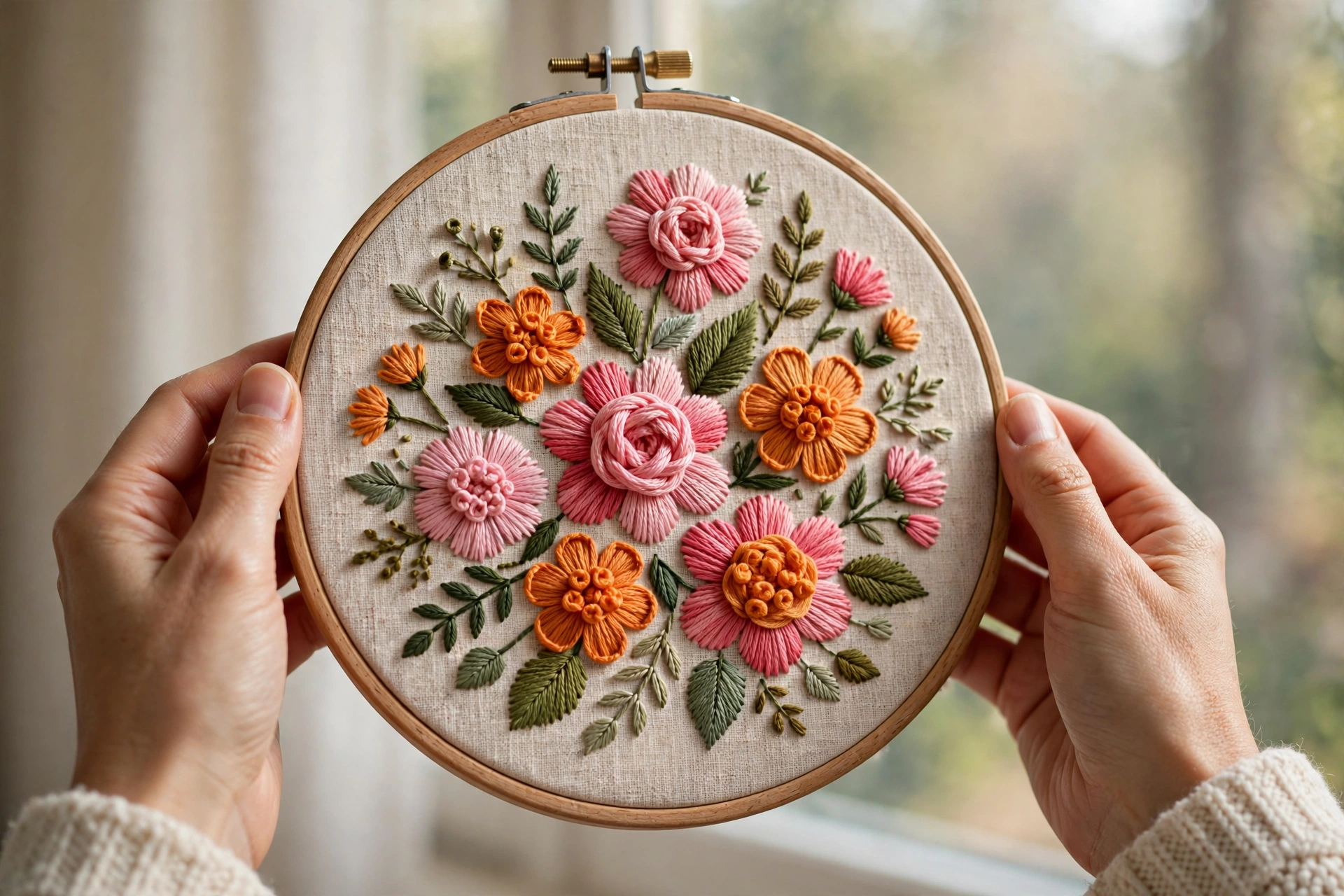
I learned the colonial knot at 1 a.m. from a grainy video, immediately frogged the french knot centers out of a hoop I had already framed, and re-stitched them colonial. The difference was embarrassing. The french knots had been lumpy and shy; the colonial knots sat up round and confident like tiny berries. That was five years ago, and the colonial knots vs french knots debate has lived rent-free in my stitching ever since. Here is my honest head-to-head, no hedging.
Colonial knots vs french knots: what is actually different
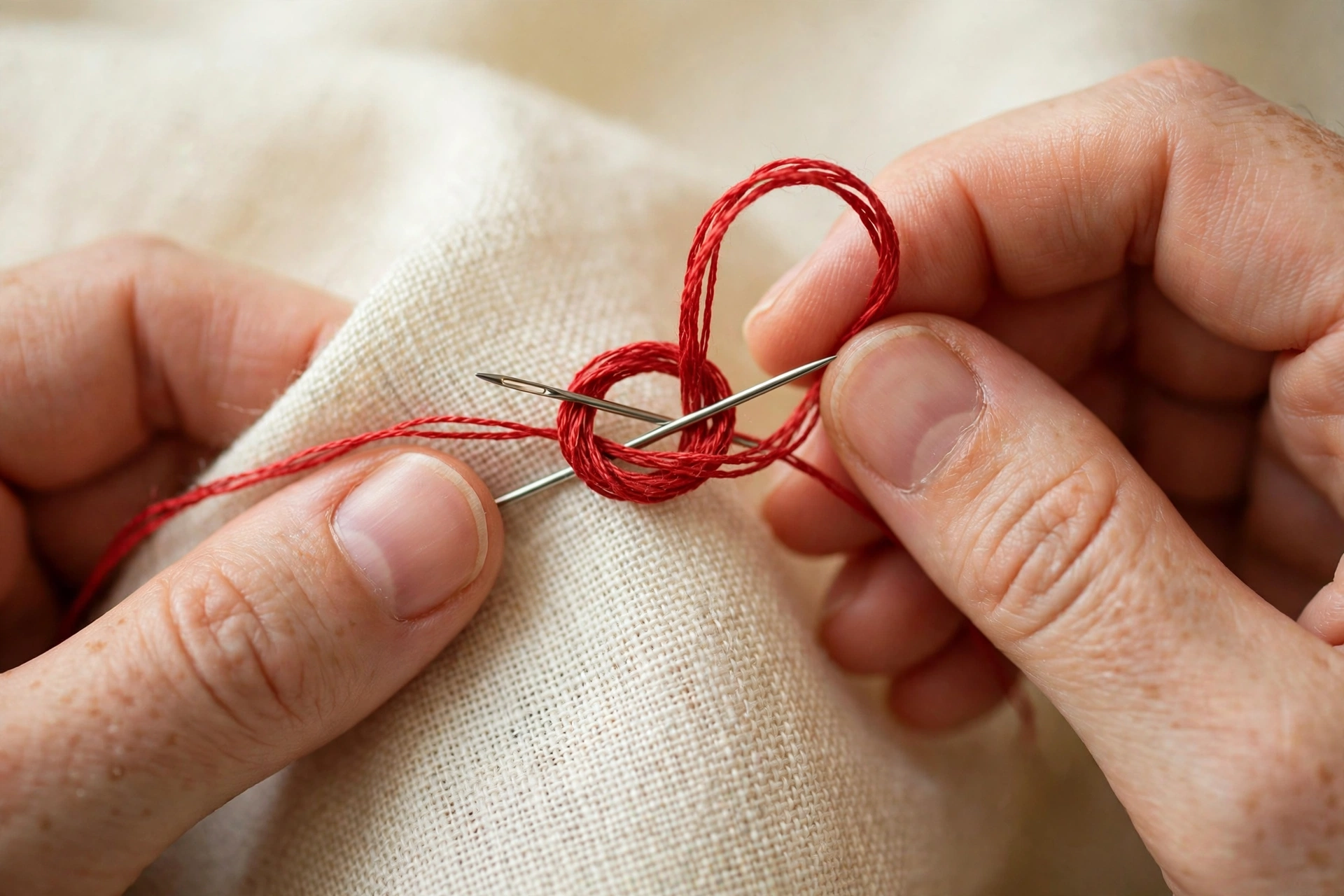
The two knots look similar from across the room and are built completely differently. A french knot wraps the thread straight around the needle two or three times, then slides the wraps down onto the fabric. A colonial knot loops the thread into a figure-eight around the needle, which is why some people call it the French colonial knot, and the figure-eight collapses into a rounder, more three-dimensional bump.
Think of it this way: the french knot is a coil sitting on the fabric. The colonial knot is a ball. Coils can tilt, snag, and unravel. Balls just sit there being round. That structural difference decides almost every round of this fight.
Round 1: shape and size
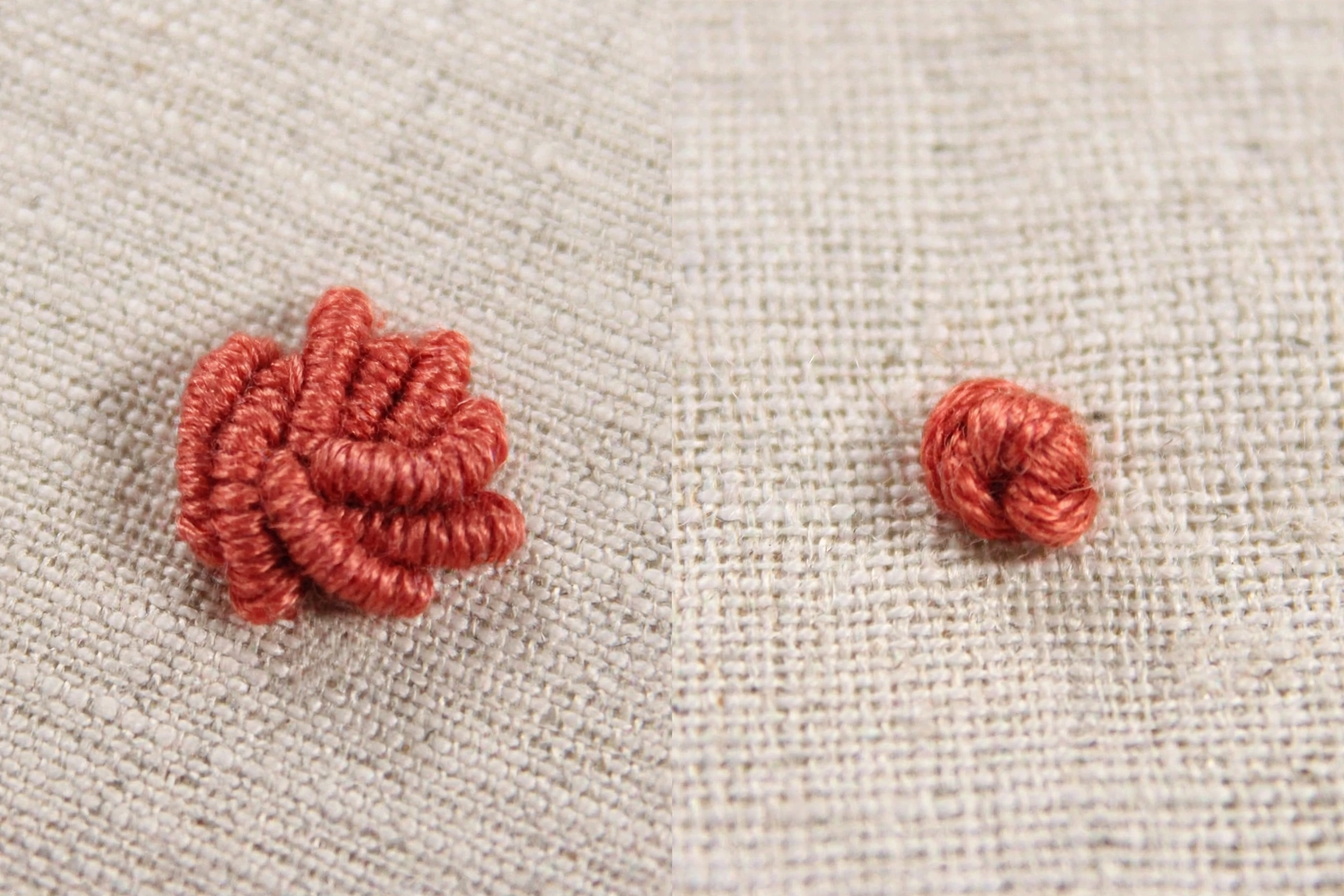
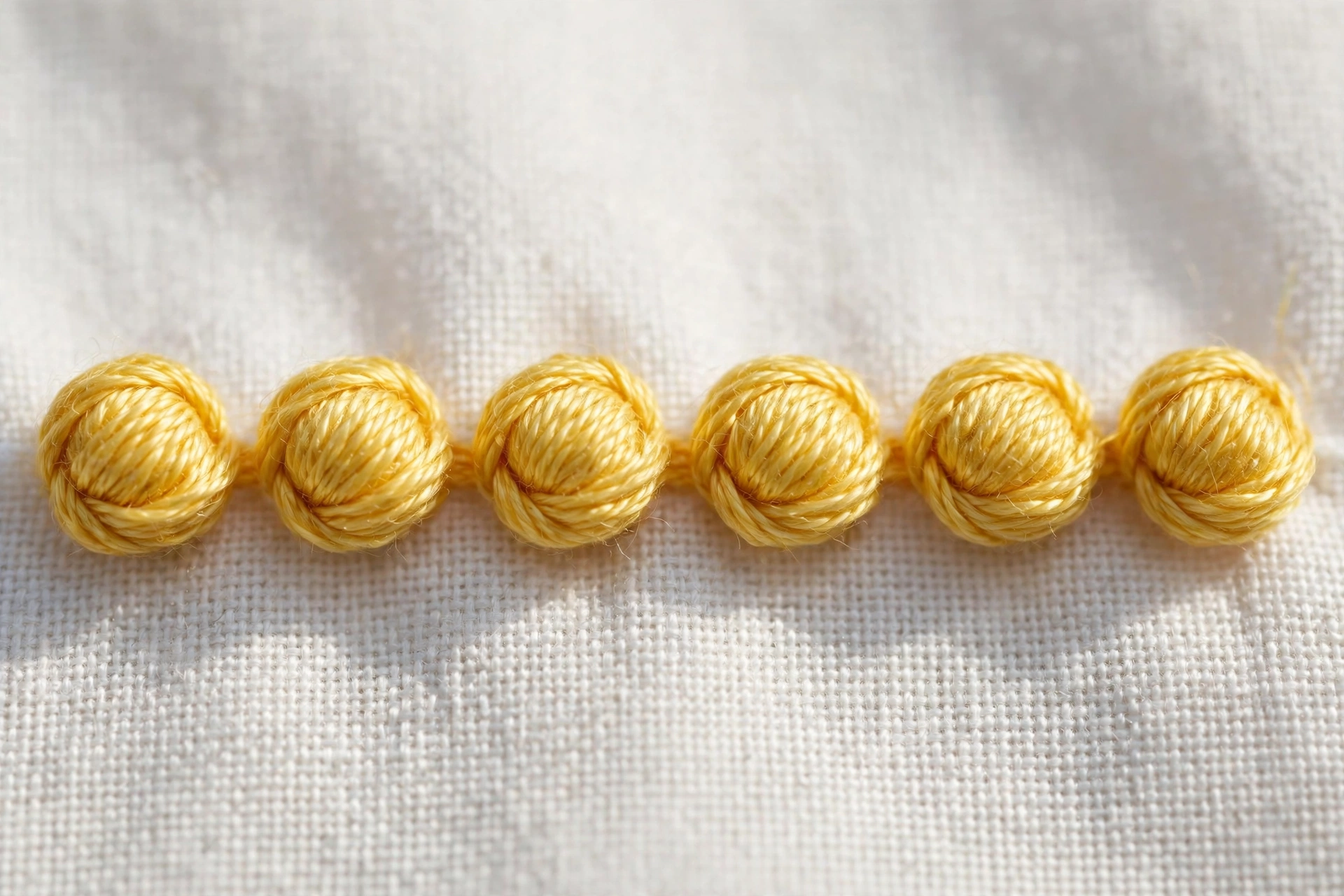
Winner: colonial, and it is not close. The figure-eight construction produces a consistently round, raised bead with a tidy little crown on top. French knots are flatter and more variable; even good ones have a slightly squashed look, like a bead someone sat on.
Size matters too. French knots scale badly. At two wraps with 2 strands they are perfect tiny dots, but add wraps or strands to go bigger and they turn into tangled nests, which I documented at length in my french knot troubleshooting guide. Colonial knots scale beautifully: 3 strands makes a peppercorn, 6 strands makes a proper berry, and the shape holds at every size.
Round 2: reliability
Winner: colonial, by a mile. The colonial knot almost never pulls through the fabric, because the figure-eight grips itself. It almost never tangles, because there are no loose wraps to snag. I have stitched thousands of colonial knots and I can count the failures on one hand, and two of those were my fault for using thread as long as a garden hose.
French knots are fussier. They demand exact wrap counts, exact tension, and short thread, and they punish loose-weave fabric by diving straight through it. None of this is fatal, it is all learnable, but the colonial knot simply asks less of you. If you are stitching 200 knot centers on a wedding sampler at midnight, you want the knot that behaves.
Round 3: speed and muscle memory
Winner: french, slightly. The french knot motion is simpler to learn: wrap, wrap, pull. The colonial knot’s figure-eight feels like patting your head and rubbing your stomach for the first fifty knots. I timed myself once, because of course I did: 20 french knots took me 6 minutes, 20 colonial knots took 7 and a half. After a hundred knots the gap closes to almost nothing, but the french knot keeps a small edge forever.
There is also the availability of teaching. Every beginner book teaches the french knot first, so most stitchers already have the muscle memory. Learning colonial later means rewiring your hands, which is annoying for about a week and then fine.
The verdict: my knot rules
For anything the size of a peppercorn or bigger: colonial knot, every time. Rounder, more reliable, scales better. For tiny dots and dense seed-like textures: french knot, because it sits flatter and a field of tiny french knots looks like scattered pollen in a way colonial knots cannot match.
My actual practice: I use the colonial knot for flower centers, berry clusters, and animal eyes, and the french knot for stamen dots and textured backgrounds. Roughly 80 percent colonial, 20 percent french. Anyone who tells you one knot replaces the other is selling something. They are different tools.
The myth that colonial knots are cheating
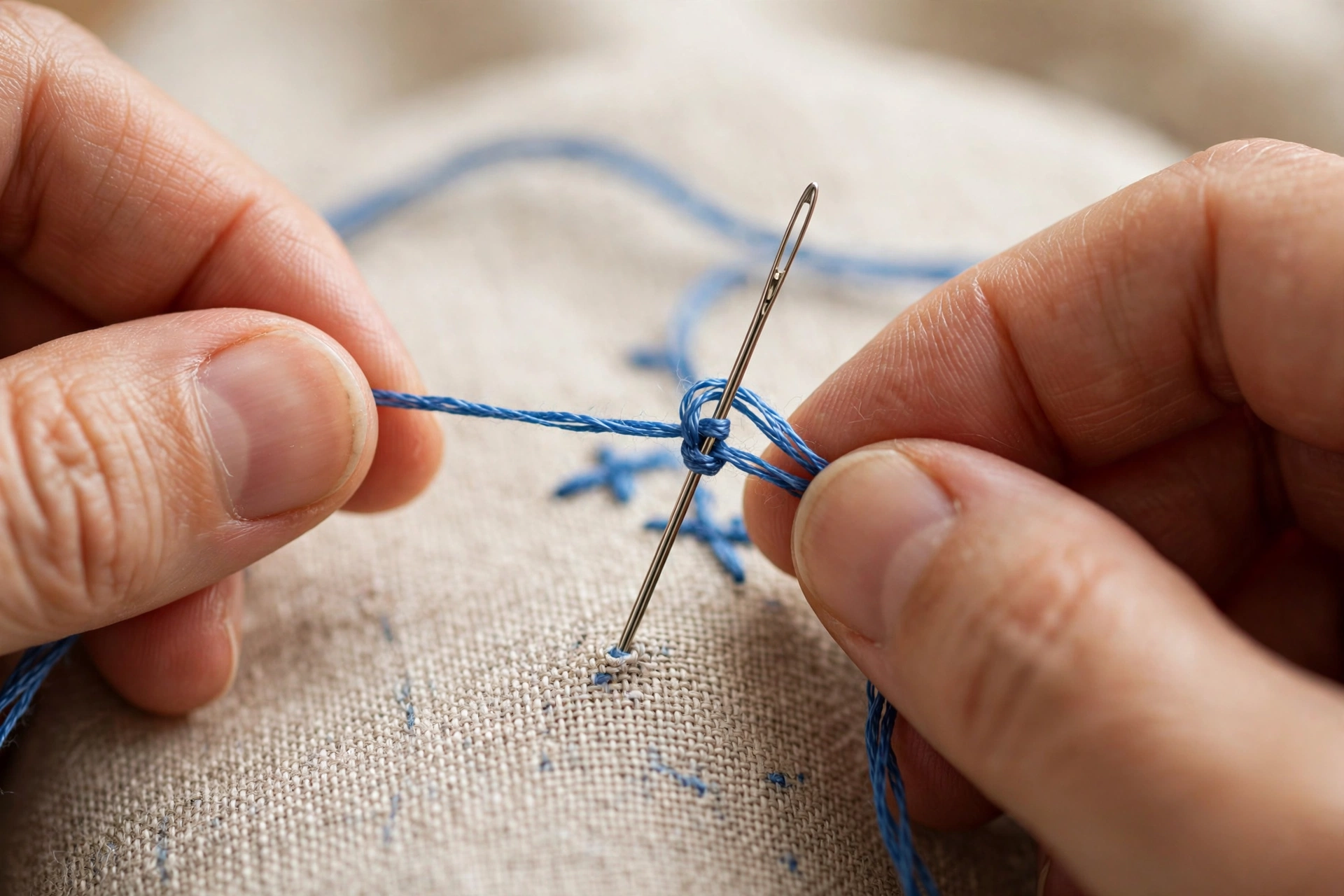
Every few months someone in a stitching group declares the colonial knot a “cheat” version of the french knot, as if the figure-eight is a shortcut for people who cannot wrap thread properly. This is nonsense with a long pedigree. The colonial knot appears in historical embroidery under various names, and the documented history of embroidery stitches is full of regional knots that all solve the same problem differently. Choosing the better-engineered knot is not cheating. It is embroidery.
Learn both. Master the french knot first if you like, since every pattern assumes you know it, then add the colonial knot and watch your knot-heavy projects transform. If you want company on the french knot learning curve, my bullion knot guide covers the other member of the knot family, and it is the fussiest of the three. Fair warning.