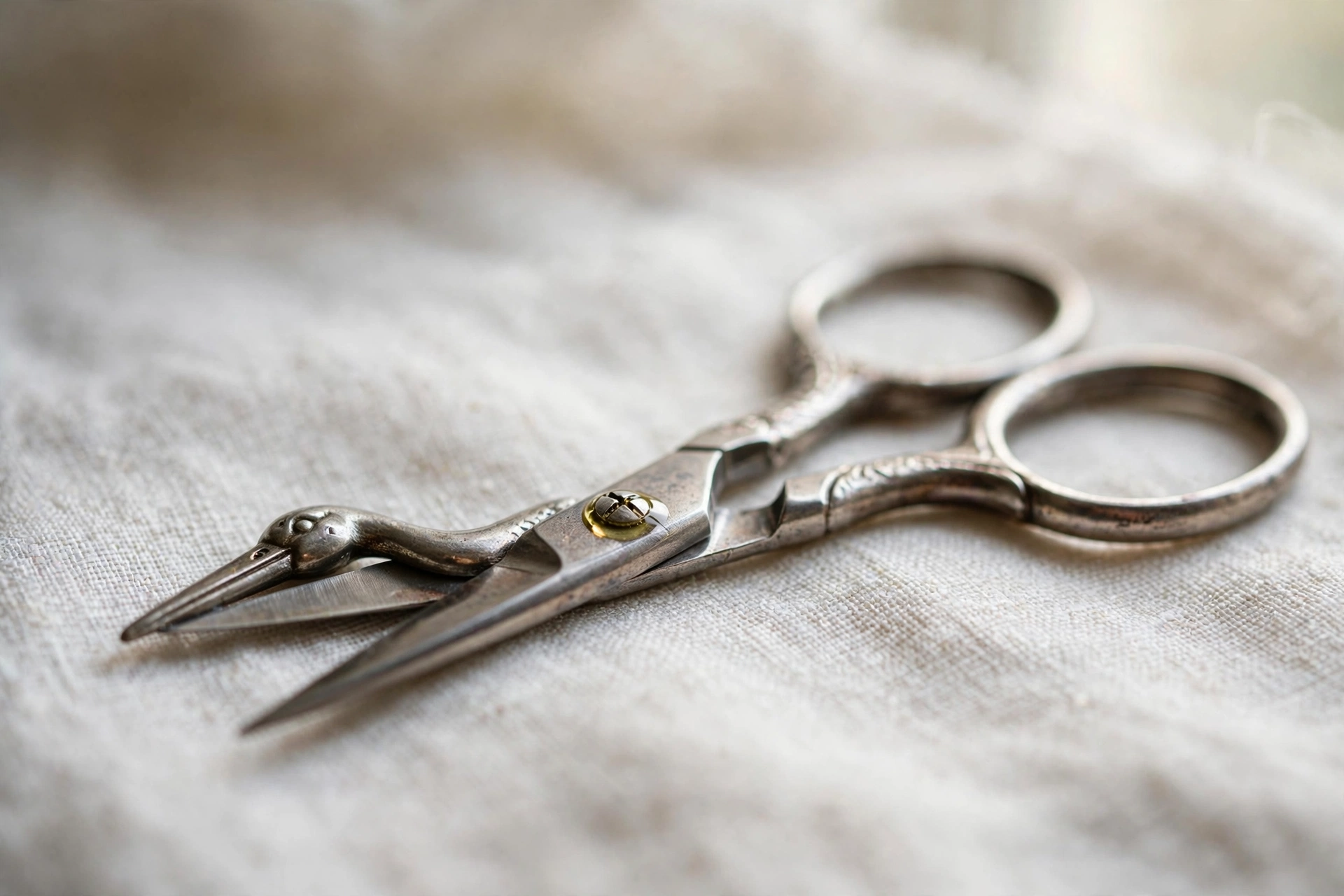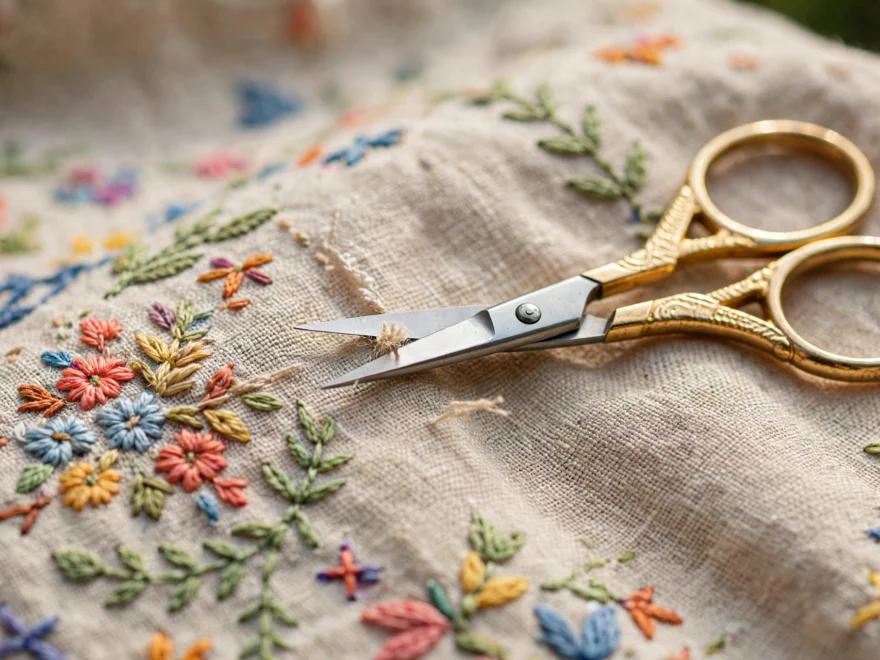
In 2019 I bought a pair of Dovo 3.5-inch gold stork scissors for $28, and I loved them the way you love a good kitchen knife. Then one afternoon I grabbed them to snip a paper pattern, because they were right there. One snip of paper. They never cut thread cleanly again. Embroidery scissors are precision tools with short, fine blades, and they go dull faster than you would expect, especially when they get borrowed for non-fabric jobs by people who should know better (me). The good news: with basic care and the occasional sharpening, one good pair lasts a decade. Here is the whole routine.
The foil thing, honestly
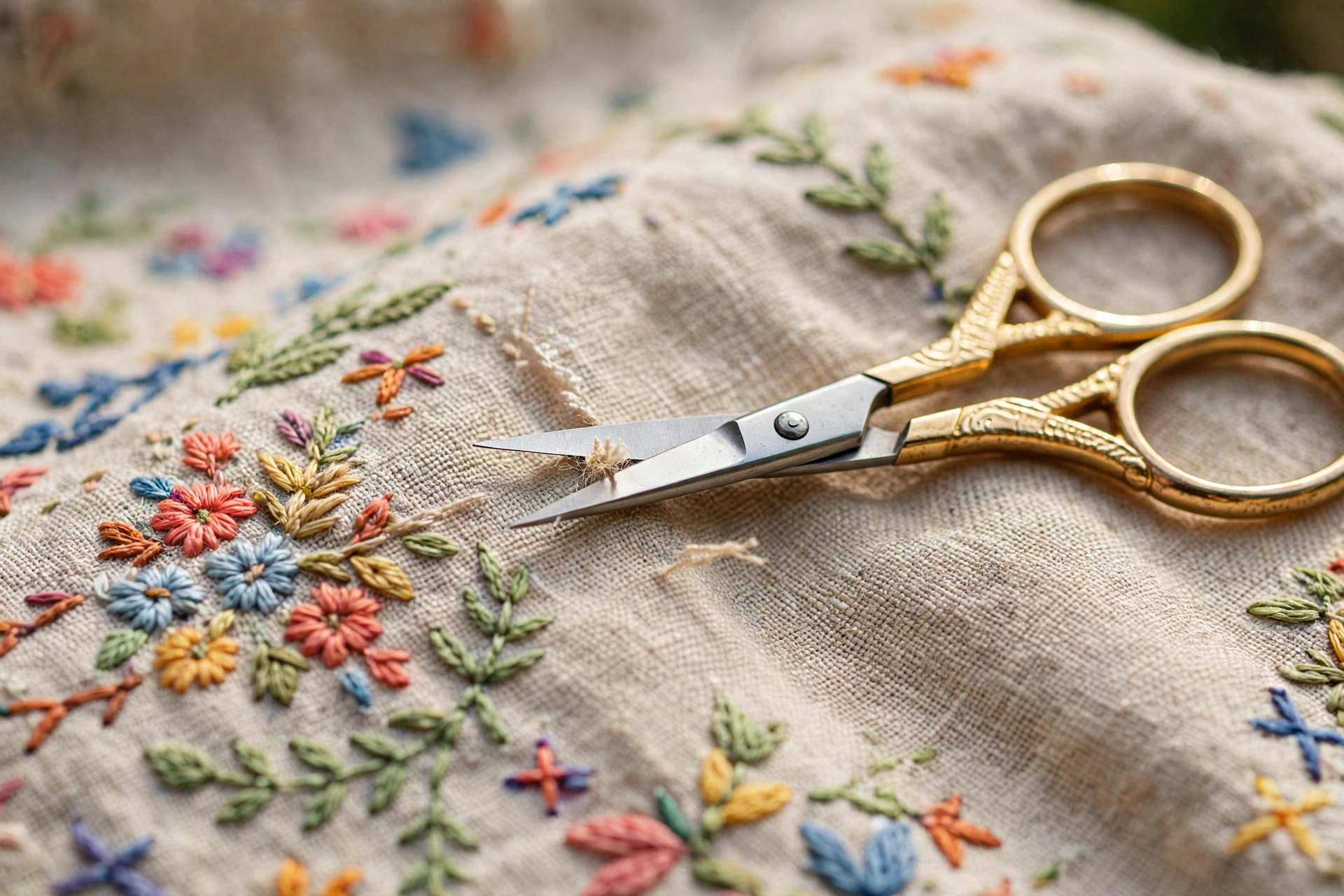
You have seen the tip: cut through folded aluminum foil to sharpen your scissors. Here is the truth, and I wish someone had told me sooner. Foil does not sharpen anything. What it does is scrape sticky residue and micro-lint off the blades, which can make gummy scissors feel sharper for a while. So the trick is not useless, it is just mislabeled. Fold foil a few times and cut through it when your blades feel sticky. For actual dullness, you need a real edge, which is next.
The only way I sharpen embroidery scissors
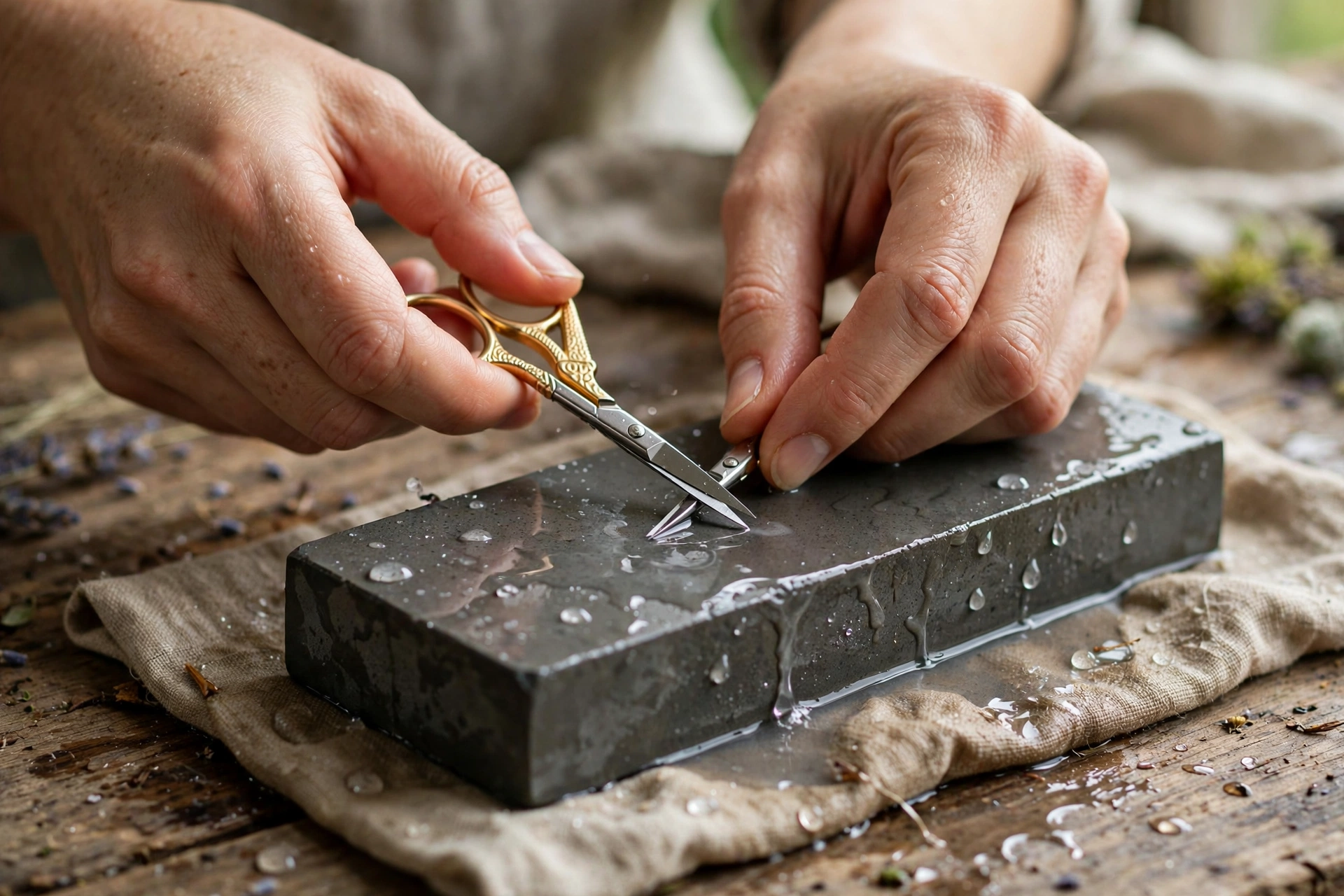
A small fine-grit whetstone, 1000 grit or higher, costs about $15 and will outlive you. Work slowly. These blades are thin and unforgiving.
- Clean the blades first with rubbing alcohol on a cotton pad. Oil, lint, and adhesive have to go before the stone touches metal.
- Soak the whetstone in water for 5 to 10 minutes, and keep it damp while you work. Dry sharpening on a water stone just scratches.
- Open the scissors and work one blade at a time. Find the beveled edge, the angled side, and lay it flat on the stone at that same angle. Do not guess the angle; match the existing bevel.
- Push the blade across the stone in smooth strokes, moving away from the cutting edge, like you are trying to shave a thin slice off the stone. Light pressure. Let the stone do the work.
- Five to ten strokes per blade, then wipe and test: snip a single thread held in the air. Sharp scissors cut it cleanly with no folding, no chewing.
- Strop to finish. Pull each blade flat across a scrap of denim or leather a few times to remove the tiny burr the stone leaves behind. Skip this and the edge feels sharp for a day, then dies.
No whetstone? A ceramic honing rod works the same way: a few light passes of each beveled edge along the rod, then test and strop. I keep a $10 rod in my travel kit for exactly this.
The rules taped inside my notions box
After the paper-pattern incident, I wrote these on an index card and taped it where I cannot miss it.
- Wipe the blades with a dry cloth after every session. Hand oils attract lint, lint becomes grit.
- One tiny drop of sewing machine oil on the pivot screw monthly. Open and close to work it in, then wipe the excess. More oil is not more care.
- Sheath on, always. Tossing bare scissors into a project bag rounds the tips within weeks.
- Fabric and thread only. Never paper, never plastic packaging, never wire. Tell everyone in your house, then tell them again.
- Store them dry. A damp project bag invites rust spots on carbon steel, and rust pits cannot be sharpened out.
- Keep a cheap $5 pair nearby as the sacrificial scissors for packages and patterns. This is the rule that would have saved my Dovos.
Ways people ruin good scissors
The dishwasher. Water gets into the pivot and rust follows, and the detergent is brutal on the finish. Soaking them “to clean them” does the same damage slower. Pulling the blades apart to tighten a loose pivot, which springs the pivot instead; tighten the screw a quarter turn at a time like a normal person. Cutting sandpaper to “sharpen” them, which scratches the blades without ever forming an edge. And lending the good pair to someone opening a package, which is how my first decent pair died in 2017. I have receipts for all of these mistakes.
When to stop sharpening and start shopping
Some pairs are done. Deep rust pits, a bent blade, or a pivot so worn that no tightening holds: these do not come back. A decent pair costs less than a restaurant lunch, so do not hold a funeral. Just start the index-card routine on day one with the new pair, and hide them from anyone holding paper.