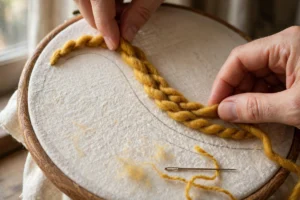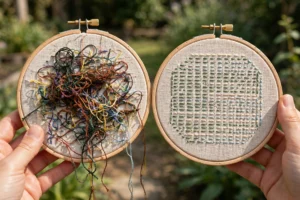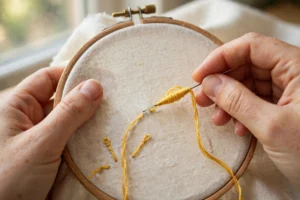
I stitched my first turkey work on a dare. My stitching group was making animal portraits, everyone else was doing sensible things like satin stitch fur, and I announced I would do a lion. A lion needs a mane. A mane needs fluff. Turkey work, which despite the name has nothing to do with the bird or the country, is the stitch that makes actual three-dimensional fluff: loops of thread standing up off the fabric, cut open and trimmed into velvet. My lion looked ridiculous for about twenty minutes. Then I trimmed the mane, and it looked magnificent. I have been a turkey work evangelist ever since.
What turkey work actually is
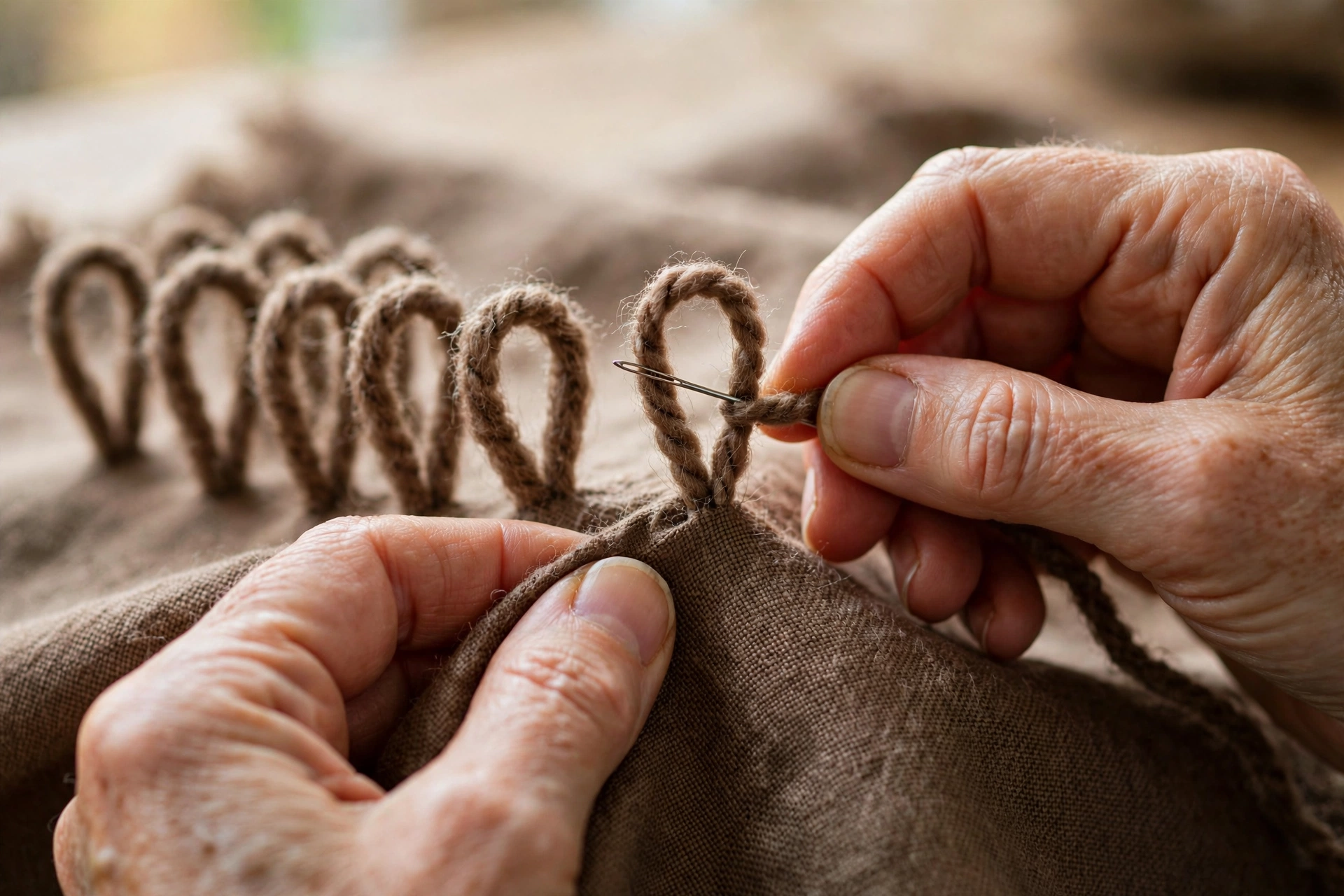
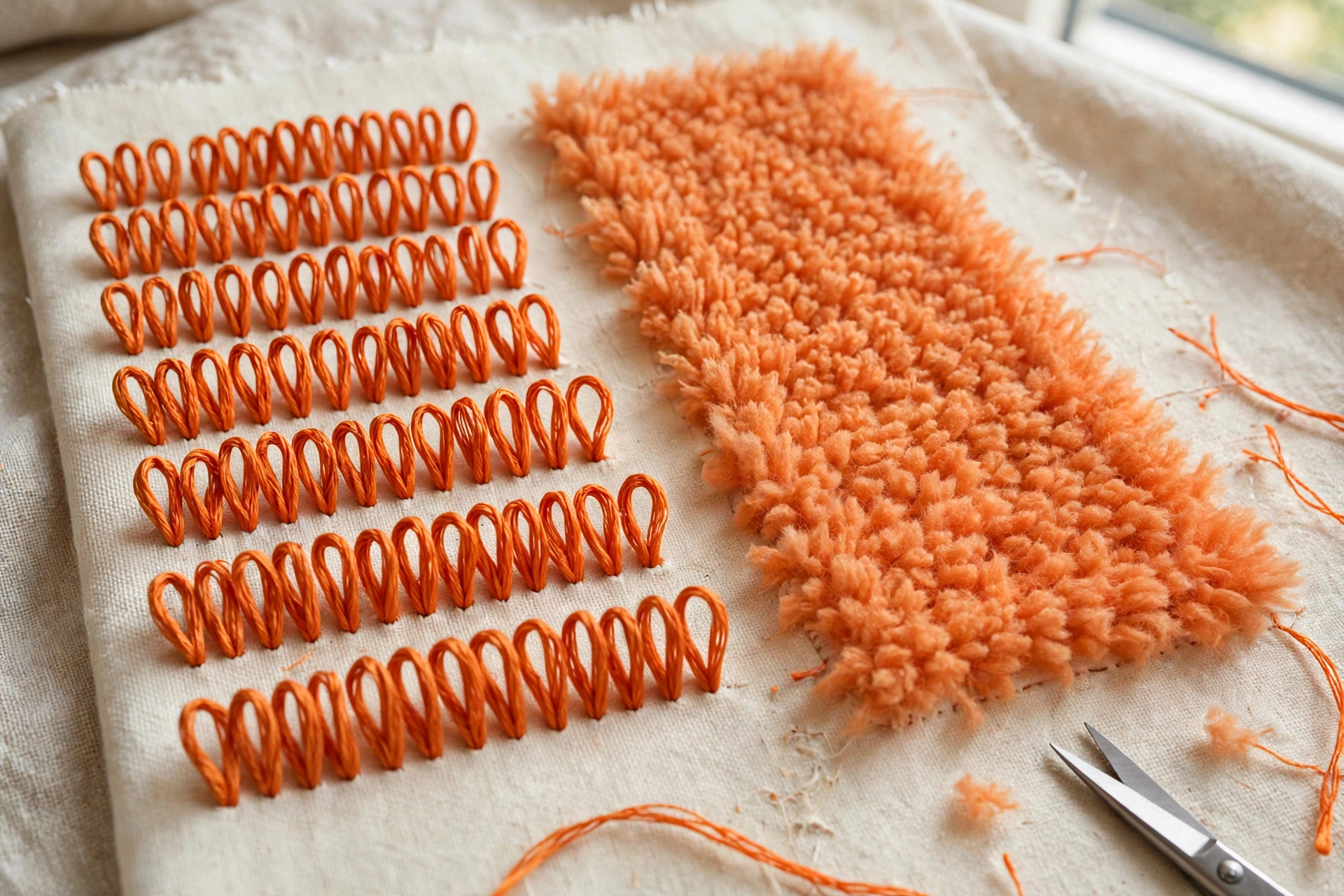
At its core, turkey work is absurdly simple. You stitch a row of loops, all the same height, standing up from the fabric like tiny thread arches. Then you cut every loop open at the top. Then you trim the cut ends to shape. What is left is a dense patch of upright thread ends, which reads to the eye as fur, velvet, grass, or the fuzziest flower center imaginable. The stitch is ninety percent loops, ten percent haircut.
It is also sometimes called ghiordes knot, after the Turkish carpet-making technique it resembles, which is where the confusing name comes from. Rug makers have been knotting pile this way for centuries. You are doing the same thing, just smaller and with embroidery floss instead of wool.
Step 1: The loops
Thread your needle with all six strands of floss. Yes, all six. Turkey work eats thread like nothing else in embroidery, and skimping on strands gives you a sparse sad patch instead of plush pile. Bring the needle up through the fabric, then take a small stitch forward, about an eighth of an inch, but do not pull it tight. Leave a loop standing up, about half an inch tall. Hold that loop with your non-dominant thumb while you take the next stitch.
Loop height is everything. Every loop in the row must be the same height, or the trimmed surface comes out lumpy. Here is my trick: rest the loop against the first joint of your thumb as a gauge, or wrap each loop around a pencil held against the fabric for perfect uniformity. The pencil method feels fussy and produces gloriously even pile. I use a chopstick, because my pencils keep wandering off to do pencil things.
Work your loops in tight rows, each new row snuggled against the last. Dense loops make dense pile. Sparse loops make a balding lion, and nobody wants that. For a one-inch square of finished fluff, expect to stitch sixty to eighty loops. It sounds like a lot. It takes about fifteen minutes once you find the rhythm, and the rhythm is meditative in the best way.
Step 2: Cut the loops
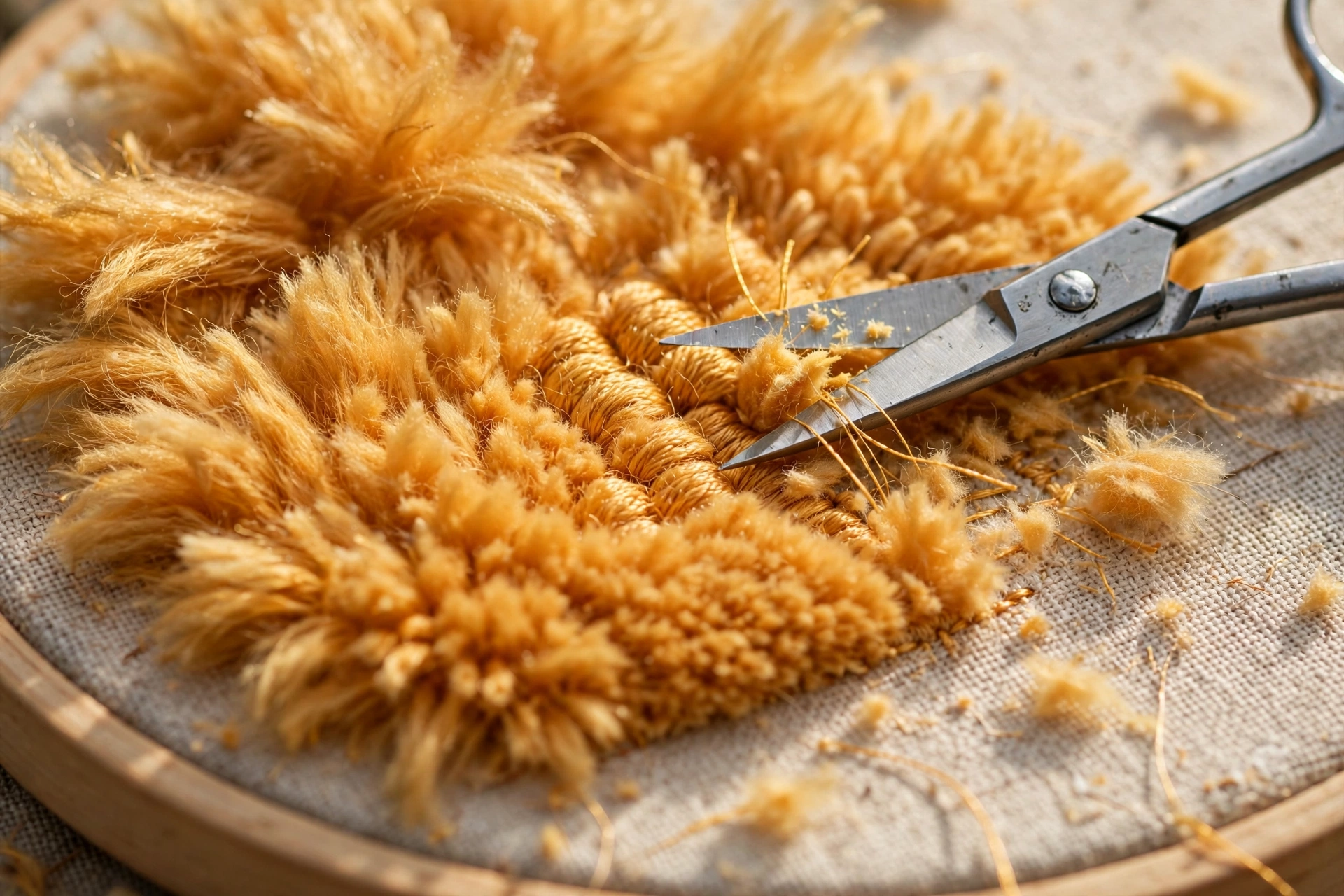
Once your patch is fully looped, slide your small sharp embroidery scissors under each loop and snip it at the top. Every loop becomes two upright thread ends. Work methodically across the patch, and do not pull while you cut. Pulling distorts the base stitches.
This is the moment beginners panic, because the cut patch looks like a mess. A wild, frizzy, alarming mess. That is correct. It is supposed to look terrible right now. The magic is all in step three.
Step 3: The haircut
Trim the cut ends to shape with small careful snips. For animal fur, trim following the natural direction of growth, slightly longer at the edges, shaped like the creature. For a flower center, trim into a neat dome. For grass, leave it shaggy and uneven, because grass is.
Trim less than you think you need to, then look, then trim more. You cannot un-trim. I take off a sixteenth of an inch at a time and check from arm’s length between rounds, because pile looks completely different from two feet away than from two inches. My lion’s mane took four rounds of trimming. The first round was terrifying. The fourth was pure joy.
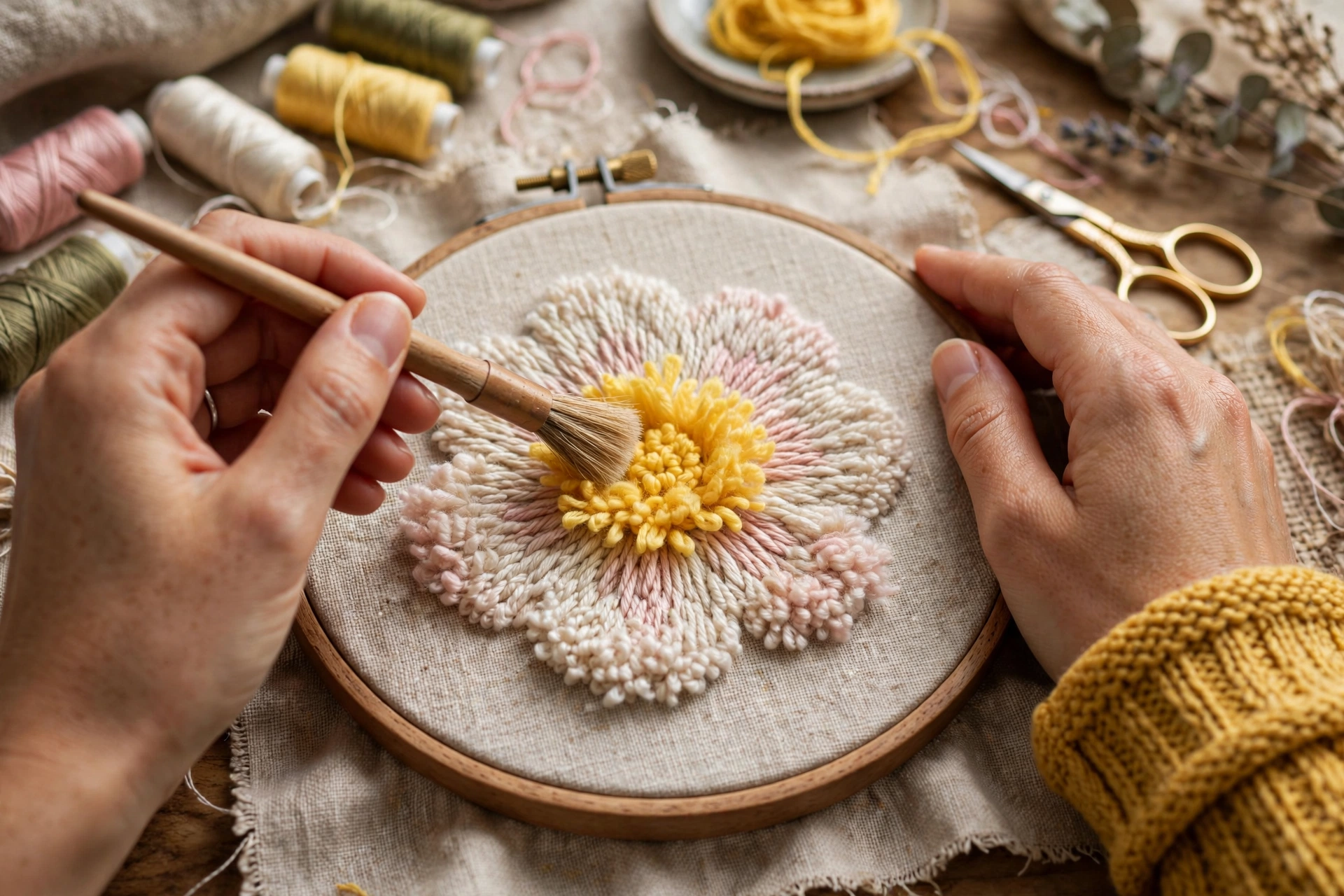
After trimming, brush the pile with a clean dry toothbrush or a small stiff brush to fluff the thread ends apart. This one step doubles the perceived fullness. It is the difference between flat cut ends and living texture. Do not skip the brushing.
What to make with it
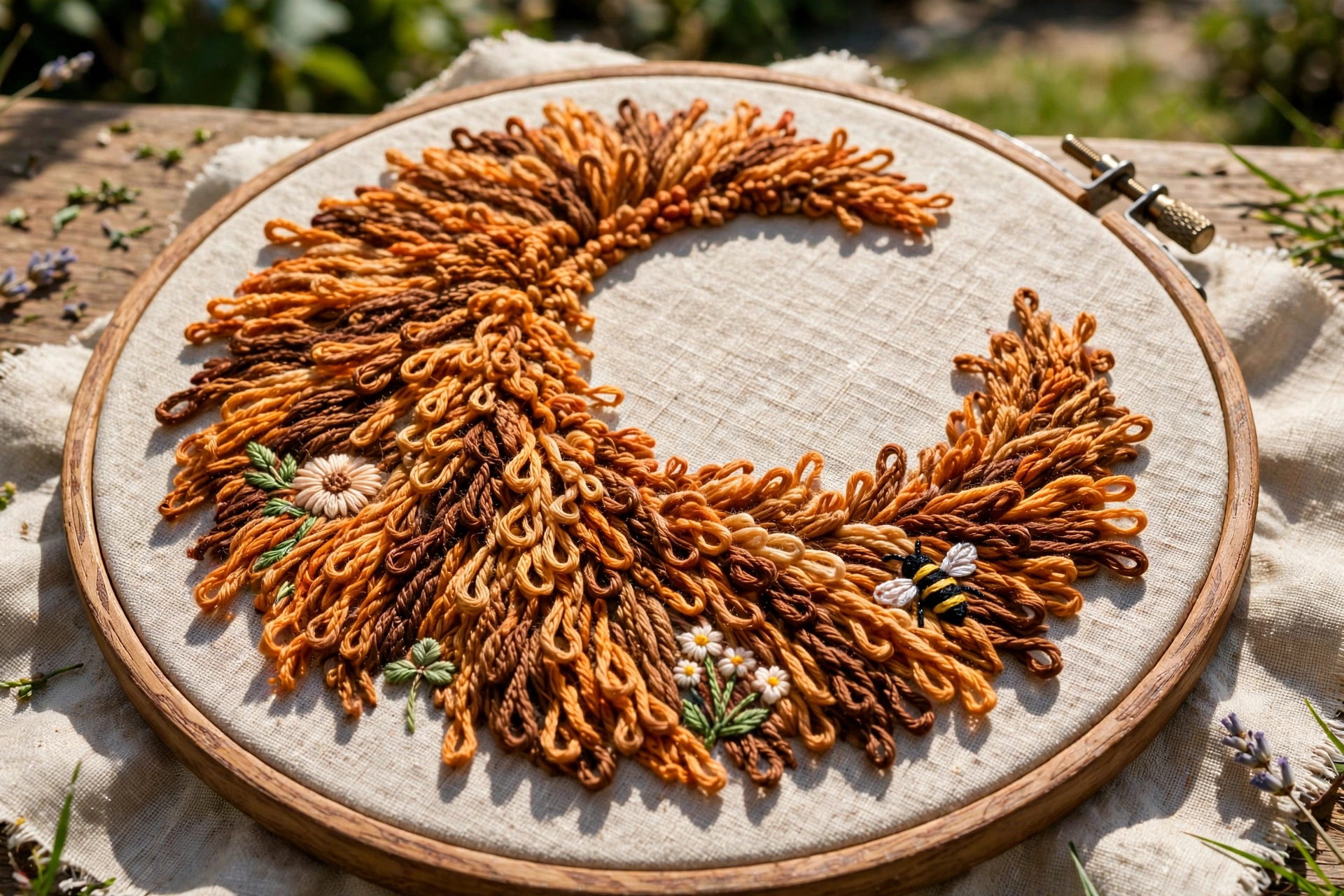
Animal fur is the obvious star: lion manes, teddy bear bodies, sheep, Highland cows, anything fluffy. But turkey work has a secret second career in florals. A small patch of golden-yellow turkey work, trimmed into a dome, is the most realistic flower center you can stitch. It has actual dimension, actual shadow, actual presence. Pair it with woven wheel roses or lazy daisy petals and the flower looks like it might smell like something.
It also makes excellent grass, moss, and textured tree foliage on landscape pieces. I did a whole cottage garden scene where the lawn was turkey work in three greens, and it is still the piece visitors touch first. People cannot resist touching turkey work. Warn your framing customers.
Thread and fabric notes
Wool floss is the traditional choice and makes the most naturally fuzzy pile, because wool fibers bloom when cut. Stranded cotton works beautifully too and comes in the enormous DMC color range, which matters when your lion needs exactly the right tawny gold. Avoid silk and rayon for turkey work. They are too slippery to hold the loops upright and too shiny for convincing fur.
Use a sturdy fabric with a tight weave. The loops pull against the base stitches, and loose-weave fabric distorts under the strain. Midweight linen or a good quilting cotton, hooped drum tight, handles it fine. And use a stand or lap frame if you have one, because turkey work needs both hands free, one for the needle, one for holding loops. It is the rare stitch where a stand is not a luxury but genuinely the right tool.
The mistakes that ruin the fluff
Uneven loop height. The number one killer. If the loops vary, no amount of trimming fixes the patch, because trimming to the shortest loop wastes all your thread. Gauge every loop. Chopstick method. Trust me.
Cutting too short, too fast. Enthusiasm with scissors is how manes become crew cuts. Trim in rounds, check from arm’s length, and remember that damp thread looks shorter than dry thread, so never judge length right after handling.
Too few loops. Beginners stitch a sparse patch to “try it out” and conclude turkey work looks thin. It looks thin because it is thin. Density is the whole game. Pack those loops shoulder to shoulder.
Turkey work is the most dramatic transformation in embroidery: flat loops in, actual fur out, with a haircut in between. It uses shocking amounts of thread, takes real patience, and produces texture nothing else can touch. Stitch a one-inch test patch this week. Trim it carefully. Brush it out. Then try to stop yourself from planning the lion.